
Annoyed by separating broken shots manually? Steel shot cleaner improves abrasive recycling efficiency
If you run a casting or metal fabrication facility, you already know the frustration. Workers spend hours sifting through abrasive media, pulling out broken fragments by hand, and the whole process slows your production line. A steel shot cleaning machine solves this directly. By automating the separation of intact shot from dust and broken media, it keeps your abrasive mix clean, consistent, and ready for reuse — without anyone crouching over a sorting tray. The result is higher throughput, lower material waste, and a surface finish that actually meets Sa2.5 specifications every time.
Understanding the Problem of Manual Broken Shot Separation
Sorting things by hand in a rough way is one of those habits that slowly kills productivity. It seems doable when you blast at a low volume, but the cracks start to show when you blast at a higher volume.
The Hidden Labor Cost
When workers separate broken shot by hand, you pay them for time that doesn't get anything done. This job can take two to four workers per shift in a facility that processes several tons of castings every day. That cost of labor adds up quickly, and skilled technicians are kept from doing work that needs their skills.
How Inconsistent Abrasive Quality Damages Surface Results?
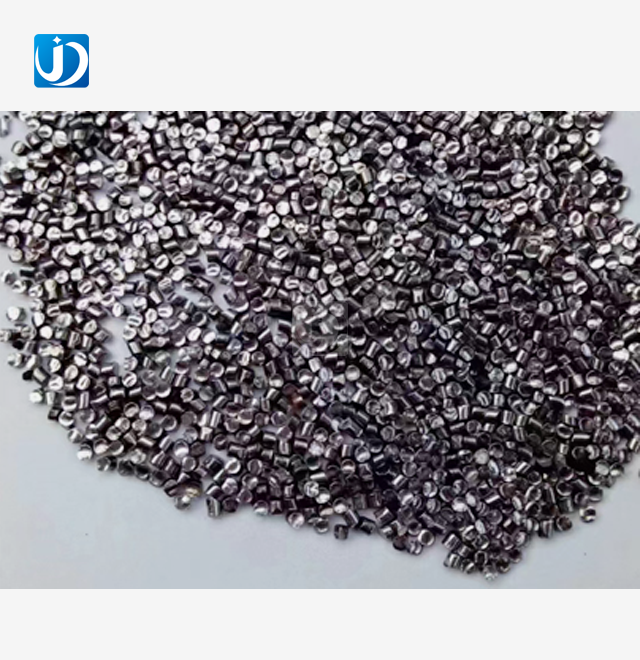
Broken pieces of shot are not all the same size or shape. When they go back into the blast wheel with whole spherical media, they hit the object unevenly, distributing impact energy across the surface. This unevenness makes it harder to keep an anchor profile steady, which has a direct effect on the quality of the coating's adhesive. ISO 8501-1 says that to get to Sa2.5, mill scale, rust, and other contaminants must be completely removed. However, an inconsistent abrasive mix often makes this impossible.
Why Traditional Mechanical Separators Fall Short?
Older drum-type or vibrating-screen separators can get rid of big pieces of waste, but they're not very good at getting rid of small dust and sub-millimeter pieces. They also need to be cleared by hand often when the screens get clogged, which adds to the downtime. Because of these problems, a lot of plant managers are looking for ways to make things more automated.
How Steel Shot Cleaners Improve Abrasive Recycling Efficiency?
A modern abrasive cleaning system uses three methods at the same time: sorting by size, separating by density, and winnowing airflow. Before the abrasive goes back to the blast wheel, these steps clean it of pieces, dust, and large contaminants.
The Closed-Loop Recycling Workflow
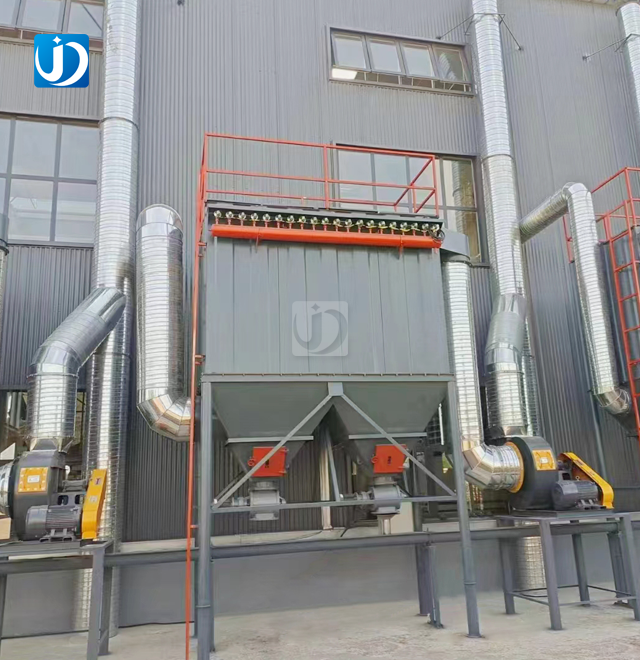
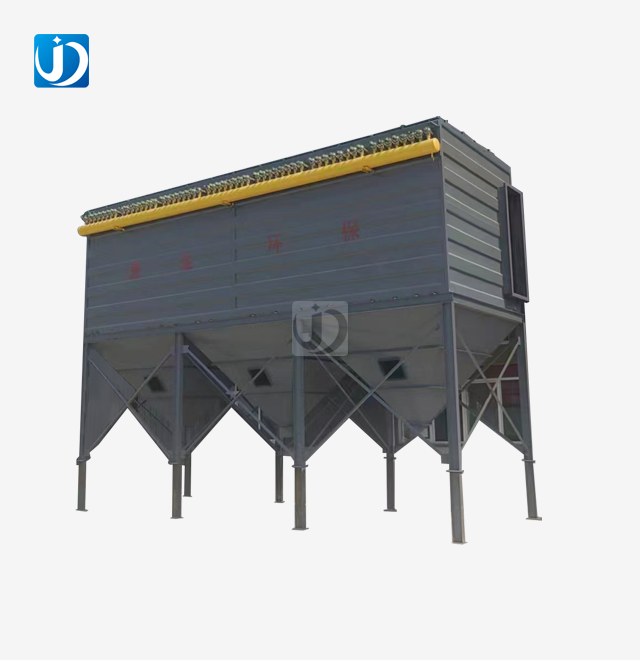
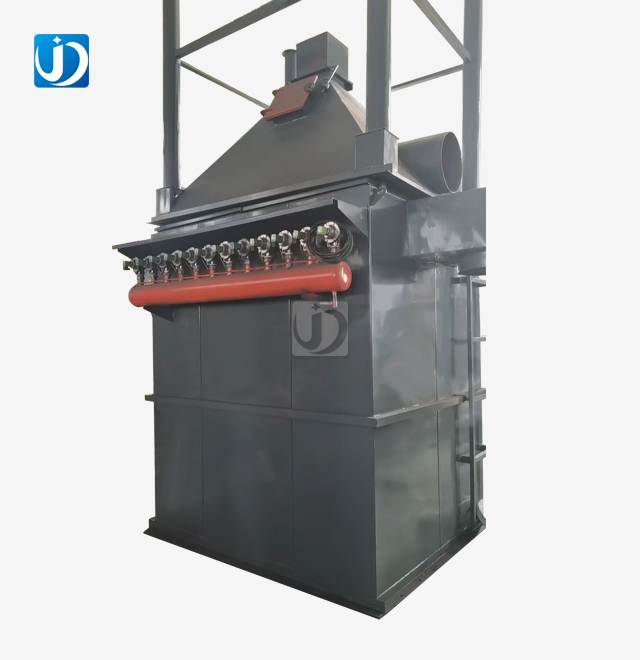
The steel shot cleaning machine from Junda Machinery has a screw conveyor, a bucket elevator, and an air-wash separator all built into one closed-loop circuit. The used abrasive falls from the blast chamber, goes up the lift, and goes through the air separator, which keeps the separate efficiency at 99.5%. The whole shot falls back into the storage bin, and the dust and fines leave through the pulse-jet cartridge dust collection. The whole cycle keeps going without any help from the user.
Centrifugal Blast Wheels and Consistent Media Performance
Junda equipment has centrifugal blast wheels that move steel media at speeds of 60 to 90 m/s. To keep the speed and impact the same over long production runs, you need to keep the graded abrasive mix clean. Broken pieces that get into the working mix throw off the balance of the wheel and speed up the wear on the blades. A separate system that is well taken care of saves the wheel and makes the blade last longer than 800 hours of normal use.
Measurable Results in Production Settings
When compared to open-loop systems, plants that use closed-loop abrasive recycling usually use 30–40% less abrasive. Depending on the type, Junda's tools can handle abrasive flow rates of 120 to 350 kg/min, which means it can process between 1 and 15 tons per hour. These numbers show how engine blocks are cleaned in places that make cars and how solid plates are prepared in places that make big things.
Comparing Steel Shot Cleaners with Traditional Methods
A rough way of managing doesn't always get the best results. In this comparison, automated separation beats older methods.
Manual Sorting vs. Automated Air Separation
Sorting by hand can catch big pieces but not fine ones at all. Workers are also exposed to metal dust, which can be bad for their health. An automated air separator gets rid of particles of all sizes, from large chunks to dust below the 50 mg/m³ emission limits, without putting people in contact with the rough air.
Magnetic Separators and Their Limitations
Magnetic separators are good at getting rid of ferrous contaminants, but they can't tell the difference between broken shot and whole shot because their magnetic properties are the same. As an addition to other filters, they work well, but not by themselves. The best abrasive cleaning happens when you use a magnetic pre-filter along with an air-wash separator.
Selecting the Right Configuration for Your Facility
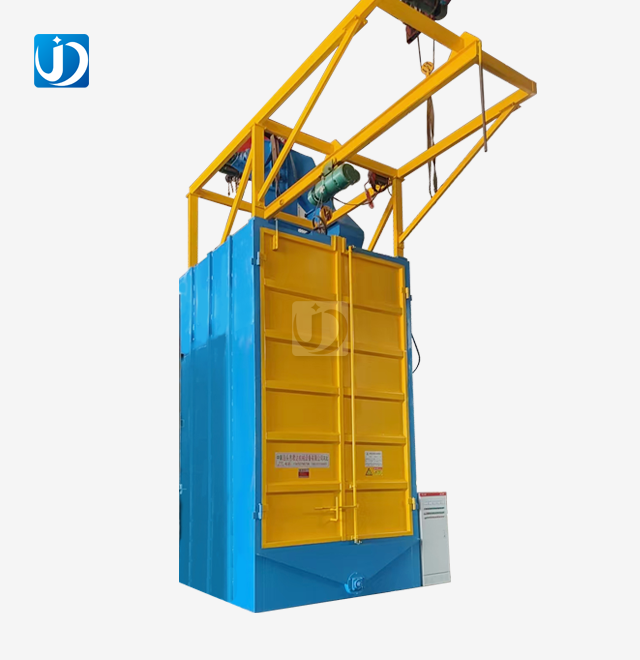
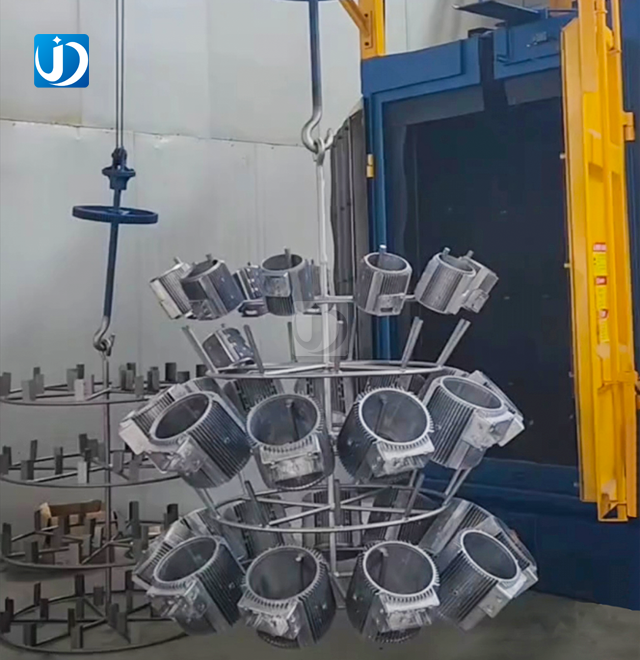
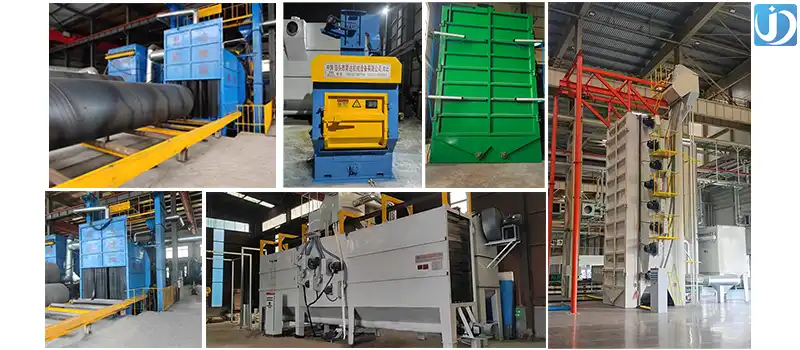
Junda has roller-conveyor pass-through models for processing plates continuously, rotating-hook models for casts with irregular shapes, and monorail systems for big structure parts. What's best relies on the shape of the piece, the speed of production, and the amount of room on the floor. Junda's engineering team answers technical questions within 6–8 hours and can help you choose the right model based on your exact throughput needs.
Best Practices for Maintaining Your Abrasive Recycling System
When it comes to separation systems in a shot cleaning machine, they only work consistently when they get consistent care. These steps will protect your investment and keep it from having to be down for no reason.
The most important maintenance tasks that production managers should regularly plan to do are:
- Weekly air separator inspection: Check airflow volume and adjust damper settings. If good abrasive appears in the dust collector output, the air volume is too high. Recalibrate to prevent media loss.
- Blast wheel blade checks every 200 operating hours: High-chromium alloy blades on Junda equipment typically last 800+ hours, but early wear detection prevents imbalance and bearing failure. Measure blade thickness at the leading edge.
- Liner hardness verification every quarter: High-manganese steel liners at 60+ HRC protect the blast chamber. When liner thickness drops below the replacement threshold, surface deformation accelerates and media leakage risk increases.
- Pulse-jet dust collector filter inspection: Check differential pressure weekly. Clogged cartridges reduce suction, raising dust levels inside the chamber and the surrounding workspace.
Environmental and Economic Benefits of Automated Abrasive Recycling
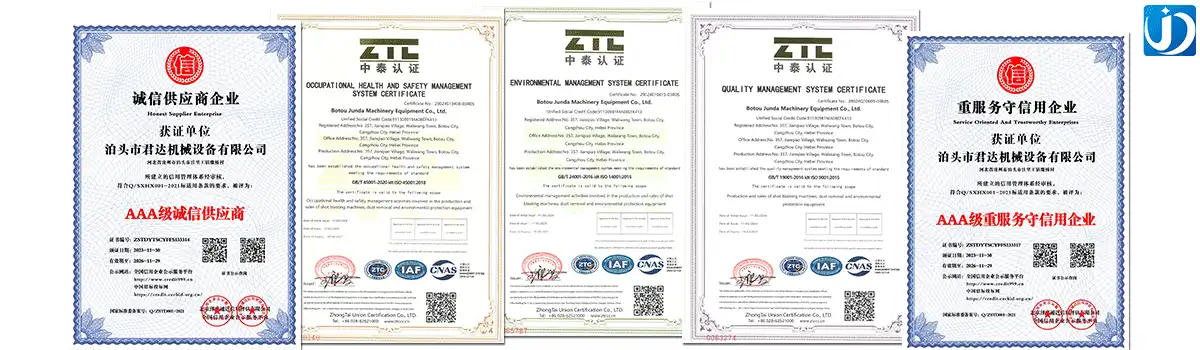
Reducing abrasive waste is not only good for your budget — it also supports regulatory compliance and environmental responsibility. Junda's equipment holds ISO 14001 and ISO 45001 certifications, reflecting a design philosophy that accounts for both operator safety and environmental output.
Lower Material Procurement Costs
When your separation system recovers and reuses 40% more abrasive per cycle, you purchase less replacement media per ton of production. Over a full operating year, that reduction makes a visible difference in consumable expenditure across any medium-to-large casting facility.
Reduced Rework from Cleaner Surface Profiles
Cleaner abrasive media produces more uniform anchor profiles — in the Ra 25–100 µm range achievable with Junda equipment — which improves first-pass coating adhesion rates. Fewer coating failures mean less rework, less paint waste, and faster throughput to the assembly or shipping stage.
Dust Emission Control Below Regulatory Limits
Junda's pulse-jet dust collectors maintain workplace emission levels below 50 mg/m³, keeping facilities compliant with occupational health standards. This avoids regulatory penalties and reduces the long-term health burden on your workforce.
Conclusion
Separating broken shot by hand wastes time and effort, and plants no longer have to put up with it. If you choose the right abrasive recycling system, it will automate the separation process, keep the quality of your surface finish stable, and cut down on material costs for every shift. Junda Machinery's shot cleaning machine and shot blasting equipment, along with 20 years of manufacturing experience, ISO 9001/14001/45001 certifications, and an air-wash separation that works 99.5% of the time, makes it easy for casting and forging facilities to meet Sa2.5 standards without having to do a lot of work by hand. The technology has been tried and tested, the customer service is quick to respond, and the gains in efficiency can be seen right away after the first production run.
FAQWhy is my abrasive consumption higher than the manufacturer's specification?
This usually points to an improperly adjusted air-wash separator. If airflow volume is set too high, intact shot gets carried into the dust collector alongside fines. Reduce airflow incrementally and run a sieve analysis on the working mix to confirm the correct particle size distribution.
How long do blast wheel blades typically last?
On Junda equipment, high-chromium alloy blades last 800 hours or more under standard production loads. Using steel grit instead of shot increases abrasive hardness and can accelerate wear; confirm that your liner and blade grades are rated for grit media before switching.
Can the machine achieve Sa2.5 on heavily rusted steel?
Yes. Adjusting the blend of shot and grit sizes, combined with appropriate conveyor speed settings, produces sufficient impact density for Sa2.5 results on heavily corroded surfaces. Reference the SAE J444 media size chart when selecting abrasive grades for specific rust grades.
What maintenance does the dust collection system require?
Check pulse-jet pressure daily and inspect filter cartridge integrity weekly. Degraded cartridges reduce chamber suction, which allows dust to accumulate and raises emission readings above acceptable limits.
Can Junda equipment be configured for non-standard workpiece sizes?
Yes. Junda provides OEM and ODM configurations adapted to workpiece dimensions, voltage standards, and facility layouts. Custom production for non-standard specifications typically completes within 15 days.
Get in Touch with Junda Machinery — Shot Cleaning Machine Supplier You Can Trust
Junda Machinery makes abrasive blasting gear that stays your production line moving and saves you money on consumables. We have been making trusted shot cleaning machines for 20 years and work with OEM buyers, casting plant managers, and industrial distributors all over North America and the world. To get a mechanical advice, email junda001@jundablast.com with the details of your workpiece or go to jundablast.com. Within 6–8 hours, our engineering team gets back to you.
References
1. ISO 8501-1:2007 — Preparation of Steel Substrates Before Application of Paints and Related Products: Visual Assessment of Surface Cleanliness. International Organization for Standardization, 2007.
2. SAE J444 — Cast Shot and Grit Size Specifications for Peening and Cleaning. SAE International, 2009.
3. Paruk, R. & Singh, R. — "Abrasive Media Degradation and Recovery in Centrifugal Blast Systems." Journal of Surface Engineering & Applied Electrochemistry, 2018.
4. SSPC-SP 10 / NACE No. 2 — Near-White Metal Blast Cleaning Standard. Society for Protective Coatings, 2007.
5. Havaldar, S. et al. — "Effect of Shot Blasting Parameters on Surface Roughness and Coating Adhesion of Cast Iron Components." International Journal of Manufacturing Science and Technology, 2020.
6. Visser, W. — "Energy Consumption and Waste Reduction in Industrial Abrasive Blast Cleaning Operations." Journal of Cleaner Production, 2019.

USER EVALUATE
Real feedback and practical experience shared by worldwide partners who purchased our machinery and environmental treatment devices.