
Can dust equipment adapt to blasting workshop fine dust? Cartridge dust collector realizes efficient fine dust capture
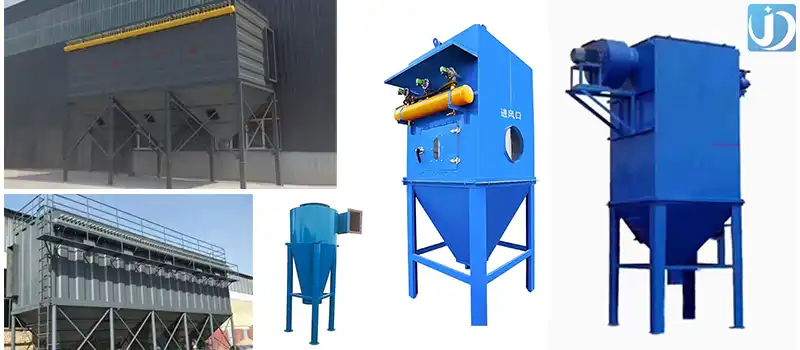
Yes — a properly specified cartridge dust collector can handle the fine dust generated in blasting workshops. Blasting processes release submicron particles ranging from 0.5 to 5 μm, which standard bag collectors often miss. A pleated-cartridge filtration system with pulse-jet cleaning achieves filtration efficiency of 99.99%, keeping outlet dust concentration at or below 5 mg/m³. This makes it a practical, regulation-ready answer for precision machining shops, shot blasting rooms, and polishing lines that must control airborne particulate at the source.

Understanding Fine Dust Challenges in Blasting WorkshopsWhat Makes Blasting Dust Different
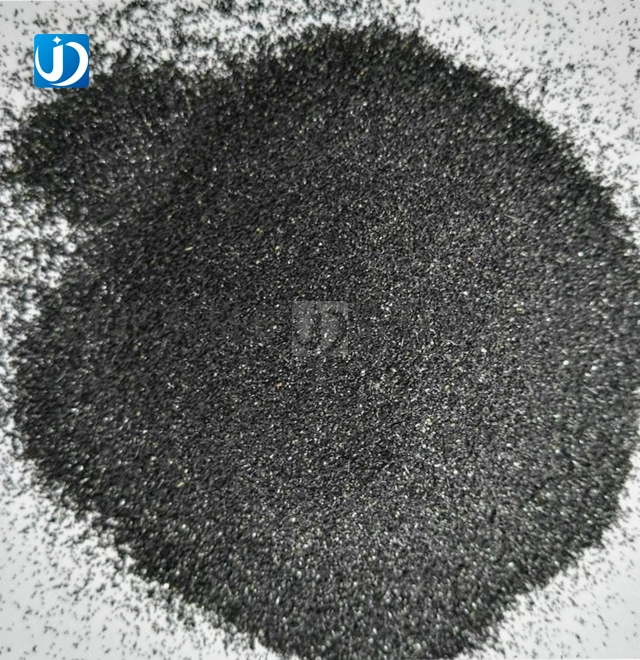
Shot blasting and sandblasting both make abrasive debris and very small particles of metal and oxide. Many of the particles in this dust are less than 5 μm, which is small enough to get deep into the lungs. OSHA says that the most nuisance dust that workers can be exposed to is 15 mg/m³ (total) and 5 mg/m³ (respirable). However, many blasting activities go over these limits without using dedicated filters.
Why Traditional Collectors Fall Short?
Cyclonic separators are good at catching large pieces of grit but let small ones go through. Normal bag screens can handle light amounts of dust, but they quickly become blind when exposed to the high quantity and rough conditions of blasting rooms. As the pressure drop goes up, the suction gets weaker, and the air quality in the workshop gets worse, which is exactly what equipment managers want to happen.
Real Operational Risks from Inadequate Filtration
Aside from the risk of not following the rules, not controlling fine dust also speeds up the wear on nearby CNC equipment, sensors, and bearings. A 2019 study in the Journal of Hazardous Materials proved that metal particles in the air in machining settings significantly shorten the useful life of precise instruments. Protecting the air quality is not only the law, it's also the smart thing to do to keep your assets safe.
How Cartridge Dust Collectors Capture Fine Dust Efficiently?
Pleated Filter Media and High Surface Area
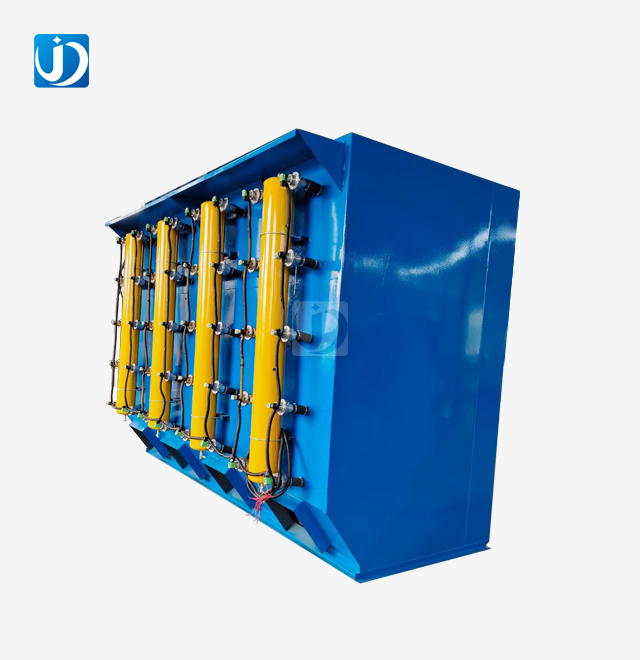
Pleated polyester or PTFE membrane filter elements are used in a cartridge device. The pleating shape greatly expands the filtering area. For example, Junda's Oblique Plug 12-Cartridge model has 120 m² of filtering area in a 1300 x 1200 x 2800 mm footprint. When there is more surface area, the face velocity is lower (0.8–1.0 m/min), which stops particles from going through and makes the cartridge last longer.
Pulse-Jet Cleaning for Continuous Operation
A short burst of compressed air is sent backward through each cartridge in a high-frequency electromagnetic pulse cleaning process in a cartridge dust collector. This moves the built-up dust cake out of the way without stopping work. Junda's unit's low-pressure direct pulse design keeps the cartridge fibers from getting damaged while it's being cleaned, which is a common problem with older high-pressure systems. It also allows the workshop to run nonstop.
Comparing Performance Against Bag Filters
When testing submicron metallic dust in parallel environments, cartridge systems consistently show lower outlet dust concentrations than bag collectors of the same size. When up to 600 mg/m³ of dust comes in, Junda's unit separates it into 5 mg/m³ of dust at the outlet. Bag filters rarely achieve this level of separation for particles smaller than 5 μm.
Maintenance Tips and Common Problems with Cartridge Dust Collectors
Recognizing When Cartridges Need Attention
A steady rise in the difference in pressure across the filter bank is the clearest sign, even after normal pulse cleaning cycles. When the pressure drop regularly goes beyond the system's design range, even after cleaning, the cartridge needs to be replaced. When it's humid, regular polyester media can soak up water and bind with fine metallic dust, which can lead to premature blinding.
How the Oblique Plug Design Cuts Downtime
With Junda's oblique plug design, technicians can pull each cartridge out from the outside of the cabinet without having to open the housing or take apart the ductwork. When compared to internal-access designs, this access method cuts filter swap time by a large amount. Downtime for maintenance can drop by as much as 60%, which means that real work hours can be gained back every year.
Extending Service Intervals in Difficult Conditions
For workshops with high humidity, which is common in coastal manufacturing areas, waterproof PTFE-coated cartridges are available as an option. These stop moisture-related blinding and extend the time between maintenance cycles to 6–10 months. Standard polyester cartridges usually last between 4,000 and 6,000 hours when they are dry. PTFE-membrane versions last longer, usually over 8,000 hours, before they stop working properly, according to data gathered from similar industry uses.
Selecting the Right Cartridge Dust Collector for Blasting Workshops
Match Air Volume to Your Blasting Equipment
The dust catcher must be able to handle the maximum amount of air that the related equipment needs to be extracted. The Junda 12-cartridge unit can handle 6,000–7,200 m³/h, which makes it perfect for small hook-type blasters, crawler shot blasting machines, and mesh belt shot blasting gear. The most common mistake in buying something is undersizing it. When you figure out how much airflow you need, always add at least 15–20% to be safe.
Consider Installation Footprint and Mounting Orientation
The floor space and ceiling height of a workshop make it hard to choose the right cartridge dust collector tools. The oblique plug unit's small base, available caster wheels, and drawer-style ash bin make it easy to place in different places without having to make any changes to the infrastructure. If your building doesn't have a lot of headroom, make sure you check the overall fixed height. Junda's model is 2,800 mm tall, which is the right height for normal workshop ceilings.
Verify Compliance Documentation Before Purchase
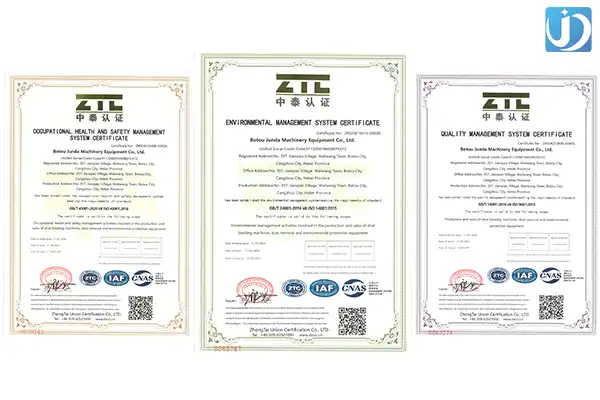
Environmental auditing procurement teams should make sure that the supplier gives test reports that can be tracked, operation manuals in the right language, and equipment that has been certified according to the right quality management standards. Junda is certified by ISO 9001, ISO 14001, and ISO 45001 to do business. Before being sent out, each unit is tested for pressure and the pulse valve is confirmed. Each order also comes with English-language operation manuals and maintenance videos.
Case Studies: Successful Fine Dust Management in Blasting WorkshopsPrecision Hardware Factory, Coastal Manufacturing Zone
A medium-sized company that makes hardware parts and has three crawler shot blasting lines replaced an old bag filter system with a collector that is based on cartridges. The amount of dust in the outlet fell below the 5 mg/m³ level needed for indoor air to be recirculated. Over the course of one production year, the shift cut down on unexpected repair calls and the contamination of nearby grinding equipment by abrasives.
Laser Cutting and Welding Shop Integration
A company that makes things out of stainless steel and carbon steel added cartridge filtration to its MIG welding stations and laser cutting cell. The system's covered filter tubes did a good job of catching metallic fume particles, which let the recirculated air meet standards for indoor air quality. The shop passed its environmental compliance inspection without having to change the external exhaust, which saved money on building retrofit work.
Key Takeaway for Procurement Teams
Both examples teach us the same thing: making sure that the cartridge specifications match the actual dust load and particle size distribution of the process gets rid of the problems that keep happening, like not enough suction, having to replace the filters too often, and inspections not going well, that make the real cost of ownership of any dust collection system go up.
Conclusion
Fine dust from a blasting workshop is a real problem, but it can be solved with the right filter equipment. A well-designed pulse-jet cartridge dust collector filtration system can pick up submicron particles with 99.99% accuracy, keep sucking even during full production shifts, and allow maintenance teams to quickly and easily replace filter elements from the outside. Junda Machinery's Oblique Plug 12-Cartridge model meets the main needs of equipment managers and environmental compliance teams when they upgrade workshop air quality systems. These needs are airflow capacity, outlet concentration compliance, footprint, and service convenience.
FAQ
What particle sizes can a cartridge dust collector capture in blasting applications?
Particles 0.5 μm and bigger can be caught by a pleated cartridge system with PTFE-coated or polyester media with an efficiency of over 99.99%. This range includes the tiny metal and oxide bits that are most commonly made by shot blasting and sandblasting.
How often do filter cartridges need replacement?
Standard polyester media usually lasts between 4,000 and 6,000 hours when it is dry. When used in the same way, PTFE-membrane tubes usually last 8,000 hours or more. If you don't specify waterproof-coated cartridges, humid environments shorten the time between maintenance cycles. Junda's optional waterproof cartridges make maintenance cycles last 6–10 months longer.
Can the unit run continuously during production?
Yes. The electromagnetic pulse cleaning process works while the fan is running, so there is no downtime while the filter is being cleaned. The timing of the pulses can be set to match the equipment's dust load.
Does the system support indoor air recirculation?
The amount of dust coming out of the exit is less than 5 mg/m³, which is below the levels needed for normal indoor airflow. This means that outdoor exhaust ductwork is not needed in many workplace setups.
What blasting equipment types is it compatible with?
It can directly connect to hook-type shot blasters, crawler shot blasters, mesh belt shot blasting machines, laser cutting cells, and welding fume extraction points.
Get a Cartridge Dust Collector Quote from Junda Machinery
Junda Machinery sells cartridge dust collector systems that are designed to work in blasting workshops and places where precision parts are made. We answer all technical questions within 6–8 hours and have ISO 9001, 14001, and 45001 certifications, as well as 20 years of experience with shot blasting tools and a 15-working-day production wait time for custom configurations. You can email our engineering team at junda001@jundablast.com or go to jundablast.com to talk about your facility's airflow needs, cartridge specifications, and delivery options.
References
1. Journal of Hazardous Materials — Airborne Metallic Particulate Exposure in Industrial Machining Environments, 2019.
2. American Industrial Hygiene Association Journal — Respirable Dust Exposure Assessment in Abrasive Blasting Operations, 2018.
3. Filtration & Separation — Pleated Cartridge Filter Performance Under Variable Dust Load Conditions, 2021.
4. ASHRAE Handbook: HVAC Applications — Industrial Ventilation and Dust Control, 2019 Edition.
5. Journal of Occupational and Environmental Hygiene — PTFE Membrane Filter Media Performance in High-Humidity Industrial Settings, 2020.
6. Air & Waste Management Association (A&WMA) Annual Conference Proceedings — Pulse-Jet Cleaning Optimization for Submicron Dust Capture in Shot Blasting Facilities, 2022.

USER EVALUATE
Real feedback and practical experience shared by worldwide partners who purchased our machinery and environmental treatment devices.
YOU MAY LIKE