
Seeking low-maintenance pre-dust removal equipment? Cyclone dust collector works continuously without consumables
A cyclone dust separator gives you continuous pre-dust removal without filter bags, cartridges, or other replaceable media. Dusty air enters at speed and spins inside the cylinder. Heavy particles hit the wall and drop into the ash hopper. Because the process relies on centrifugal force, nothing inside the unit clogs or needs replacing. Routine care mostly means emptying the hopper and checking wear. On shot blasting, grinding, and casting lines, this protects downstream baghouses and recovers reusable abrasive. Below, I explain how it works, how it compares with other collectors, and how to choose one.
Understanding Cyclone Dust Separators: How They Work and Why They Are Low Maintenance
How Centrifugal Force Separates Dust?
Cyclone dust separators use the fact that heavy particles don't like to move in different directions. Air with a lot of dust comes into the cylinder very quickly and makes a rotating flow of air. Due to their higher speed, medium and large particles are pushed against the wall by centrifugal force. As they slow down, they slide down the cone and land in the ash trap. Through the hole at the top, the clean air goes out. This is how our Junda Machinery cyclone dust separator works, and it gets rid of more than 95% of medium and large particles. That means it's a good base for equipment that blasts, sandblasts, grinds, and crushes.
Why No Consumables Means Continuous Operation?
There are two types of filter-based dust collectors: bags and cylinders. Until they are cleaned or replaced, these parts get full of dust. Cyclone dust separators don't have filter media, so nothing inside them gets blocked or blinds up when they're not being used. Inside our design, there are no moving parts, and the only thing that keeps them apart is air flow. If you plan fewer stops to swap media, you need to keep fewer spare parts on hand. According to a fact sheet from the U.S. EPA, two of the best things about cyclone dust separator technology are that it doesn't need much upkeep and can work in hot conditions. The daily task is to empty the ash bin.
Where a Pre-Separator Fits in a Dust Collection Line
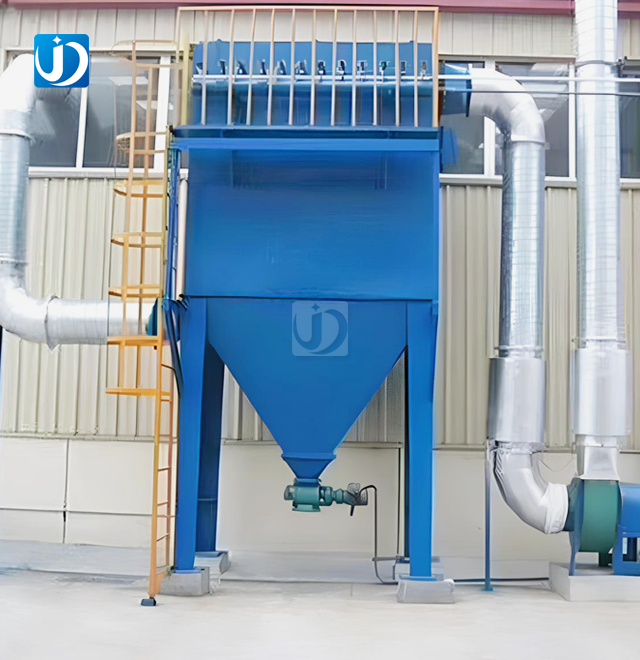
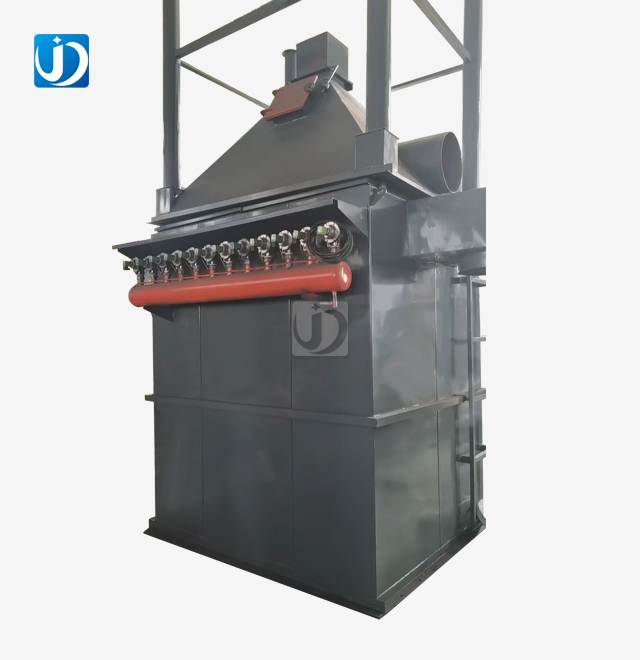
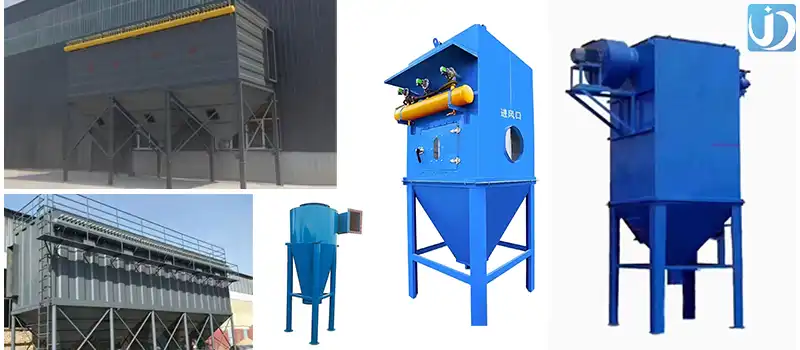
It moves broken steel shot, mill scale, and fine dust through the air in the same stream. The cyclone dust separator sits in front of a pulse bag or cartridge collection and first gets rid of the heavy part. It falls into the bin dry, without any sludge or sewage, so you can screen it and use the grit again. In either a vertical or horizontal layout, our unit can connect in series with lifts and dividers before the pulse bag dust collector. Less dust gets into the filter further downstream, and you get back media that you can use again.
Core Design Principles and Performance Factors of Cyclone Dust SeparatorsGeometry and Airflow Set the Cut Point
The performance is affected by three design choices: the body diameter, the inlet size, and the length of the outlet tube. Smaller particles are caught by centrifugal force when the body is thinner or the entrance moves faster. It also makes the fan energy and pressure drop go up. In their book on gas cyclones, Hoffmann and Stein talk about this trade-off between productivity and pressure loss. Our units can handle 1,500 to 15,000 m³/h, which is about 880 to 8,830 CFM, and the sizes are changed based on the tools that will be used and the amount of dust. If the cyclone dust separator is too big, it slows down the flow and is less efficient. If it's too small, it limits the system.
Particle Size, Density, and Moisture
The effects depend on particle size and quantity more than most buyers think. The best particles for standard cyclone dust separators are those bigger than 10 microns. This includes steel shot fragments, scale, and grinding debris. Finer dust goes through more often, so it should be taken care of by a filter further down the line. Also, moisture is important. The wall can change form, pressure drop go up, and efficiency go down if the dust is wet. Tell your supplier right away if your process makes dust that is wet or sticky. For the dry abrasive streams that are used in blasting, our unit's dry mechanical separation works well.
Wear Resistance for Abrasive and Metal Dust
When metal dust hits the wall, it quickly wears away bare steel, especially at the entrance and cone. We can line the housing with a material that doesn't wear down easily so that high-concentration abrasive dust doesn't wear it down. This works with shot blasting systems. Give us the type of abrasive, the amount of dust, and the number of hours you expect the machine to run when you ask for a price. This way, we can match the covering and plate thickness. When a shell wears through, air leaks out and the efficiency drops. It has a sound lining that keeps the shell and the cyclone dust separator safe.
How Cyclone Dust Separators Compare to Alternative Dust Collection Technologies
Cyclones Versus Baghouses and Cartridge Collectors
Since baghouses and cartridge collectors get rid of much finer dust than cyclone dust separators, they are usually the last step. Their price keeps going up because bags and cartridges break down and cleaning systems need to be fixed. A cyclone dust separator doesn't have to pay those fees, but it can't catch as many small particles as they can. In real life, you should use each one where it makes sense. Put the cyclone dust separator in first to get rid of the big stuff, and then let the filter clean up the small dust that's left. Our cyclone dust separator can handle coarse dust by itself, or it can work with a cartridge collector to meet stricter emission standards by cleaning the air again.
Cyclones Versus Wet Scrubbers and Electrostatic Precipitators
When wet scrubbers collect dust in liquid, they make sludge or wastewater that you have to deal with and get rid of. Electrostatic precipitators are very good at getting rid of fine particles, but they need special electrical tools, need to be operated carefully, and need more space to be installed. This is not a problem with a dry cyclone dust separator. The dust that is collected stays dry, so you can screen it and send the abrasive back to the machine to be used again. It is helpful to have a dry stream when blasting or casting lines with metal dust. The limit stays the same, though: a cyclone dust separator by itself won't get rid of fine particles fast enough.
Why Two-Stage Systems Make Sense?
Two steps are what most shops find work best. First, the cyclone dust separator gets rid of the big bits. Then, the baghouse or cartridge unit takes care of the rest. The filter loads more slowly and lasts longer because it doesn't get as much dust. For finer dust, some buyers use multi-cyclone banks of small tubes. However, small tubes tend to get clogged more easily. A single cyclone dust separator is best for rough, heavy loads like blasting debris. As a first stage that doesn't need much maintenance, it is generally the easiest part of the system to add.
Selecting and Procuring the Right Cyclone Dust Separator for Your NeedsMatch Airflow and Dust Type
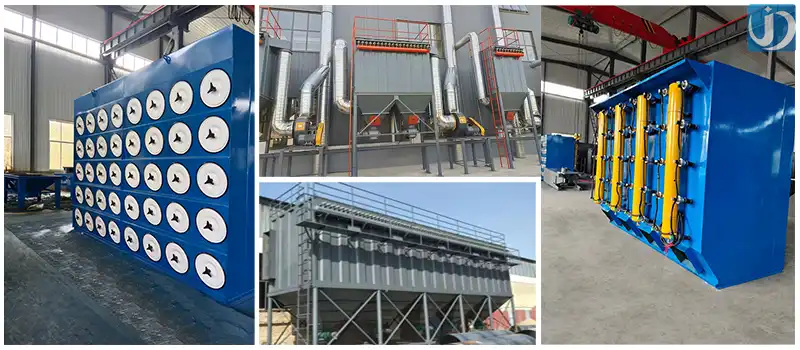
Figure out how much air your process needs first. Find out the design flow in m³/h or CFM from the machine builder or the system plans. Then, find out about the dust's type, range of sizes, moisture level, and metal fragments if it has any. Our units can clean up to 15,000 m³/h and can be changed to fit the tools and amount of dust. Also, let us know where the entry and exit points need to be. With these information, we can check the sizes before they are made, so the unit and your ducting won't not fit right.
Check Materials, Liners, and Interfaces
Check out the build details next. Check the wear lining, flange sizes, inlet and outlet positions, inspection ports, and the connection to the ash hopper. Also, check the thickness of the shell plate. These things determine whether the cyclone dust separator fits right into your system the first time. Give the supplier your drawings and ask them to check each interface against them before they cut the steel. For shot blasting lines, find out how the lining is attached and how it can be changed later. Compare prices for the same equipment that has the same airflow, material, and lining. This will help you decide what to buy.
Evaluate Supplier Capability and Delivery
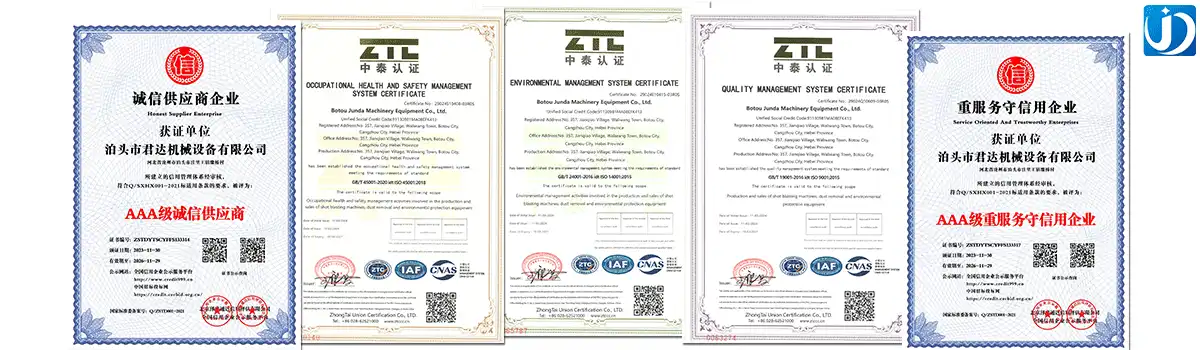
Botou, Hebei, is where Junda Machinery is based. It is a major hub for casting machinery and dust removal equipment. Our ISO 9001, ISO 14001, and ISO 45001 certifications show that we know a lot about shot blasting equipment. Standard customized equipment takes about 15 days to make, but we keep some in stock in case you need it quickly. We answer questions between 6 and 8 hours, and we offer OEM and ODM choices, as well as private marking. Not only that, but we can also help with CE approval, export paperwork, and FCL or LCL shipping. The tools come with English instructions and movies on how to maintain them.
Installation, Setup, and Usage Practices for Stable PerformanceSite Preparation and Ducting
A good installation starts with the site. Pick a stable, level base that can hold the cyclone dust separator and the dust it collects. Leave space under the hopper for the bin to be taken out and the release point to be reached. Our small body can be used either upright or sideways, which is helpful in small shops. Make sure the ducting is short and has smooth bends and no big changes in size. Sharp turns cause pressure to drop and uneven flow to come in. The ACGIH text Industrial Ventilation talks about the rules for designing ducts that are used here. We can also help with installation from afar.
Airflow Calibration and Sealing the Hopper
After mounting, compare the airflow to the design value and make any necessary changes to the fan or dampers. Then shut off the flow. If air gets in through the ash hopper or dust bin, it can mess up the lower vortex and push dust back into the exhaust. This is a common reason why efficiency goes down. Check the gaskets and flanges and use a sealed bin or an air-lock valve. We help with commissioning and training operators so that your team knows how to set things up correctly from the start. Keep track of the drop in pressure when the engine first starts up. This will help you when you do later checks.
Routine Maintenance and Safety Checks
Cleaning up is easy. Get rid of the ash before it gets full, because dust can get back into the swirl when it's full. During planned shutdowns, check the cone and inlet lining for wear, air leaks, and the discharge seal. Keep an eye on the pressure drop. If it goes up, it could mean that pressure is building up, and if it goes down, it could mean that there is a leak or the shell is wearing through. These checks don't take long because the unit doesn't have any screens or working parts inside. NFPA 652 says to do a dust hazard analysis and keep sources of ignition out of the collection system if your dust can catch fire.
Conclusion
A cyclone dust separator uses centrifugal force to get rid of medium and large particles. It doesn't need bags, cartridges, or other media to be replaced, so it can run all the time with little maintenance. Body shape, airflow, particle size and density, moisture, and wear protection all affect how well it works. It keeps things dry and catches heavy dust better than baghouses, cartridge collectors, wet scrubbers, and precipitators, but fine particles still need a filter further downstream. So, the best choice is a two-stage setup with the cyclone dust separator coming first. First, airflow, dust data, materials, and interface drawings are used to make the choice. So, for good results, make sure the machine is set up correctly, that the output is shut, and that the hopper and lining are checked often.
FAQ
How often does a cyclone dust collector need maintenance?
Based on how much dust you have, empty the ash hopper often. During planned shutdowns, check the lining and seals. Since the filters don't need to be changed, the regular work stays light.
Can a cyclone dust separator be used instead of a baghouse?
Just for rough dust. Over 95% of medium and large particles are sucked up by a cyclone dust separator, but fine dust gets through. It fills more slowly when paired with a baghouse or cartridge collector, which is how most systems do it.
Does rain change how well a cyclone works?
Yes, wet dust can stick to the wall, which can make the pressure drop higher and the efficiency lower. Tell the supplier what kind of dust you have before you place your order.
Can Junda Machinery make changes to the unit?
Yes. We make sure that the dimensions, inlet and outlet positions, flanges, and wear lining match your equipment and drawings. The airflow capacity ranges from 1,500 to 15,000 m³/h.
Request a Cyclone Dust Separator Quote From Junda Machinery
Junda Machinery helps people buy the right cyclone dust separator for lines that do grinding, shot blasting, and casting. As a company that has been making cyclone dust separators for 20 years, we can make them to any size, with wear-resistant linings, and we can help with exports. Send your drawings, airflow, and type of dust to junda001@jundablast.com. We'll get back to you in 6 to 8 hours. Go to jundablast.com to see all of our machinery.
References
1. U.S. Environmental Protection Agency, Air Pollution Control Technology Fact Sheet: Cyclones, 2003
2. Hoffmann, A. C. and Stein, L. E., Gas Cyclones and Swirl Tubes: Principles, Design, and Operation, 2008
3. Cooper, C. D. and Alley, F. C., Air Pollution Control: A Design Approach, 2011
4. American Conference of Governmental Industrial Hygienists, Industrial Ventilation: A Manual of Recommended Practice for Design, 2019
5. National Fire Protection Association, NFPA 652: Standard on the Fundamentals of Combustible Dust, 2019
6. Occupational Safety and Health Administration, Occupational Exposure to Respirable Crystalline Silica Final Rule, 2016

USER EVALUATE
Real feedback and practical experience shared by worldwide partners who purchased our machinery and environmental treatment devices.