
Troubled by slow oxide scale removal efficiency? Sharp steel grit enhances descaling capability
Slow oxide scale removal usually means the abrasive bounces off the surface instead of cutting it. Sharp steel grit solves that problem. Its angular, heat-treated particles chip and fracture mill scale and rust, while round media mostly peens the surface. With the right grade and particle size, steel grit also leaves the uniform anchor profile that coatings need. We see the same pattern on many blasting lines: faster scale removal shortens the cycle and lowers the cost per square foot. This article explains why scale resists cleaning, how steel grit works, and how to choose and source it with confidence.
Understanding the Challenges in Oxide Scale Removal
Why Mill Scale Resists Cleaning?
High temperatures, above 570°C (1,050°F), are sometimes used to hot-roll or treat steel. This makes mill scale. Hematite forms on the outside, magnetite forms in the middle, and wustite forms next to the steel. A weak or round abrasive will usually just skip over these layers because they stick well to the base metal and break into hard, brittle plates. You can also use mill scale as a cathode on steel that doesn't have anything on it. Rust pitting can begin at the edges if scale stays under a coating and water gets to it through a fault. That's why specs for covering things need to be taken off completely instead of just being cleaned.
Where Conventional Blasting Methods Fall Short
To get rid of scale, many shops still use sand, slag, or other mineral abrasives. When mineral particles hit something, they quickly lose their power, making dust that is heavy. Another thing that is bad for your health is silica sand. In 2016, OSHA made a rule about respirable crystalline silica that let workers be exposed to more silica. It's good to clean and polish round steel shot, but it shouldn't be used to cut scale because it's round. Then, workers make up for it by going more slowly, putting more pressure on, or going around more times. Nozzles, wheels, and liners wear out faster and use more power or air when you do these things. People who use these fixes all the time will be the problem, not the way they blast.
What Slow Descaling Costs You?
It costs more for slow descalers than for rough ones. It takes longer, more fuel, wheels, and wear on machine parts for each extra pass. It also takes longer than planned for the painting crew waiting further down the river. It's worse not to clean everything. If you compare the surface to SSPC-SP 10/NACE No. 2 or ISO 8501-1 Sa 2½ and find scale, you can reject it and ask for more work to be done. The bigger picture also has a lot at stake. A study done for the Federal Highway Administration by NACE International in 2002 found that corrosion costs the U.S. about 3.1% of its gross domestic product. Before you can protect the surface from rust, you need to do it quickly and well.
Why Sharp Steel Grit Is a Superior Solution for Descaling?
How Angular Particles Cut Through Scale?
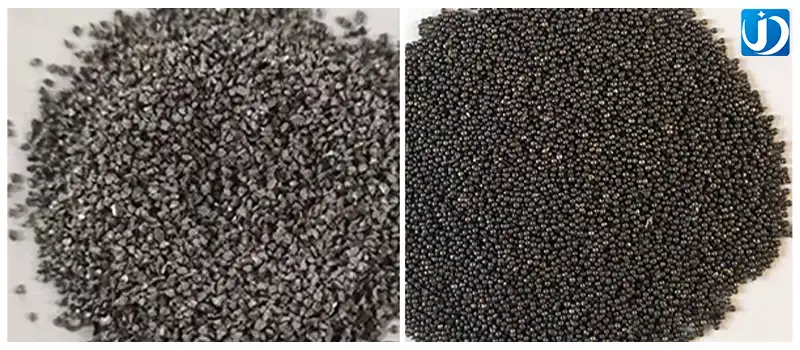
There is a lot of damage done when a round particle hits something. A sharp particle focuses the same amount of energy on a small point. This raises the stress in the area and breaks up thin layers of brittle scale. The edge then pulls the plates away from the steel. After being heated and made stronger, steel shot is broken up so that the ends are sharp. This is how you make cast steel grit. If you cut high-carbon steel with 0.85 to 1.20 percent carbon and a tempered martensite structure, the pieces are tough enough not to break but hard enough to cut. The grit breaks up into smaller, sharper pieces as it wears away. This keeps the cutting going even after a lot of hits. This makes getting rid of scales go more quickly and makes the surface smooth and sharp.
Steel Grit Compared with Steel Shot, Garnet, and Sand
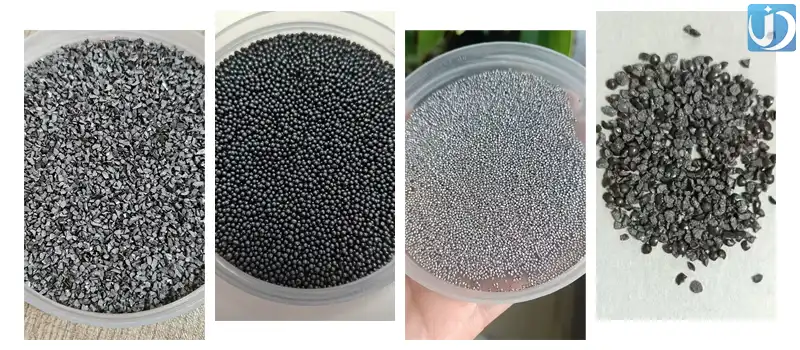
Steel shot is good for finishing and light cleaning because it fits into a round shape and can be peened. However, it cuts scale slowly. This kind of steel grit cuts faster and leaves bumps and deep grooves that coats stick to. A lot of people who clean surfaces do it this way to get the best cleaning and appearance. Every piece of garnet is less powerful because it is a mineral and not steel. It can't be used over and over again. Sand gives off silica dust and is light and easy to break. Cast steel grit can only take about 1,500 to 3,000 hits before it breaks. It is still used a lot, though. The material is kept from being used too much on a large scale by being recycled.
Junda Machinery Steel Grit and Where It Works
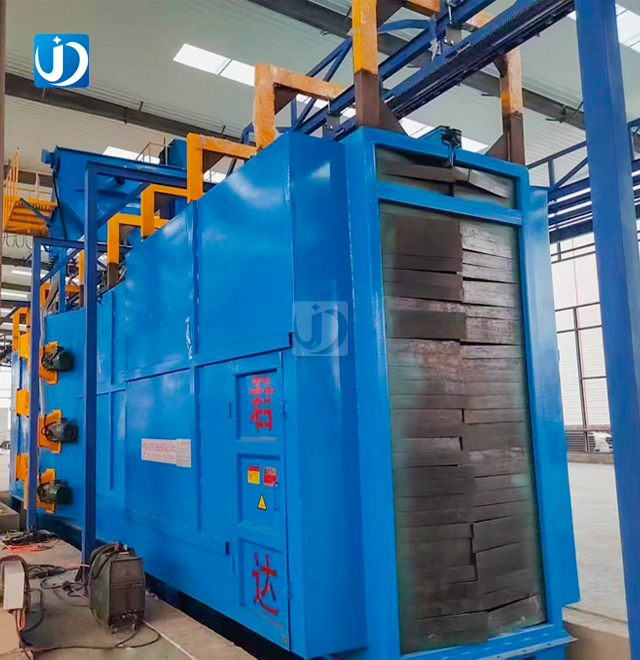
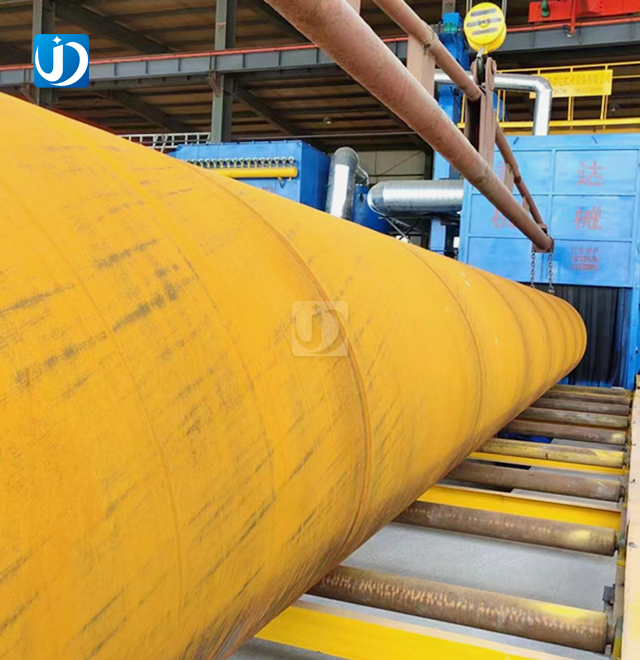
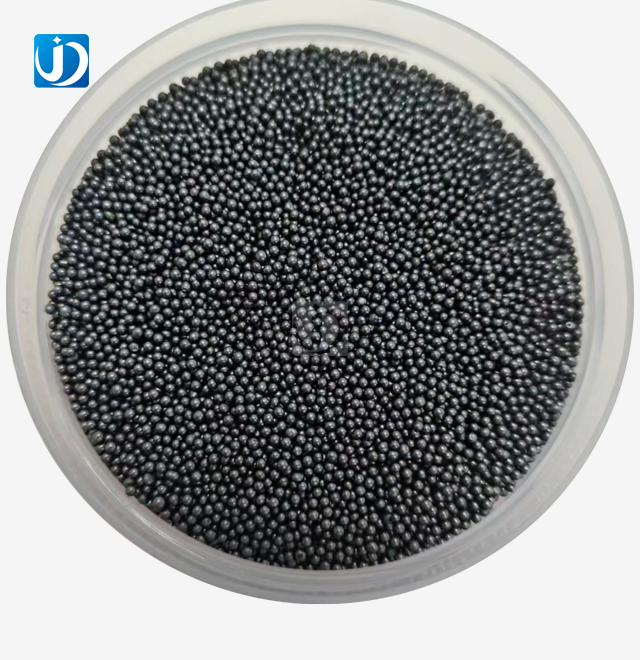
Cast steel grit that meets SAE J444 standards is sold by Junda Machinery. Most people choose the G25 and G40 types. Standard hardness is between 45 and 55 HRC, and high hardness is between 58 and 65 HRC. Particles in 16 grades range in size from 0.1 mm to 2.5 mm. Big bags that hold 1,000 kg or 25 kg of grit are used to store it. Grit is often used to fix up ocean platforms and bridges by getting rid of old paint and deep rust. It's also used to get pipeline coats ready for fusion-bonded epoxy and to get rid of scale in foundries or forges, where bits of metal can become complex shapes. We can make sure that the grit grade works with what you have because we also make shot blasting tools and dust catches.

Tuning Your Steel Grit Blasting Process for Better Oxide Scale RemovalMatch Grit Grade and Size to the Surface
Figure out the size and type of people you want to reach first. For thick, tight scale and heavy rust, you need a harder grade like G25 because bigger pieces have more force when they hit something. There is a range of G40 or less if the scale is thin or the outline is tight. There are many coating requirements that say the roughness must be between 40 and 80 μm. Make sure you know what they are before you place your order. For bigger grit, it can leave peaks that show through the paint and need more paint to cover them. Many times, a mix of particles of different sizes works best. This is because big particles break up scale better, while small particles make covering better. This test and an ISO 8503 profile check will help you choose the right one.
Set Equipment Parameters and Keep the Mix Clean
It can only work well with a machine that throws grit. For most jobs, the air pressure at the nozzle should be around 100 psi. To break up brittle scale, keep the distance between you and the tip firm and close to straight on. Coverage and wear are controlled by how fast the wheel is turning, how fast the abrasive flows, and how the blast is designed. In both systems, the air-wash separator should get rid of dust, small pieces of scale, and grit that is too small. This will keep the work mix the same. Fines stay out of the circuit and the view is kept safe by a dust catcher. Check the divider and the mix before you say the grit is to blame for how slowly the house is cleaned.
Protect Operators and Verify the Result
Abrasive blasting makes noise, dust, and moving things, so people should be kept safe first. According to OSHA rules, the work area needs to have enough air flow and be able to control dust. Workers also need to wear approved supplied-air respirators, hearing protection, and the right safety gear. When the surface is clean, like SSPC-SP 10/NACE No. 2 or ISO 8501-1 Sa 2½, compare it to a cleaning grade. Then, use copy tape or a comparator to measure the area. Note down the grit grade, the work mix, and the settings that worked. The notes make setting up the next job go faster and make it easy for inspectors to find their way if they have a question.
Sustainable Practices: Steel Grit Recycling and LongevityHow Steel Grit Recirculates in a Blast System
The grit hits the part, bounces off of it, and goes into a repair system in a closed-loop machine. A divider that cleans the air gets rid of dust, scale, and broken pieces. The grit that can be used is then sent back to the storage bin. Because each hit breaks them down, cast steel grit only needs 1,500 to 3,000 hits to break down into fines that the separation can remove. When it comes to heavy-duty abrasives, this cycle can save you money because you only have to replace the worn-out material instead of the whole charge.
Replenish in Small, Steady Additions
It's important to keep adding to a stable work mix. Add small amounts of new grit often instead of big bits every once in a while. The size range will stay close to the goal this way. It changes the surface appearance and how fast it cleans when big and small bits move around a lot. Every once in a while, use a screen to see if the mix moves. If the grit breaks down a lot faster than expected, ask the supplier for hardness and microstructure reports. A lot of the time, bad heat treatment will show you what went wrong. To plan, 0.15 to 0.4 kg per square meter is a good range, but the real range will depend on the scale, grade, and machine.
Environmental and Operating Benefits
It takes less work and less trash to throw away after each job when you use steel grit instead of mineral media that you only use once. Also, metallic grit doesn't have any crystalline silica, which means it doesn't have one of the biggest dust problems that comes with sand. It's easier to move and store things when arrivals aren't as rough. Since Junda Machinery makes tools for getting rid of industrial dust, we plan the side that blows dust away with just as much care as the side that moves it around. There will be less trash, more steady mixes, and cleaner air, and output plans can still be met. When blasting is done every day in heavy manufacturing and steel structure work, this is especially true.
Procurement Guide: How to Source High-Quality Sharp Steel Grit?
Verify Standards and Test Reports
Fill out the forms first. For a wide range of sizes, good steel grit should meet SAE J444. ISO 11124-3 is also looked at by many people who want to buy high-carbon cast steel shot and grit. You should ask for a batch report that has the science make-up, the Rockwell C hardness, and a screen analysis. Check with the source to see if they look for cracks, holes, or too much leftover austenite in the microstructure. Any of these things can cause the material to fail early. It's just as important that the second batch of G25 is the same as the first one. The surface shape will change if two lots of G25 are either rougher or smoother than the other. This can make it hard to meet specifications. You shouldn't just compare one shipment report.
Assess Supplier Capability and Packaging
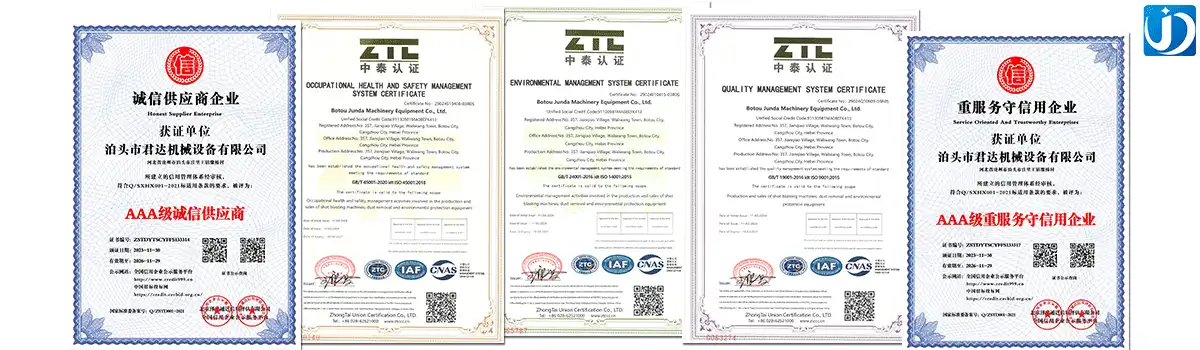
Providers should talk about how they keep quality high. ISO 9001, ISO 14001, and ISO 45001 have all been given to Botou Junda Machinery Equipment Co., Ltd., which has been making shot blasting gear for 20 years. They are able to send test results and technical papers. Be just as careful with the boxes. If you keep wet grit in a damp place, it can rust and stick together. To avoid this, find strong 25 kg weave bags or 1,000 kg bulk bags with strong pulling loops and moisture protection. Junda Machinery can also print under your own brand name, and you can talk to them about sending different grade levels in the same package. Bags should be kept off the ground and on shelves somewhere dry.
Plan Orders, Freight, and Lead Time
It's important to keep in mind that freight costs can add up if the grit is heavy. You should compare more than just the original price when you get quotes. Look at how much it costs to send as well. A 20-foot barrel can hold about 25–27 tons of grit, which is enough for a first test order. Before you buy, get a 25 kg sample and do a test blast to see how fast the material cuts and how much of it you need compared to the abrasive you're already using. Junda Machinery ships full containers and loads that aren't big enough to fit inside a container with the help of foreign freight forwarders. The people on our team can help you with export paperwork, origin certificates, and shipping boxes that are safe for the ocean. Set aside extra supplies based on when you're busy so that a late ship doesn't stop work.
Conclusion
When the rough mill scale hits something that can't cut it, the oxide scale slowly comes off. When rough or grainy media hit the surface, the check is more likely to fail, take longer to run, and cause more equipment wear. Sharp steel grit fixes the issue because it is made up of angular, heated particles that make contact, remove scale, and leave a surface that is ready to be coated. It's still important to pick the right grade and size, make sure the work mix is clean, set up the machine correctly, and keep the operator safe. It is important to keep adding more grit and sorting it well so that performance stays steady and loss is low. This is because grit goes through a blast system more than once. Before you buy something, make sure it meets standards, has good packaging, and that you know how much freight costs once it's shipped.
FAQ
What is the difference between steel grit and steel shot?
Steel grit is very sharp and quickly cuts through scale. It takes longer to clean steel shot because it scratches the surface because it is round.
How do I choose between G25 and G40?
G25 is rougher and works best on thick scale or heavy rust. G40 is finer and works best for profiles or scales that are thinner. Test your pick with a blast.
Can I use carbon steel grit on stainless steel?
Yes, carbon steel grit does leave behind iron that can rust stainless steel. Take out the iron and use media made of stainless steel or something else.
Why does my steel grit break down too fast?
If the heat treatment is bad or the microstructure is weak, it's likely to happen. Check the wheel's speed or air pressure and get feedback on how hard and rough it is.
How often should I add new grit?
Depending on how quickly you use it, add small amounts often. Check the work mix with a sieve every so often to make sure it stays on track.
Speed Up Descaling with Steel Grit from Junda Machinery
Junda Machinery sells cast steel grit in SAE J444 types G25 and G40. You can buy it in 25 kg bags or 1,000 kg large bags. If you want to buy steel grit from a company that also makes shot blasting machines, email junda001@jundablast.com with your scale conditions and target profile. We can give you a grade and set up a test blast for you. Visit jundablast.com for more details.
References
1. Corrosion Costs and Preventive Strategies in the United States, NACE International and Federal Highway Administration, 2002
2. SAE J444 Cast Shot and Grit Size Specifications for Peening and Cleaning, SAE International, 2018
3. SSPC-SP 10/NACE No. 2 Near-White Metal Blast Cleaning, AMPP, 2007
4. ISO 8501-1 Preparation of Steel Substrates Before Application of Paints and Related Products, ISO, 2007
5. ISO 8503-1 Surface Roughness Characteristics of Blast-Cleaned Steel Substrates, ISO, 2012
6. Occupational Exposure to Respirable Crystalline Silica, OSHA, 2016

USER EVALUATE
Real feedback and practical experience shared by worldwide partners who purchased our machinery and environmental treatment devices.