
Baghouse vs Cartridge Dust Collector: Which to Choose?
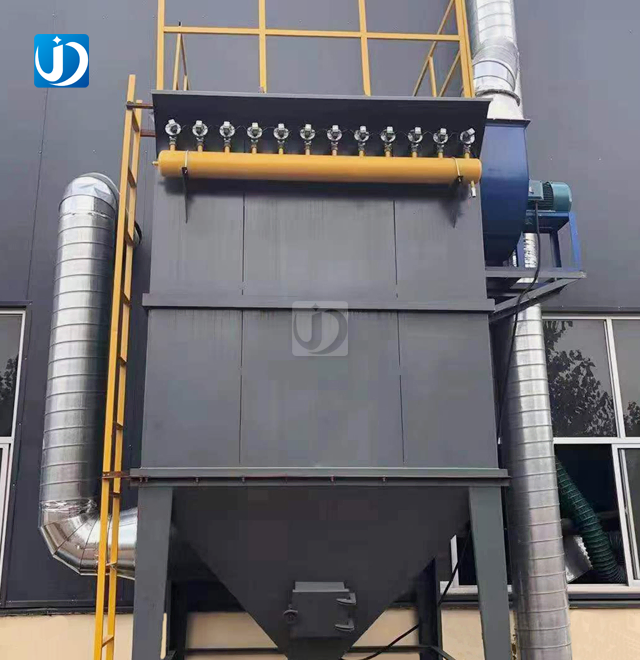
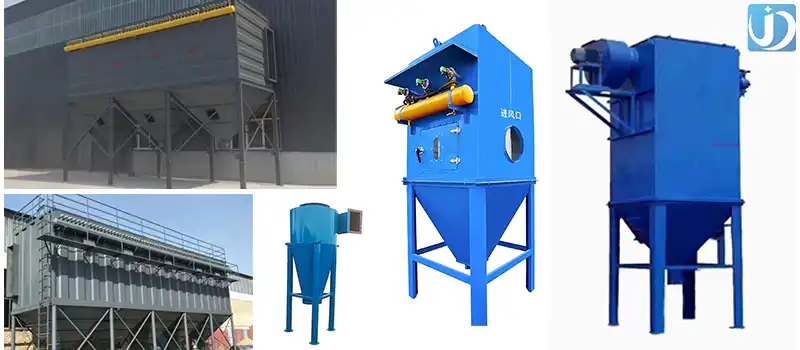
A baghouse dust collector collects industrial dust with long fabric filter bags, whereas a cartridge dust collector uses media that is pleated and packed into a smaller housing. This guide compares both technologies by looking at real project data from steel, foundry, and building materials plants.
What Is a Baghouse Dust Collector and How Does It Work?
A baghouse dust collector cleans the air in a factory by forcing dusty air through fabric filter bags. It's not a wet scrubber or a cyclone separator; it only gets rid of solid particles in a gas stream. However, plants that work with smells or gasses still need to scrub them or treat them with carbon separately. Fabric filters can catch more than 99% of fine particles when they are the right size, according to the EPA (2023). They are one of the best ways to keep industrial sources of particulate matter under control.
Baghouse Dust Collector Definition and Scope
How well it works depends on four things: the type of filter media used, how fast the air flows, how much dust is in the system, and how often it is cleaned. It won't matter if a plant buys the right size housing or not; it will fail emission tests anyway. This is the mistake we see most often: a factory used an old design from a different dust source and then tried to fix it.
Industrial Baghouse Dust Collector Working Principle
There are five steps to the process. This housing gets dusty air through a tube that goes into it. Things that are heavy are pushed into the hopper by gravity before they reach the bags. Little bits of fine dust settle on top of the bag over time, making it work better. Clean air flows through the fabric and out of the hole. If you use pulse-jet or reverse-air to clean the cake, it is pushed into the hopper at a certain time or when you press down on it.
Main Baghouse Dust Collector Components
When it comes to dependability and service life, these are the main parts that matter:
- Housing and chambers isolate the dirty-air zone from the clean-air zone and prevent fine dust from circumventing the bags via gaps or worn gaskets, a major cause of failed stack tests during third-party emission verification.
- Filter bags, cages and tube sheets sustain the fabric structure during filtering and can bear repeated pulse-cleaning pressure without ripping, sagging or chafing against the metal support cage for thousands of cleaning cycles.
- The valves’ quality determines how many cleaning cycles the system can do before repair is required. Short bursts of air released from pulse valves and the compressed-air manifold flex the bags and release the dust cake.
- The accumulated dust is continually moved out of the system by a hopper and discharge device such as a rotary valve or screw conveyor eliminating bridging or accumulation which may restrict airflow and elevate differential pressure.
- Differential-pressure gauge and PLC controller provide real-time monitoring of filter loading, automatically starting cleaning cycles, and providing operators advance notice of when pressure drop reaches a level that compromises airflow or emission compliance.
All of these parts work together. You should check out more than just the filter bag specification sheet to get a sense of the supplier. One example is that even good filter bags can fail early if the pulse valve is not strong enough.

What Is a Cartridge Dust Collector and Where Does It Excel?
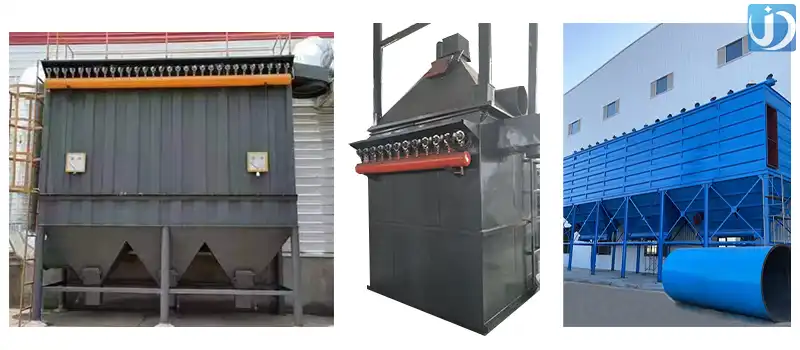
In the same footprint, a cartridge dust collector has a lot more filter surface area per cubic meter than a traditional baghouse dust collector. This is because it can fit many pleated filter elements into a small space. It's a good choice for plants that don't have a lot of room on the floor or in the ceiling.
Cartridge Dust Collector Definition
The pleated design keeps the unit small while making the filtration area bigger. There may be a better way to get the airflow you need in your workshop if you have a small mechanical room and only need 3,000 to 8,000 m³/h. That's also better because the cartridges can be put in and taken out from the front or top, rather than having to go inside the housing.
Typical Cartridge Collector Applications
Cartridge collectors work well in a number of common situations, such as:.
- Welding fume extraction benefits from compact cartridge units placed close to the source, capturing fine metal fume before it spreads across the shop floor and affects worker breathing zones.
- Laser and plasma cutting booths generate fine, dry particulate that pleated media captures efficiently without the bulk of a full baghouse installation in a space-constrained fabrication shop.
- Pharmaceutical and food powder handling often requires cartridge systems with washable or easily replaceable elements to meet hygiene and cross-contamination control standards.
- Centralized extraction in small-to-medium workshops uses multiple cartridge units feeding one duct network when ceiling height or structural load limits rule out a tall baghouse housing.
When a Cartridge Collector May Not Be Suitable
There are real limits to what cartridge media can do. When comparing a cartridge collector with a baghouse dust collector for grinding or shot blasting applications, consider how quickly heavy and abrasive dust can accumulate. Pleats keep large particles in their folds when they're cleaned, so they don't go away. Normal cartridge parts will bend or melt if the high-temperature gas gets too hot for the media. Disks that are pleated wear out much faster than bags when they are exposed to dust from sand, metal grit, or mineral processing. The pleats can't see through a $2,000 cartridge after a few weeks because the dust is too wet or sticky.
How Do Baghouse and Cartridge Collectors Differ in Filtration Efficiency?
High capture rates are seen in both technologies, but the number doesn't mean much if there aren't any tests to compare it to.
Filtration Efficiency Comparison
The filtration efficiency of a baghouse dust collector depends on particle size distribution, air-to-cloth ratio, filter media selection, and how effectively the access doors and tube sheets are sealed. A collector may say on the manufacturer's datasheet that it works at 99.9% efficiency, but if the duct velocity is off or the door gasket is worn, it might only reach 97% efficiency in real life. There have been plants where all the equipment met the standards, but a failed stack test was due to a single access door that leaked.
Baghouse Dust Collector Efficiency Comparison Table
| Evaluation factor | Baghouse collector | Cartridge collector |
|---|---|---|
| Filter medium | Woven or felted bags | Pleated media cartridges |
| Fine-dust performance | Strong with membrane bags | Strong at moderate loading |
| High dust loading | Well suited | Loads faster, needs pre-separation |
| Airflow scalability | Strong for large plants | Often modular, space-limited |
| Pressure-drop behavior | Stable with proper cleaning | Rises quickly if media blinds |
| Temperature flexibility | Broad with suitable media | Limited with standard media |
| Maintenance access | Larger door/walkway needed | Compact front-load access |
Test Methods and Emissions Verification
There should be a record of the operating temperature, the differential pressure, the airflow rate, and the amount of dust coming into and leaving the plant when the plant is ready for an environmental inspection. You can still use EPA Method 5 to check for particles at fixed sources in a lot of places (EPA, 2017). EN 13284-1 is used to test low-level dust concentrations in the European Union (CEN, 2017). If the reading for emissions changes over time, it is easier to do another inspection since these records are already kept.
Which Collector Handles High-Temperature and Abrasive Dust Better?
They are not at all the same when it comes to heat and wear.
Temperature and Chemical Compatibility
The filter media selected for a baghouse dust collector determine its ability to withstand high temperatures and chemical exposure.
- Polyester felt handles general dry dust below roughly 130°C and costs the least, making it the default choice for machining and general metalworking dust.
- Aramid media tolerates higher operating temperatures common in kiln or furnace exhaust but needs checking against moisture-related hydrolysis risk before final selection.
- PTFE membrane or felt resists fine-particle penetration and chemical attack, often selected for ultra-low emission projects where the outlet limit sits near 10 mg/m³.
- Fiberglass media supports high-temperature service in cement and metallurgy applications but is more brittle and sensitive to rough handling during bag changes.
The exact highest temperature that can be used is always found by comparing the media manufacturer's data sheet to the real gas conditions. This is not something that everyone in the industry thinks about.
Abrasive Dust and Mechanical Protection
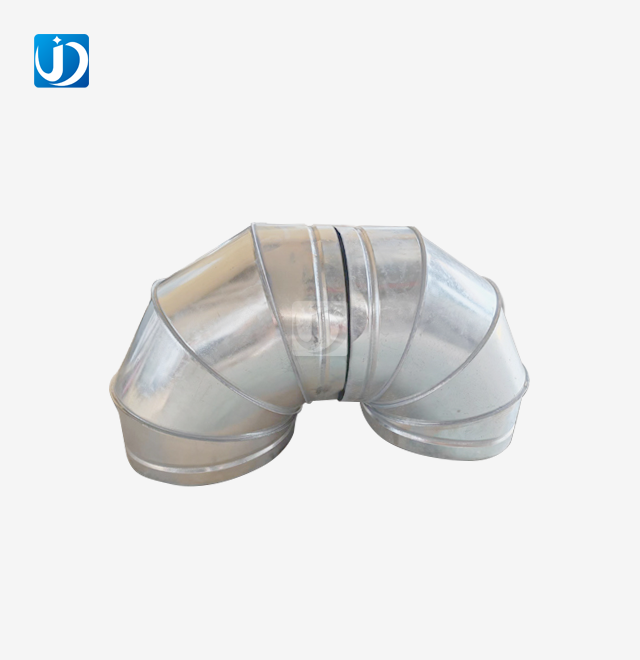
A bad intake design on a baghouse dust collector may cause steel shot, mill scale and grinding dust to swiftly erode the filter media and internal components. Slower entrance rates, intake baffles and wear resistant elbows retain the housing and bags in place for longer. Pre-separation is a simple baffle chamber to send the heavier particles away before they reach the cloth. This means the bag lasts much longer in foundries and shot blasting.
Combustible Dust and Process Safety
Before you choose a system, determine whether the dust is combustible, if sparks might get into the collector, and if NFPA 660 or local codes require explosive venting, isolation valves or grounding (NFPA, 2020). People who are in a rush to achieve compliance requirements frequently skip this stage however it should not be done in a hurry.
How Do Footprint and Installation Requirements Compare?
You need to plan your space to see which technologies will work best on your site before you can compare prices.
Space and Layout Requirements
A baghouse dust collector typically requires more vertical clearance and a stronger structural platform to accommodate long filter bags and provide sufficient space for maintenance access. This is because they are taller. You can mount these units closer to the process and they are shorter. This makes the duct shorter and the fans less busy. It's not enough to just look at a general equipment drawing to make sure that the building layout matches the hopper clearance, dust discharge arrangement, and filter room door swing space.
Airflow, Ductwork, and Fan Sizing
You need to enter airflow (in m³/h), duct velocity, number of pickup points, static-pressure losses, filter area, and fan motor power. A big baghouse dust collector will cost more and not work as well because air moves more slowly through each bag.
Which System Has Lower Filter Replacement and Energy Costs?
It's not enough to know how much something costs to buy it. The long-term cost is based on how long the filters last and how much energy they use.
Filter Replacement and Maintenance Cost Drivers
Several things affect the total cost of replacement, not just the price of the filter:.
- Element service life varies widely by dust type, with abrasive mineral dust cutting filter life roughly in half compared to dry, non-abrasive dust under the same airflow conditions.
- Replacement labor and access time differ between systems, since cartridge swaps often take minutes per element while bag changes in a tall baghouse may require scaffolding or a lift platform.
- Downtime during replacement matters most for plants running continuous shifts, where compartmentalized baghouse design lets technicians isolate one section while the rest keeps filtering.
- Local spare-parts availability affects how fast a plant can recover from a failure, since imported non-standard filter sizes can leave a system offline for weeks while parts ship from overseas.
Energy Consumption and Pressure Drop
The fan needs more power when the system pressure drops, the filter is full, or there is a leak. The pressure drop stays steady and the fan doesn't have to work too hard when the pulse-cleaning schedule is just right. When you look at total ownership costs over three to five years, lifecycle cost models always show that the biggest part of the total cost of ownership in continuous-duty plants is not the purchase price, but the cost of energy and filters.
Case Study: Steel Foundry Cuts Filter Costs After Baghouse Upgrade
A moderately sized steel casting plant in Hebei Province didn't have a water-spray dust system that could meet the 10 mg/m³ regional ultra-low emission limit in time for an environmental check. Junda Machinery engineers found out how much dust the shot-blasting line really made. They then made a custom baghouse dust collector with PTFE membrane bags and online pulse cleaning that could handle 18,000 m³/h.
After the installation, a test by a third party showed that the outlet's concentration dropped from 46 mg/m³ to 7.8 mg/m³. Over the course of 30 days of monitoring, filtration efficiency was found to be 99.92%. Since each part of the plant was pulse cleaned without stopping the shot blasting line, the production didn't have to stop for longer than the three days planned for the changeover. The filter bags lasted 2.4 years, which is longer than the 10–14 months that the plant's previous supplier said they would last for standard felt bags that collected the same kind of dust. It saved the business about 35% of what it would have spent on new filters every year. The plant passed the first time it was checked for environmental damage. This kept production from stopping for two months, which is what the director of environmental protection had said would happen.
Fine Dust vs. Coarse Dust: Which Collector Type Suits Each?
A lot of the time, the size of the dust particles makes it easy to tell the difference between the two.
Fine-Dust Applications
It will work well with tobacco smoke, drug powder, pigment, and fine mineral dust if you pick the right filter media. High-efficiency cartridges or bags treated with a membrane will both work in this case. Not the size of the dust particles but also how they move and conduct electricity are what matter.
Coarse, Heavy, and Abrasive Dust
It puts more mechanical stress on the filter media when it comes to wood chips, cement dust, foundry sand, and dust from moving bulk materials. Most of the time, a baghouse dust collector works better in this situation because it has more surface area and a bigger hopper, so it can handle heavy dust bursts without the pressure spikes that pleated cartridge media often shows.
Application Decision Matrix
| Application condition | Usually preferred starting point | Key verification |
|---|---|---|
| High airflow, heavy dust load | Baghouse | Air-to-cloth ratio, hopper size |
| Compact installation | Cartridge | Service clearance, pressure drop |
| High temperature | Baghouse with suitable media | Peak gas temperature |
| Very fine dry dust | Cartridge or membrane baghouse | Media efficiency |
| Abrasive dust | Baghouse | Inlet wear protection |
| Combustible dust | Engineered system | Explosion risk assessment |
How Does Pulse-Jet Cleaning Differ Between Bags and Cartridges?
It is used to get rid of dust in both systems, but the geometry changes how well it cleans.
Pulse-Jet Baghouse Operation
Through a venturi, a short burst of compressed air is sent into each bag. When you do this, the fabric is bent outward, and the dust cake falls into the pan below. Some of the settings that can be changed are the pulse pressure, pulse duration, timing of the intervals, and the setpoint for differential pressure that starts the next cleaning cycle. When Junda's connected shot-blasting cycle is going on, the baghouse dust collector units keep running and don't stop. They can do this because they are split up into sections that clean one area at a time.
Cartridge Pulse-Jet Cleaning
Even though the air pulse that hits the cartridges is the same, the pressure is spread out unevenly across the folds because of the way they are shaped. Deep pleats near the center cartridge can get clogged with dust and be hard to clean, even if the pleats on the outside are easy to remove. To make up for it, over-pulsing wastes compressed air and can over time change the shape of the cartridge, which means it doesn't last as long as it would if it were cleaned properly.
What Maintenance Skills and Downtime Does Each System Need?
Which system still works at the level that was recommended a year after it was installed depends on how often it is serviced.
Baghouse Dust Collector Maintenance Checklist
A baghouse dust collector requires several daily checks, including differential pressure, fan vibration, compressed air pressure, and hopper discharge. Every month, the access door seals, pulse valves, and rotary valves are all checked. To avoid extra downtime, the plant should only be shut down for maintenance once a year or as planned. During that time, the condition of the bags, the alignment of the cages, the cleanliness of the tube sheets, and the calibration of the instruments should all be checked.
Cartridge Collector Maintenance Checklist
As part of their maintenance, cartridges need to have their pleats checked, their ends sealed, all of their parts pulsed, and any sparks or hot particles that come in from welding or grinding dust blocked. Most of the work that needs to be checked or replaced can be done from the outside, since the elements load from the front. When compared to changing bags in a tall baghouse chamber, this makes being in a small space less dangerous.
Planned Downtime and Safety Controls
For workers to change filters, they need to be locked out, tagged out, and cut off from the fan and machine power. The dust-release controls must be set off and the right safety gear must be worn when the bag or cartridge is taken out. When people skip these steps during a rushed filter swap, they often get hurt in dusty workshops. It's better to write down the steps than to try to remember them.
How to Decide Between Baghouse and Cartridge for Your Plant?
You shouldn't compare different kinds of equipment to make your choice. Instead, you should use measured data from your own process.
Baghouse vs. Cartridge Decision Checklist
Before you ask for a quote, you should think about the volume of air that needs to flow, the size and type of the dust, the gas temperature and moisture, chemical exposure, abrasive behavior, the risk of fire, the required emission limit, the floor space you have, how you will get to the filter, your energy goal, and the paperwork you need for certification. A baghouse is likely to be chosen by a plant that needs to meet an ultra-low emission limit of 10 mg/m³ for abrasive foundry dust. A workshop that needs to deal with dry welding fume but doesn't have a lot of floor space, on the other hand, might choose a cartridge system.
Supplier Capability and Evaluation
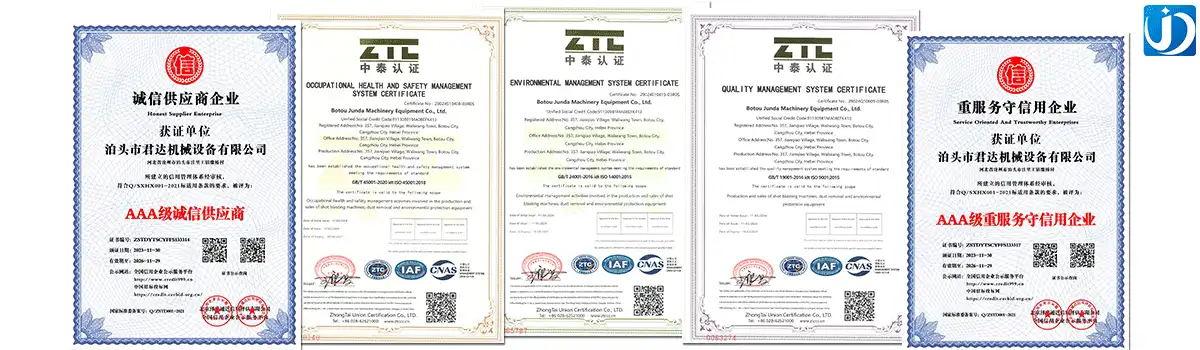
If you want to judge a baghouse dust collector manufacturer, use facts instead of marketing speak. Check with people in your field about past projects, get factory inspection reports, keep track of the filter media's documents, and get test results from a third party that show how airflow and pressure drop. Junda Machinery has ISO 9001, ISO 14001, and ISO 45001 certifications, and they provide full technical drawings and operation manuals. They also help with translating CE files for projects that are sent abroad. A standard custom unit is shipped in about 15 days, and our engineering team answers technical questions in 6–8 hours to make sure your environmental project stays on track.
Compliance and Procurement Documents
Before you sign a purchase order, you should verify the materials, get filter media datasheets, a report on the factory inspection, test results for airflow and pressure drop, and if needed, a declaration of conformity. If you want to sell your project in the EU or another country, make sure it meets the CE marking rules for machinery and the ATEX coverage rules for flammable dust (European Commission, 2014). These papers will protect your plant while it is being checked for problems with its environment after it has been put in place.
Conclusion
For steel, foundry, cement, and chemical plants with a lot of airflow, dust, rough particles, and high-temperature gas streams, a baghouse dust collector is still the best choice. A cartridge collector, on the other hand, works better when there isn't much room on the floor because the dust stays fine and dry. Other things that matter are the dust, airflow, temperature, pressure drop, emission limits, explosion risk, lifecycle cost, and how much documentation your supplier can give you. If a factory needs to meet a compliance deadline, the best thing they can do is measure their own dust profile and then match the technology to that.
FAQ
What is a baghouse dust collector?
In the business world, a baghouse dust collector is a way to clean the air by collecting dust in fabric bags. The bags keep filtering at a steady level because every so often they go through a cleaning cycle that gets rid of the dust cake.
What is the difference between a baghouse and a cartridge dust collector?
Long fabric bags are used in a baghouse, which works best when there is a lot of dust and air flow. The media inside a cartridge collector is pleated and fits inside a smaller housing. It works well in places with little floor space and dry, fine dust.
Is a baghouse better than a cartridge collector for fine dust?
If the right filter media and airflow are used with the right type of dust, both can get rid of fine dust well. Which choice is best depends on how much dust there is, how hot it is, how wet it is, and the emission limits your plant has to meet.
What type of dust collector is best for a steel or cement plant?
Most of the time, a baghouse dust collector is chosen in steel, cement, and foundry plants because it can handle rough mineral dust and high airflow better than pleated cartridge media in the same situations.
How often should baghouse filter bags be replaced?
Differential pressure and outlet emissions readings should be kept. This is a better way to know when to replace the bags than a set date on the calendar.
Does a baghouse require explosion protection?
Some types of dust can catch fire, and you may need explosion venting, isolation valves, or grounding to keep them from spreading. This should be confirmed by a formal test for dust explosions and risk assessment before it is put in place.
Get a Baghouse Dust Collector Quote Before Your Next Inspection
If you wait too long to size a new system, your plant could fail an environmental inspection or run out of time for an emission permit deadline. This could mean that production is limited. In Botou, Hebei, there is a business called Junda Machinery that makes baghouse dust collectors. They make custom systems for chemical, foundry, steel, and foundry plants all over Asia. To back this up, they have full technical documentation and ISO 9001 certification. Send an email to junda001@jundablast.com with your emission goal, dust type, and airflow. In 6–8 hours, our engineering team will get back to you with a size suggestion.
References
U.S. Environmental Protection Agency, Fabric Filters — Air Pollution Control Technology Fact Sheet, 2023.
U.S. Environmental Protection Agency, Method 5: Determination of Particulate Matter Emissions from Stationary Sources, 2017.
European Committee for Standardization (CEN), EN 13284-1: Stationary Source Emissions — Determination of Low Range Mass Concentration of Dust, 2017.
National Fire Protection Association, NFPA 660: Standard for Combustible Dusts and Particulate Solids, 2020.
European Commission, Machinery Regulation and ATEX 2014/34/EU, 2014.
ASTM International, ASTM D737: Standard Test Method for Air Permeability of Textile Fabrics, 2018.
About the Author
James Chen is an Industrial Dust Removal Engineer with field experience sizing and commissioning baghouse and cartridge dust collection systems for steel, foundry, and building-materials plants across Asia. His work focuses on matching filter media and airflow design to ultra-low emission targets while keeping production downtime to a minimum during installation and filter replacement.

USER EVALUATE
Real feedback and practical experience shared by worldwide partners who purchased our machinery and environmental treatment devices.