
Blast Wheel: Amps, Hot Spot and Wear Parts
A blast wheel is the rotating heart of any centrifugal shot blast system. It accelerates abrasive media — steel shot, steel grit, or cut wire — at high velocity and directs it onto a workpiece surface to clean, strengthen, or profile the metal. Because these wheels spin continuously under heavy abrasive load, three technical factors determine whether your system runs efficiently or bleeds money: amperage draw, thermal hot spots, and the condition of rotating wear parts. Understanding all three is how serious procurement teams protect equipment uptime and reduce lifecycle cost.
Understanding Blast Wheel Amps and Their Impact on Performance
Amperage is one of the clearest real-time indicators of blast wheel health. When you know what normal amp draw looks like on your machine, deviations tell you something is wrong before a failure occurs.
What Amp Draw Actually Measures
The motor driving a blast wheel draws current proportional to the mechanical load it carries. A standard blast wheel motor typically operates between 30 and 75 amps depending on wheel diameter and abrasive flow rate. If amp readings climb above the rated range, the wheel is working harder than it should — often a signal of worn blades creating imbalance, clogged abrasive feed, or bearing degradation.
Common Causes of Amp Fluctuations
Several conditions shift amp readings away from baseline. Blade wear changes the mass distribution of the wheel and increases vibration load on the motor. Incorrect abrasive feed volume — either too high or too low — pushes the motor out of its efficient operating band. A worn control cage that misroutes abrasive flow also forces the motor to compensate, which shows up as erratic amperage spikes during production.
Monitoring Amperage Effectively
Installing an inline amp meter or integrating current monitoring into a PLC gives maintenance teams a continuous data feed. Junda Machinery's proprietary shot blasting machine Data Acquisition and Analysis System logs amp trends over time, so engineers can spot gradual drift rather than reacting only to sudden failures. Tracking amperage weekly against a baseline reading taken after the last blade set replacement gives procurement managers clear, objective data to schedule maintenance rather than guess.
Identifying and Managing Hot Spots in Blast Wheels
When heat builds up in a blast wheel assembly, parts wear out faster than when they are just worn down by abrasion. If you don't fix thermal damage to bearings, hubs, and blade seats, you may have to repair them twice as often.
How Hot Spots Form
When friction builds up in one part of the wheel assembly, hot spots form. When bearings aren't lined up right, blades aren't balanced, or grit is packed around a blade guard, heat is generated in one area. According to a study released in the Journal of Tribology, bearing temperatures above 80°C speed up the breakdown of grease and cut the expected life of the bearing by up to 50%.
Detection Methods That Actually Work
For field workers, thermal imaging cameras are still the most effective way to find things. It takes less than two minutes to do a single infrared scan of a running wheel, which accurately shows how the temperature changes across the assembly. The Intelligent Shot Blasting Machine Management and Control System from Junda uses sensor-based monitoring that is built into the bearing housings to send out constant alerts and connect directly with plant control systems.
Maintenance Strategies to Prevent Thermal Damage
As soon as a trouble spot is found, the steps to fix it are clearly laid out. First, turn off the machine and check the blade set for broken or unevenly worn blades. Second, check the preload and lubrication of the bearings. Third, check that the grit feed is symmetrical through the control cage. Instead of just changing the bearing, getting to the root of the problem at this level stops it from happening again in the same production cycle.
Wear Parts of Blast Wheels: Types, Lifespan, and Replacement
Wear parts are the parts that break down over time and are directly hit by abrasive media. The quality of the blasting and the total cost per hour are both affected by the type of material used and how often it needs to be replaced.
Key Wear Parts and Their Functions
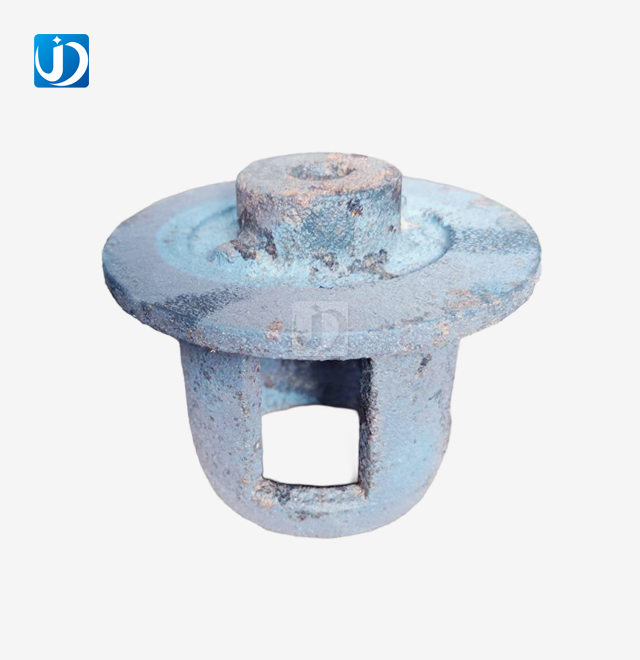
In a blast wheel assembly, the blades, control cage, impeller, and liner plates are the main parts that wear down when they rotate. Blades move abrasive faster and wear out the fastest. The control cage tells the rough stream to go in the right direction for a blast pattern. The agitator evenly sends the grit from the feed spout to the blades. Liner plates keep the wheel hub safe from grit that gets out of the blast zone.
How Material Grade Affects Service Life?
Standard cast iron blades and high-chromium alloy blades are very different from one another. When used continuously, standard gray iron blades last about 200 to 400 hours. High-chromium cast iron blades, which have 18% to 27% chromium, usually last 800 to 1,200 hours in the same use. Junda Machinery sells blast wheel blades in two grades and a variety of models that work with most OEM platforms, such as the 034, Q034, and Q030 configurations. Just choosing the right grade can cut the cost of blades every year by 40% to 60%.
Replacement Scheduling and Cost Impact
Here are some useful factors that repair teams use to decide when to replace blades:
- Blade thickness gauge readings drop below the manufacturer's minimum specification, typically 30% of original thickness.
- Amp draw increases more than 10% above the post-installation baseline without a change in production volume.
- Visible blade chipping or cracking observed during routine visual inspection.
These checkpoints give procurement teams objective replacement triggers instead of guesswork based on the calendar. Using measured criteria lowers the risk of both catastrophic failure and wasteful replacing before it's time.
Comparative Overview: Blast Wheel Components and Market Solutions
There is a wide range of blast wheel wear parts on the market, from cheap generic cast parts to well-balanced assemblies with proven performance data. The difference is important for operations.
Limitations of Generic Wear Parts
Generic blades that aren't dynamic balance certified cause vibrations from the first hour of use. A blade set that isn't balanced properly raises the load on the bearings, shortens the life of the housing divider, and causes more current to flow through it over its entire life. These costs later on usually add up to more than the initial price savings in the first replacement cycle.
What to Look for in a Quality Supplier
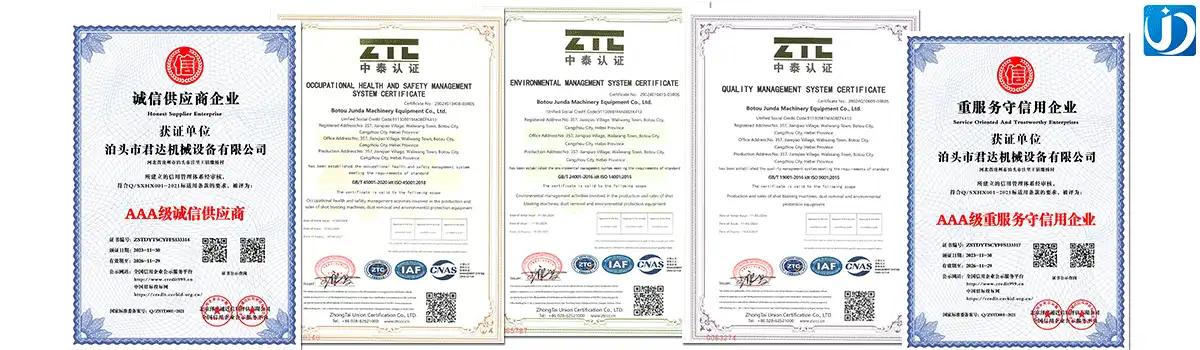
A reliable provider of blast wheel wear parts should offer dynamic balance test results for each blade set, material certificates that prove the alloy makeup, cross-reference paperwork that shows compatibility with specific OEM machine models, and records of how each batch was made. Junda Machinery has two utility model patents and seven computer software copyrights. It is also certified by ISO 9001, ISO 14001, and ISO 45001, all of which support quality documents that can be checked for purchase audit files.
Evaluating Total Cost of Ownership
When you only look at the unit price when making a purchase choice, you often end up spending more overall. When suppliers offer different pricing levels based on volume, recorded service life data, and quick technical help, they cut down on both administrative work and machine downtime. When comparing blast wheel wear part suppliers, it's more useful to look at cost-per-operating-hour instead of cost-per-piece.
Practical Guide to Purchasing and Maintaining Blast Wheel Systems
Getting the procurement process right from the start saves a lot of time and keeps problems with compatibility from happening on the shop floor.
The Inquiry-to-Purchase Process
When asking for a quote on blast wheel worn parts, you should include the model number of the machine, the current blade material grade, the amount of material used each month, and any special working conditions, like a high temperature or a corrosive climate. This lets the supplier make sure that the parts will work together and suggest the right alloy grade before the parts are ordered. Answers to technical questions from Junda Machinery are given within 6 to 8 hours, which keeps project plans on track without any needless delays.
After-Sales Support and Vendor Training
How quickly your team gets back to work after an unplanned failure depends on how well you handle after-sales support. A seller who offers remote commissioning help, English-language upkeep documents, and help with keeping spare parts in stock adds measured value beyond the original transaction. Junda's service package includes remote installation help, training for operators, and long-term supply of original spare parts for all of its blast wheel models.
Digital Maintenance Management Integration
When you connect data about how well a blast wheel is working to a plant's maintenance management system, fixes that are done on the spot become planned events. Junda's own software platforms, such as the Equipment Maintenance and Production Scheduling Management Platform, keep track of amp trends, blade wear intervals, and bearing temperature data in one place. This approach, which is based on data, cuts down on unplanned downtime and increases the time between major overhauls.
Conclusion
Taking good care of a blast wheel system comes down to three skills: constantly reading amp data, finding strange temperature changes before they cause failures, and changing worn parts based on proof rather than guesswork. Each of these sports rests on the quality of the wheel's parts and the dependability of the company that supplies them. Junda Machinery has been making machines for 20 years, has certifications that have been checked, and has its own monitoring software that helps procurement teams and OEM partners run blast operations more efficiently and accurately.
FAQ
What is the normal amp draw for a blast wheel motor?
Most industrial blast wheel motors run at 30 to 75 amps when not under full load. The normal amp draw depends on the size of the wheel and the flow rate of the abrasive. If the reading stays 10% above the baseline level after installation, the blade condition, feed volume, and bearing status should be checked.
How long do high-chromium blast wheel blades last?
If they are used continuously, high-chromium alloy blades of the Cr18 or Cr27 grade last between 800 and 1,200 hours. For the same job, regular gray iron blades last between 200 and 400 hours. Most of the time, the better material pays for itself in less work and downtime during the first replacement cycle.
How do I identify a hot spot in a running blast wheel?
The best way to do things in the field is with a thermal image camera. A quick infrared scan of the running assembly shows that the hub, bearing housings, and blade seats are all at different temperatures. If the bearing housing is warmer than 80°C, that means there is a problem that needs to be looked into right away.
Can Junda Machinery supply blast wheel parts compatible with other OEM machines?
Yes, Junda Machinery sells wear parts that work with a number of OEM blast wheel systems, such as the 034, Q034, and Q030 models. If you ask, you can get documentation on compatibility and dimensional cross-reference sheets.
Get Reliable Blast Wheel Components from Junda Machinery
Junda Machinery is a real company that has been making blast wheels for 20 years, has ISO 9001 certification, and has two utility model patents for designing wear parts. If you need standard new blades for regular maintenance or custom high-chromium assemblies for specific uses, our engineering team can help. They offer detailed compatibility checks, dynamic balance reports, and quick technical support. To get a quote on blast wheel parts right away, email us at junda001@jundablast.com or go to jundablast.com.
References
1. Journal of Tribology, ASME, 2019 — Thermal degradation of rolling element bearings under sustained elevated temperature.
2. Surface Engineering, Taylor & Francis, 2021 — Abrasive wear behavior of high-chromium white cast irons in centrifugal blast applications.
3. Wear, Elsevier, 2020 — Material loss mechanisms in centrifugal blast wheel blades: a comparative study of alloy grades.
4. International Journal of Advanced Manufacturing Technology, Springer, 2018 — Dynamic balancing requirements for high-speed rotating components in surface preparation equipment.
5. Corrosion Science, Elsevier, 2022 — Surface profile requirements for coating adhesion on structural steel substrates.
6. Industrial Maintenance & Plant Operation (IMPO), 2020 — Predictive maintenance strategies for abrasive blast equipment in heavy manufacturing environments.

USER EVALUATE
Real feedback and practical experience shared by worldwide partners who purchased our machinery and environmental treatment devices.