
How to Use a Tumble Belt Shot Blasting Machine Effectively
By Michael Zhang, Surface Treatment Equipment Engineer, Botou Junda Machinery Equipment Co., Ltd.Michael Zhang is a surface treatment equipment engineer at Botou Junda Machinery Equipment Co., Ltd. in Botou, Hebei, China's foundry machinery base. He has 20 years of experience with rubber belt tumble blasting systems across fastener, spring, and die-casting shops in Vietnam, Malaysia, Indonesia, India, and South Korea.
A tumble belt shot blasting machine cleans small metal parts in batches. Parts tumble across a soft rubber conveyor while two blast wheels throw cast steel shot at high tip speed. A closed-loop separator strips dust from the abrasive before it returns to the wheels. The machine handles up to 1,000 kg per batch. It replaces manual grinding plus acid pickling in a single step. This guide covers setup, loading, parameters, maintenance, and cost control.
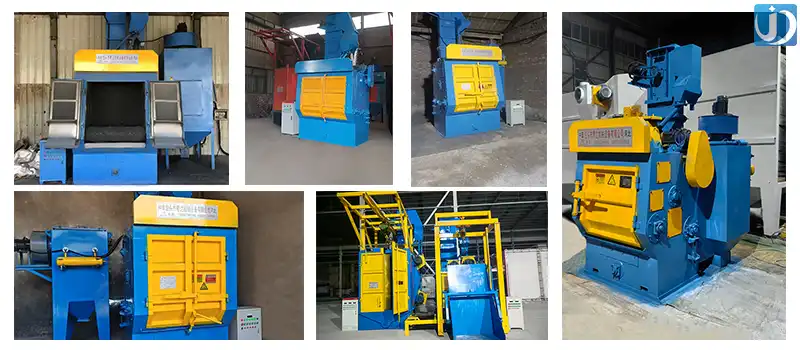
What Does a Tumble Belt Shot Blasting Machine Do?
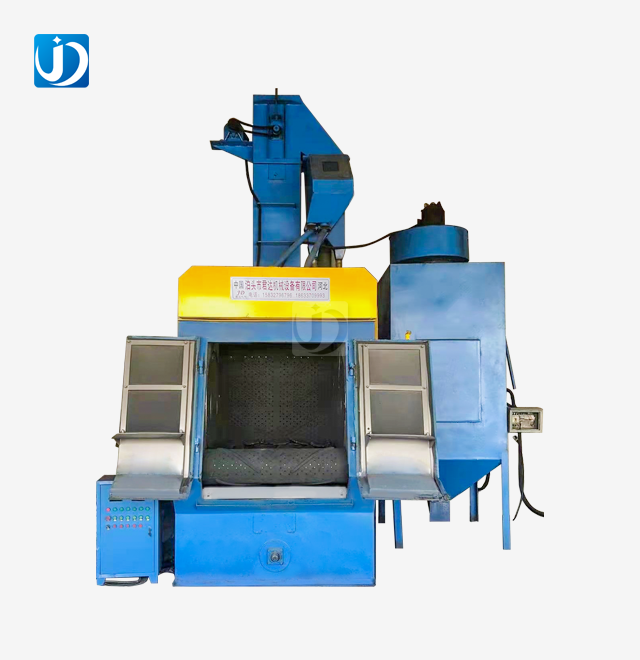
A tumble belt shot blasting machine is a batch cleaning system built around an endless rubber conveyor belt and a sealed blast chamber. Operators pour mixed parts through a loading door onto the belt. The belt rotates slowly and tumbles the parts while two blast wheels throw cast steel shot. The shot strips rust, mill scale, burrs, and oxide from every exposed face.
Definition and core mechanism
The rubber belt acts as both conveyor and worktable. It tumbles parts over and over, so they hit the blast stream from many angles. A framed tumble belt shot blasting machine does not need a foundation pit. Abrasive drops through a grate under the belt, rides a screw conveyor up to a bucket elevator, and reaches an air-wash separator. The separator pulls out dust and broken shot, then clean shot drops back to the hopper.
Where it earns its place
Small sturdy parts in bulk are the ideal fit. Common applications include fasteners, springs, small bearings, hardware stampings, and small die-castings. A typical batch of M10 hex bolts, hot-forged and acid-pickled, runs through a tumble belt shot blasting machine and comes out clean and uniformly textured. The machine also handles small cast iron and steel castings under about 5 kg each.
Batch capacities and typical models
Standard models fall into 100 kg, 250 kg, 500 kg, and 1,000 kg batch classes. The 500 kg and 1,000 kg sizes match the bulk output of most fastener and spring lines. A typical 1,000 kg unit carries two blast wheels at 11 kW to 15 kW each. Total connected power usually lands between 25 kW and 45 kW.
Send Junda Machinery a part drawing and a 5 kg sample before you shortlist any tumble belt shot blasting machine manufacturer. We run a free test in our Hebei workshop and return a written process sheet. As a tumble belt shot blasting machine supplier, we ship standard units in about 15 days and customize voltage, color, and control language. Email junda001@jundablast.com and engineers reply within 6 to 8 hours.
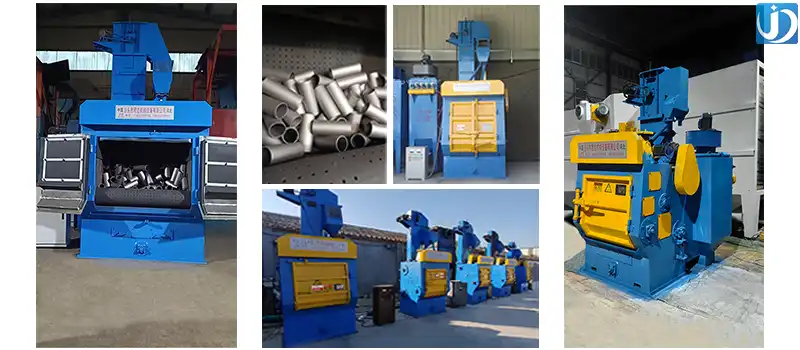
How to Set Up a Tumble Belt Machine for Initial Use
A tumble belt shot blasting machine leaves the factory as a packaged skid. Setup covers unpacking, leveling, electrical hookup, dust collector tie-in, and a controlled commissioning cycle. Verify every safety interlock before any production cycle starts.
Pre-installation checks
Floor, power, and dust. A level concrete floor with at least 1 m clearance on the loading door side is enough. Standard builds ship in 380 V three-phase at 50 Hz, with 415 V, 220 V, and 60 Hz options for Vietnam, Malaysia, Indonesia, India, and South Korea. The dust outlet duct velocity should hold near 4,500 feet per minute in the branch and 3,500 feet per minute in the main duct (OSHA, 2026).
Shot and lift. Stock the abrasive silo with S230 or S330 cast steel shot to match the parts list. Run the bucket elevator empty for ten minutes. Listen for bearing noise, chain stretch, or bucket rub, and adjust belt tension before any load enters the chamber.
Commissioning steps
Dry run empty and loaded trial. Start the separator, then the elevator, then the screw conveyor, and only then the blast wheels. That order prevents shot pile-up at the chamber floor. Load 50 kg of typical parts and run a 5-minute cycle. Adjust wheel amperage in 1 A steps until coverage is even across the load.
Confirm interlocks and log readings. Open any door while a cycle runs and confirm the wheels halt right away. Test the emergency stop from at least two positions and reset the controller to clear the fault. Log wheel motor current, dust collector differential pressure, and cycle time as the weekly baseline.
Correct Loading: How to Avoid Tangling and Part Damage
The single biggest cause of damaged parts on a tumble belt shot blasting machine is poor loading. Overload bends the belt. Mixed sizes let small parts lodge in gaps and jam the conveyor. Tangled parts such as long bolts or chain links wrap the belt and stop the cycle.
Loading weight rules by part size
A tumble belt shot blasting machine works best when the load fills about 70 percent of belt width and stays below the rated batch capacity. For a 500 kg machine, that means a steady load around 350 kg. Loading too little wastes a cycle. Loading too much buries the bottom layer under parts that never tumble, so the bottom layer never sees the blast. Long slender parts need the belt stopped for a manual stir every two cycles.
Mix part sizes carefully
When part sizes vary by more than a factor of three, sort them into two batches. Small parts slip into the gap between the belt and the chamber wall and jam the screw conveyor. Large parts in a mixed batch crush softer parts underneath. For fasteners and springs, run small bolts in one cycle and longer bolts in another. For die-castings, keep parts of the same thickness range in the same load to balance tumble action.
Blast Parameters to Adjust for Better Cleaning Results
Three knobs decide how clean parts come out of a tumble belt shot blasting machine. They are wheel tip speed, abrasive size, and cycle time. Tune those three against your part material and you stop paying for cycles that underperform.
Blast wheel speed and abrasive feed
Most tumble belt machines run blast wheels near 80 m/s tip speed. The blast gate controls how much shot the wheel flings per minute. A gate set too low leaves stripes on parts. A gate set too high wastes shot and overloads the separator. On a tumble belt shot blasting machine, 200 kg/min to 250 kg/min per wheel is a workable starting band. Raise the gate when parts come out with patches, lower it when shot piles up under the belt.
Abrasive size and cycle time
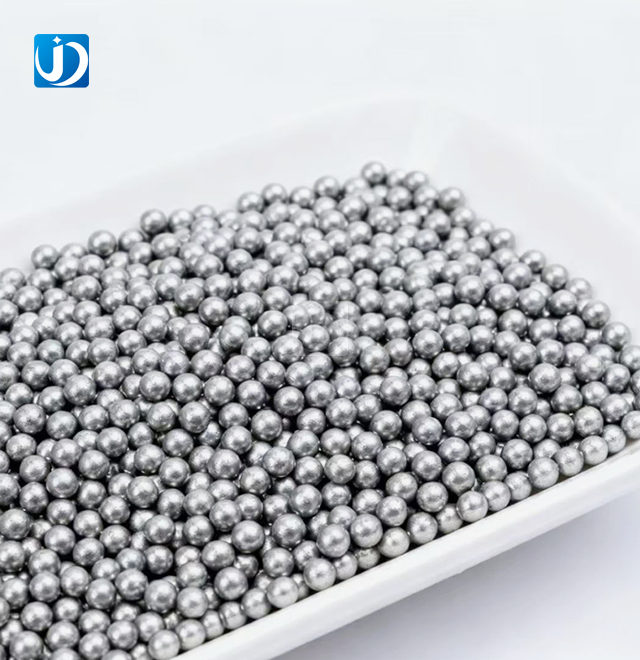
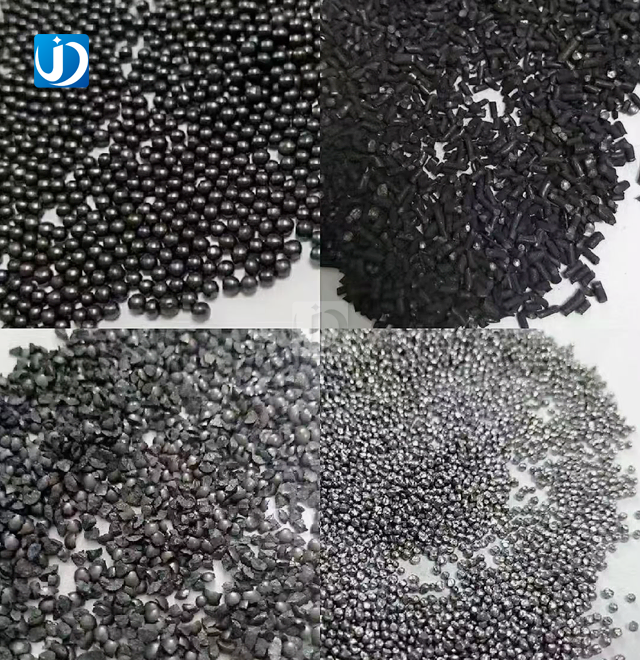
Cast steel shot in the 0.2 mm to 0.8 mm band covers most fastener, spring, and small casting work. S230 shot (about 0.4 mm) is the typical starting choice for general hardware. S330 (about 0.7 mm) hits harder and is the better pick when rust or scale is heavy. Steel grit with sharp edges leaves an angular profile that holds paint better than round shot (Steel Construction Institute, 2026). A 5-minute to 12-minute cycle covers most small parts on a tumble belt shot blasting machine. Brass and aluminum parts need shorter cycles because the shot peens soft surfaces. Watch the dust collector pressure gauge. A rising pressure during a cycle means shot breakdown is faster than the separator can clear it.
Tumble Belt vs Hook Type: Cleaning Efficiency Compared
A tumble belt shot blasting machine and a hook type machine look similar from the outside, but they handle parts very differently. The right choice depends on part geometry, batch size, and how much handling labor you want to absorb.
When the tumble belt wins
Small parts in bulk are the sweet spot. Fasteners, springs, small bearings, hardware stampings, and die-castings all tumble cleanly and finish in one pass. A tumble belt shot blasting machine takes 500 kg of bolts in a single load and cleans them in 8 to 12 minutes. The labor is one operator at the door. Cost per kilogram of cleaned part drops fast at that volume.
When a hook machine still wins
Long slender parts, large fabrications, and parts with delicate features stay on a hook. Tumbling damages them. A 2 m welded shell or a 1 t hub casting cannot ride a rubber belt without damage. For those parts, a hook type machine rotates each piece in front of fixed wheels and keeps every face protected. The same rule applies to thin-walled die-castings and parts with polished surfaces.
Feature | Tumble Belt Shot Blasting Machine | Hook Type Shot Blasting Machine |
Best part size | Small parts under 5 kg | Heavy parts 500 kg to 10 t |
Loading method | Poured through loading door | Hung on overhead hook |
Cycle time | 5 to 12 minutes per batch | 3 to 7 minutes per part |
Common jobs | Fasteners, springs, die-castings | Welded shells, large dies, hubs |
Surface risk | Parts may dent each other | No inter-part impact |
Labor per cycle | One operator | Hoist plus operator |
How to Reduce Abrasive Consumption and Cost
Abrasive is the largest variable cost on a tumble belt shot blasting machine. Shot loss depends on separator tuning, blade wear, and the mix of part sizes. Three moves consistently drop the consumption rate below 1 percent per shift.
Media selection that matches your parts
Hard abrasive on soft parts burns through shot faster than the job needs. Aluminum and brass parts cut shot life by 30 percent to 50 percent compared with steel. Switch to a finer S170 or S230 shot for those jobs. Hardened steel parts take a coarser S330 shot without much extra wear.
Recovery and reuse efficiency
A well-tuned air-wash separator on a tumble belt shot blasting machine keeps dust under 0.5 percent by weight in the working mix. Check the dust discharge every shift. A heavy black discharge means dust is bypassing the separator. The 2026 shot blasting machine market sits at USD 1.48 billion with 7.7 percent annual growth (Fortune Business Insights, 2026), so consumable pricing stays competitive.
Energy saving moves that pay off
Run the dust collector on a VFD that ramps down between cycles. Run the elevator on a soft starter. Set the wheel idle timer so it stops the wheels when no part is in the chamber. A typical 1,000 kg tumble belt shot blasting machine drawing 35 kW over an 8-hour shift uses about 280 kWh per shift. Cutting idle time by 20 percent drops that to 224 kWh, saving roughly USD 1,500 in power across 300 shifts a year.
Daily and Weekly Maintenance Checklist
A tumble belt shot blasting machine has few wear parts compared to many shop machines, but the parts it does have see hard service. A short daily walk-around and a one-hour weekly check catch most problems before they stop a shift.
Daily checks before the shift starts
Belt and shot. Walk to the loading door and look at the rubber belt edge for cuts, exposed fabric, missing cleats, or trapped parts. A torn belt edge jams the side seal and lets abrasive leak into the screw conveyor. Check the working silo and the dust discharge. Top up shot to the working mark before the shift starts.
Dust collector and interlocks. Read the differential pressure gauge on the dust collector. A reading above the nameplate setpoint means the filter bags need cleaning or replacement. OSHA requires exhaust ventilation that holds continuous inward airflow at every opening (OSHA, 2026). Test the door interlock and confirm the wheels halt right away when the door opens.
Weekly checks that catch wear early
Wheel blades and bearings. Open the wheel housing and inspect the blades. Worn blades widen the blast pattern and lower cleaning power. Replace all eight blades at the same time. Listen for bearing noise on every motor and replace any bearing that growls under load on the next planned stop.
Belt drive and chamber liner. Check the belt drive chain tension and the elevator belt. Adjust belt tension and grease every bearing from a single chart. Look at the Mn13 manganese liner plates in the chamber hot zones and replace plates before they wear through to the chamber shell.
Operator training basics
A trained operator makes a tumble belt shot blasting machine run longer between stoppages. Operators must read the load weight on the dial and never overload the chamber. They stop the cycle when a strange noise appears and log every cycle in the shift book. Rising dust collector pressure goes straight to maintenance. Junda ships every machine with an English operation manual, an English maintenance video, and remote commissioning support.
Fixing Uneven Cleaning and Slow Cycle Times
Two complaints come up on every tumble belt shot blasting machine over its life. Parts come out with unblasted patches, or cycle times creep longer. Both have known causes and known fixes. Run through this checklist before calling the manufacturer.
Common defects and what they point to
Defect on parts | Likely cause | Quick fix |
Unblasted patches on top layer | Overload or low blast gate | Reduce load 20%, raise gate one step |
Stripes on parts | Worn wheel blades | Replace all eight blades as a set |
Long cycle times | Separator overload, dust in shot | Clean dust bag, check air flow |
Shot leaks from chamber | Worn door seal or torn belt | Replace felt strip, inspect belt edge |
Slow elevator, low shot flow | Bucket slip, low belt tension | Tighten belt, check bearing noise |
High dust at loading door | Negative pressure lost | Check dust collector, clear filter |
When none of those fixes works, send Junda Machinery a 1 kg sample of the parts and a photo of the unblasted patches. Also send a sample of the shot from the silo. The engineering team in Hebei reviews the data and replies with a written process sheet. A 20-year track record on rubber belt systems means most fixes come back within one working day.
Conclusion
A tumble belt shot blasting machine is the workhorse of small parts cleaning. It earns its place when fasteners, springs, hardware stampings, and die-castings need bulk cleaning without manual grinding. Set it up on a level floor and dial in the load weight and the gate. Run the daily checks. The machine pays back its cost in months, not years. Match the machine to your part mix, and you trade hours of hand work for one short cycle.
FAQ
What is a tumble belt shot blasting machine used for?
A tumble belt shot blasting machine cleans small metal parts in bulk batches. Typical work includes fasteners, springs, small bearings, hardware stampings, and small die-castings. It strips rust, mill scale, burrs, and old coating before painting or assembly.
How much can a tumble belt machine clean per hour?
A 500 kg tumble belt shot blasting machine with a 10-minute cycle cleans about 3,000 kg per hour across an 8-hour shift. A 1,000 kg unit with a 12-minute cycle hits a similar rate, loading and unloading faster per kilogram cleaned.
Can a tumble belt machine reach Sa 2.5?
Yes, when the wheels cover every face and cycle time is long enough. Sa 2.5 is the very thorough blast cleaning grade in ISO 8501-1, and it allows only slight staining (Steel Construction Institute, 2026). Pull a sample part at 5 minutes for a quick visual check.
Does a tumble belt machine need a foundation pit?
No. A framed tumble belt shot blasting machine sits on a level concrete floor and needs no pit, which suits existing plants with finished concrete. A pit-free layout also avoids water collecting under the machine and corroding the elevator.
How long does a rubber belt last?
A rubber belt on a well-tuned machine lasts about 1,500 to 3,000 hours of loaded operation. Sharp steel shot, overloading, and parts with sharp edges cut that life in half. Operators who watch for trapped parts and avoid sharp castings double the belt life.
Send Us a 5 kg Sample and Get a Written Process Sheet
Choosing a tumble belt shot blasting machine for sale usually stalls on the same questions. How big a chamber, how much load weight, which abrasive, and which cycle time? Send Junda Machinery a 5 kg sample of your parts, your target output per shift, and your local voltage. As a tumble belt shot blasting machine manufacturer with 20 years of field experience, we return a sizing sheet, a sample-test video, and a delivery plan within 6 to 8 hours. Email junda001@jundablast.com or visit jundablast.com.
References
1. OSHA (2026). 1910.94 Ventilation: Abrasive blasting.
2. Steel Construction Institute (2026). Surface preparation.
3. World Steel Association (2026). Short Range Outlook April 2026.
4.Fortune Business Insights (2026). Shot Blasting Machine Market 2026-2034.
5. Global Wind Energy Council (2026). Global Wind Report 2026.
6. NIOSH, CDC (2026). Prevention of Silicosis Deaths, DHHS 93-124.

USER EVALUATE
Real feedback and practical experience shared by worldwide partners who purchased our machinery and environmental treatment devices.