
Maximize Efficiency: Cyclone Dust Collector Guide
If you manage dust control for an industrial facility, a cyclone dust separator is likely one of the most practical tools in your air quality system. It spins dusty air inside a cone-shaped chamber with centrifugal force, pushing heavier particles outward and downward into a storage hopper. Clean air leaves through the top. Not any filter bags. There are no moving parts. It's just physics at work. This book tells you how these systems work, how to get the most out of them, and how to pick the best unit for your needs.
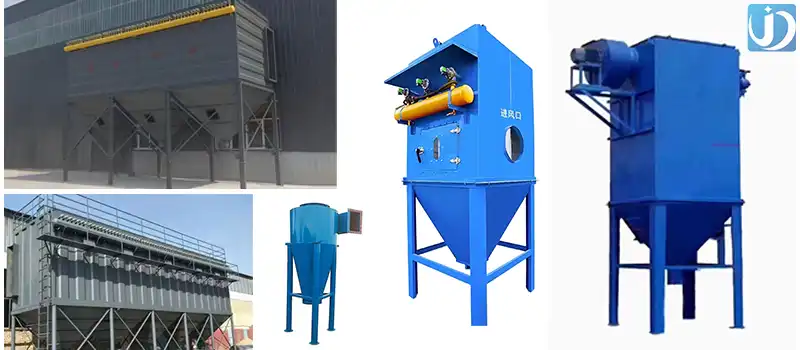

Understanding Cyclone Dust Collector Principles and OperationHow Centrifugal Separation Works
From the side, fast air full of dust enters the cyclone body, making a vortex that spins inside the cylinder. Centrifugal force pushes heavy things like broken steel shot, mill scale, and other rough, abrasive trash outward. They hit the inside wall and fall into the ash hopper below. The clean air then swirls back up through the middle vortex finder and comes out of the top drain. This process doesn't need any electricity besides the motor that moves the fan.
Key Design Variables That Affect Performance
The cylinder diameter, cone angle, inlet geometry, and vortex finder length all have a direct effect on how well a unit sorts particles. It's easier to catch smaller bits because longer cones stay in place for longer. It usually takes 15 to 25 m/s to get into the house. When it moves too slowly, there is less separation. When it moves too quickly, turbulence brings settled dust back into the flow. It's important to get these parameters right during the design phase so that the unit works well on-site.
Industry Applications Where Cyclones Excel
People who work with metals, make tools, make castings, build things, and make steel structures all use cyclone dust collectors. They can handle air flows of 1,500 to 15,000 m³/h and separate medium-sized and large particles more than 95% of the time. When there are two stages of dust control, like the ones used for shot blasting and sandblasting, the cyclone is the first stage pre-separator. It cuts down on the number of bits that get into the baghouse further down the line.
Cyclone Dust Collector Performance Optimization
Matching Airflow to System Design
When it comes to productivity, airflow mismatch is one of the most common mistakes. Pressure drops quickly and doesn't separate well if the unit is too small. Too much of it makes it move too slowly and lose its centrifugal force. It is important for engineers to know the actual volumetric flow rate at the operating temperature before they choose a unit. They should also make sure that the model's rated capacity matches the system fan curve. It's not enough to just believe what the maker says; you should also look at actual data on how well the split works.
Maintaining Peak Separation Efficiency Over Time
Performance of a cyclone dust separator slowly goes down when the ash hopper gets full and isn't cleared often, when the discharge valves don't close properly, or when air leaks form at the flanges and inspection ports. Industrial repair manuals say that a 1% air leak in the hopper can make the process of separating up to 20% less effective. The unit stays at the right level with just a weekly checkup that includes making sure the input pressure is right, making sure the seals are still good, and taking out any buildup.
Wear Management in Abrasive Environments
A lot of metal dust is made during processes like shot blasting and casting, which wears away at the inside surfaces over time. Ceramic tiles or manganese steel panels bonded to the inside of the cone and cylinder walls make units that don't wear out as quickly last a lot longer in these situations. Cyclone dust catchers from Junda Machinery can have a wear-resistant lining on the inside wall that is made for places where there is rough metal dust. Thus, the tools last longer and parts don't need to be changed as often.
Cyclone vs. Baghouse Filter
A baghouse can catch dust particles smaller than 1 micron, but the filter bags need to be changed more often, it costs more to run, and heavy coarse dust can make it hard to see. Most of the heavy particles are removed by a vortex pre-separator before they reach the baghouse. This protects the filter media and makes the bag last a lot longer. In heavy industrial settings and shot blasting lines, the two-stage process of cyclone first and baghouse second is the standard way to do things.
Cyclone vs. Wet Scrubber
With wet scrubbers, particles are picked up by water. They can handle sticky or hygroscopic dust, but they make dirty waste water that needs to be thrown away and cleaned up. Cyclone dust separators use dry mechanical separation to keep the material they collect dry so it can be screened directly or recycled in an abrasive way. This is the only practical way for companies to get steel shot or other recycled materials back and use them again. You don't have to pay to treat the water or deal with sludge or other garbage.
Cyclone vs. Electrostatic Precipitator
Small particles can be caught by electrostatic precipitators with little pressure loss, but they are pricey, need high-voltage power sources, and need electrode units that are well taken care of. They are less expensive, don't need any electrical parts inside the separation chamber, and don't put out sparks that could start a fire in places where dust is likely to catch on fire. For first-stage uses with big to medium particles, the cyclone is the more useful and cost-effective choice.
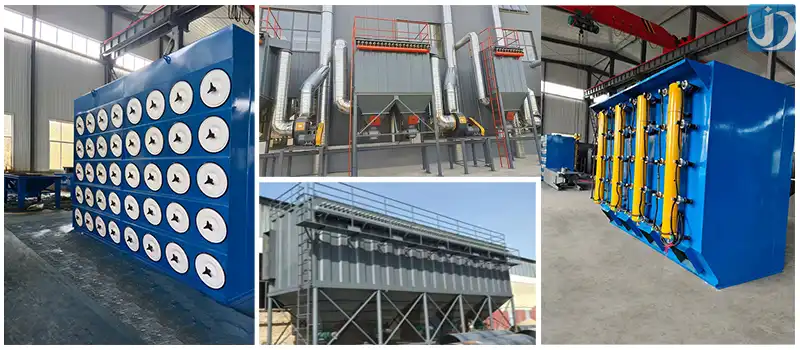
How to Choose the Right Cyclone Dust Collector for Your Business?Define Your Dust Characteristics First
Write down the type of dust, the range of particle sizes, the bulk density, the moisture content, and the operating temperature of your process before you call any suppliers. Shot blasting metal dust acts in a very different way than wood dust or cement powder. If you choose the wrong dust profile for your unit, it will either not work well or wear out too quickly. Before giving a quote, suppliers who ask a lot of questions about the process are most likely to send a unit that works as promised on-site.
Before finishing a cyclone dust separator design, these are the most important things to make sure of:
- Air handling capacity: Your system must fall within the 1,500–15,000 m³/h range; confirm the exact flow rate at operating conditions.
- Separation efficiency requirement: For pre-separation applications, ≥95% efficiency on medium and large particles is the accepted benchmark.
- Flange and inlet/outlet configuration: Verify that connection dimensions match your existing ductwork to avoid costly on-site modifications.
- Material and liner specification: Abrasive environments require wear-resistant inner lining; confirm the liner material and thickness before ordering.
The four checkpoints below stop the most common mistakes people make when buying things: mismatched sizes, bad wear performance, and problems with fit on-site.
Evaluate Supplier Capability, Not Just Price
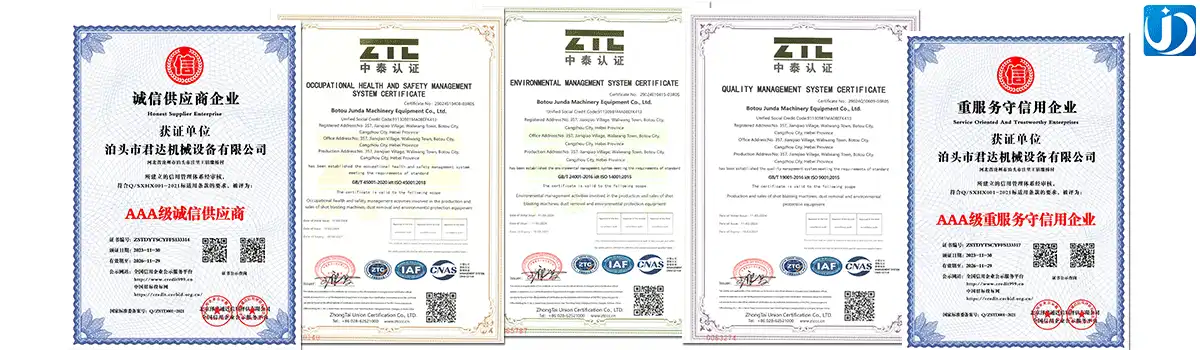
Certifications are important. Suppliers with ISO 9001, ISO 14001, or ISO 45001 certification use documented quality systems that lower the chance of using the wrong material or not being able to meet the right measurements. Ask for test results, dimensional plans, and examples of similar projects that have been done. A supplier that gives 3D interface drawings and technical documentation to help with installation is worth more over the course of the project than one that just sends a cheaper unit.
Procurement and Installation Guide for Cyclone Dust Collectors
Sourcing Channels and Lead Time Planning
This is how industrial procurement teams usually get cyclone dust collectors: they talk to makers directly, use trade platforms, or ask engineering firms for suggestions. When you place an order for a project-driven item, you usually have to wait two to four weeks. It might take longer for custom units with non-standard inlet places or liner materials that aren't used very often. When you add extra time to the project plan, you don't have to buy things quickly to meet a deadline. This makes it much less likely that fitment problems will only be found after delivery.
Customization Options Worth Specifying
Standard catalogue units can be used for most things, but projects that aren't standard often need changes. Some of these are moving the inlet and exit to fit existing ducts, using flanges with non-standard sizes, adding inspection ports and making the building explosion-proof in places where dust is flammable. As long as you stick to these rules, Junda Machinery can set up units in any way you like. You are given technical drawings before production starts. In this step of the paperwork process, the sizes don't match up, which would cost a lot of money to fix during installation.
Installation and Commissioning Best Practices
A site study is the first step to a proper installation. This checks the strength of the support structure, the alignment of the inlet duct, and the distance between the hopper and the ground. The unit needs to be set up on a strong, level base frame. All flanged connections need to be sealed with a gasket material that is right for the temperature and type of dust. As soon as the system is set up, it should be checked for inlet velocity, pressure drop across the unit, and hopper discharge function before it starts full production.
Conclusion
If you choose the right cyclone dust separator and set it up properly, it will make the next filter work less hard, recover abrasive media that can be used again, and keep your costs low for years without having to buy new parts. Making sure the airflow, liner material, and connection shape are all just right for the process is the most important thing. This is the first part of a two-stage dust control system that, when paired with a baghouse further downstream, meets industry emission standards every time. The only thing that matters is which manufacturer has strong quality control systems, the freedom to make changes, and professional support after the sale.
FAQ
Why is my cyclone losing separation efficiency over time?
More often than not, it's because of an air leak at the hopper discharge valve or the flange connections. Even a small leak can mess up the lower vortex and let dust that has settled back into the exhaust stream. During your next checkup, make sure you check all of the seals and gaskets.
Can a cyclone handle particles smaller than 10 microns?
Standard cyclone designs are very good at catching particles bigger than 10 microns. If you want to catch smaller particles better, a high-efficiency long-cone design or multi-cyclone assembly works better. However, these are usually used as pre-filters before a baghouse or cartridge collection.
How much maintenance does a cyclone dust collector actually require?
Not much. The separation chamber doesn't have any moving parts or filter media that needs to be changed. The ash hopper needs to be cleared out and the flange seals and discharge valve need to be checked as part of regular maintenance. For most uses, a visual check once a week and a monthly seal inspection are enough.
What causes pressure drop to increase in a cyclone system?
Too much stuff in the bin, a release valve that won't open, or buildup inside the cone wall can all stop airflow and make the pressure drop higher. In abrasive situations, wall erosion without a wear-resistant lining can also change the shape inside and make it more resistant over time.
Partner With Junda Machinery for Your Next Cyclone Dust Separator Project
Junda Machinery, based in Botou, Hebei — one of China's established manufacturing centers for environmental dust control equipment — has spent 20 years building shot blasting and industrial dust collection equipment for customers across multiple industries. Our cyclone dust separator line handles 1,500–15,000 m³/h, achieves over 95% efficiency on medium and large particles, and is available with ceramic or manganese steel wear lining for abrasive environments. We hold ISO 9001, ISO 14001, and ISO 45001 certification and provide full technical drawings before production begins.
If you are sourcing a cyclone dust separator manufacturer for a current project or evaluating suppliers for OEM supply, contact our team directly. We respond to all technical inquiries within 6–8 hours.
Email: junda001@jundablast.com
Website: jundablast.com
References
1. Hoffmann, A. C., & Stein, L. E. Gas Cyclones and Swirl Tubes: Principles, Design, and Operation. Springer, 2008.
2. Cooper, C. D., & Alley, F. C. Air Pollution Control: A Design Approach. Waveland Press, 2011.
3. U.S. Environmental Protection Agency. Control Techniques for Particulate Emissions from Stationary Sources — Volume 1. EPA Report No. EPA-450/3-81-005, 1982.
4. Salcedo, R. L. R., & Chibante, V. Industrial Cyclone Separators: Design and Performance. Chemical Engineering Journal, 2003.
5. Mothilal, T., & Pitchandi, K. "Influence of Mass Flow Rate of Inlet Solid Particles and Inlet Velocity on the Flow Characteristics in Cyclone Separator." Journal of Mechanical Science and Technology, 2015.
6. ACGIH (American Conference of Governmental Industrial Hygienists). Industrial Ventilation: A Manual of Recommended Practice for Design, 30th edition. ACGIH, 2019.

USER EVALUATE
Real feedback and practical experience shared by worldwide partners who purchased our machinery and environmental treatment devices.