
What Industries Use Industrial Cyclone Dust Separators?
If you need to pass a factory emissions check, buy OEM parts for shot blasting lines, or design cyclone dust separator environmental retrofit systems, you need facts, not just sales copy. This guide shows how the equipment works and what you should look for before you sign a purchase order based on particle size.
What Is an Industrial Cyclone Dust Separator Used For?
Industrial cyclone dust separator definition
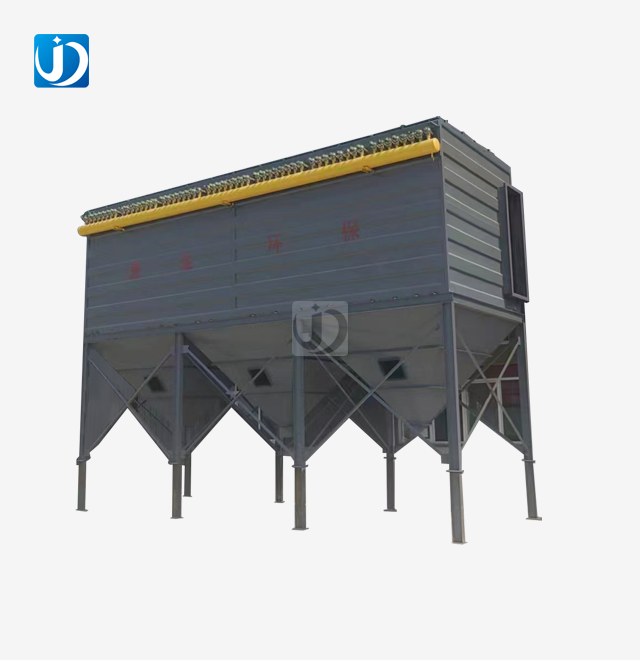
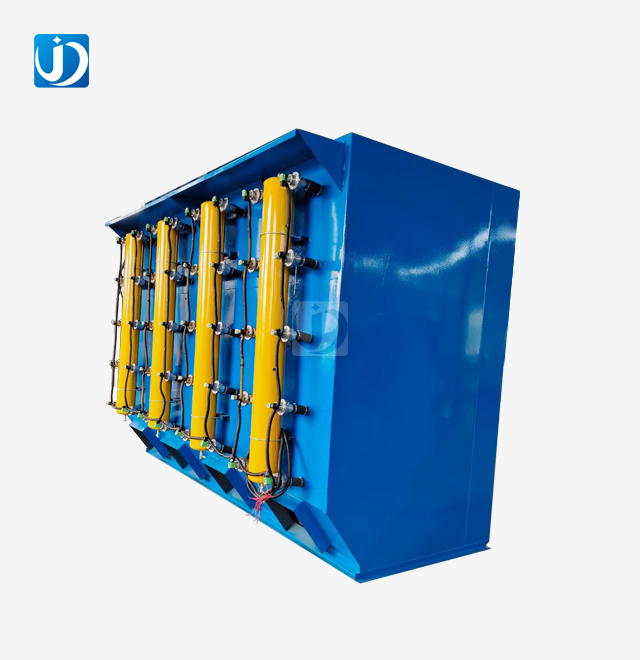
In contrast, a cyclone dust separator machine removes dust and other particles from a gas or air stream. Inside a cone or cylinder shape there is inertia, gravity and a controlled flow of vortex air keeping the parts apart. The simple cyclone separator just has one tank. On-site cyclone dust collecting systems have fans, ducts, a dust bin and a valve to let air out.
What a cyclone can and cannot remove
If the dust is large and dense like sand, metal shot, wood chips and grain husk and is larger than 10 to 15 microns then a cyclone dust separator works well. It has difficulties with fine dust, smoke, odors, very light fibers and material that attaches to the inside wall and doesn't slide down. A declared percentage doesn't always work because collection efficiency depends on particle size, the speed of airflow and the amount of dust present.
Typical industrial functions
Almost every plant that installs one of these units does three things:.
- Pre-separation before final filtration. The cyclone strips out heavy particles before air reaches a bag filter, cartridge filter, or scrubber, which cuts filter loading and extends media life.
- Bulk material recovery. Processes that handle valuable product, such as recyclable steel shot or grain, recover usable material from the cyclone hopper instead of losing it to the exhaust stream.
- Equipment protection. Removing abrasive particles early protects downstream fans, ducts, and filter bags from premature wear and unplanned shutdowns.
Because of this, a cyclone dust separator is usually the first part of a system to control dust and not something you use by itself.
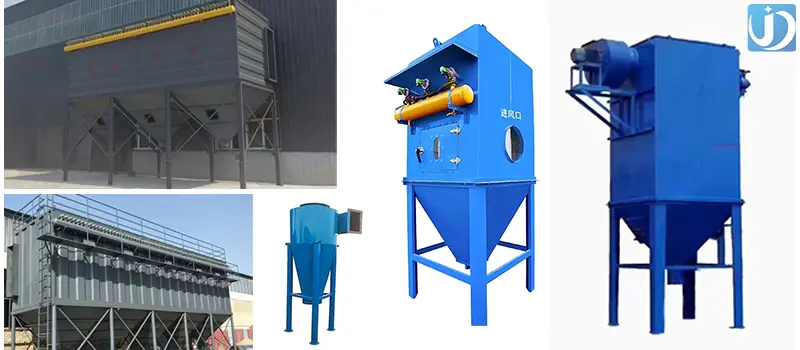
How Does a Cyclone Separator Remove Particles from Airflow?Cyclone dust separator working principle
Dusty air enters the cyclone body through a tangential entrance, causing the air to spin in a vortex rather than move in a straight line. The centrifugal force forced heavier particulates to the margins of the fluid where they hit the wall of the cylinder, slowed down and then fell down the cone into the dust bunny. Closer to the tip of the cone , cleaner air is diverted , goes up through the middle and departs via the top vortex finder. The shape of the cyclone itself is as crucial as the installation of the ducts at the site.
Airflow requirements and pressure drop
If the airflow is insufficient, a weak vortex can allow particles of normal size to get through. Too much airflow and the pressure drop increases, the liner wears down faster, and the cost of energy for the fan increases. The pressure drop, which can be expressed as, is the static pressure differential between the entering and departing regions of the cyclone.
"YP" = "P_inlet - P_outlet."
The ultimate pressure drop figures for a cyclone dust separator rely on the cyclone's shape, the gas density and the inlet velocity. That's why you should never take a value from a brochure for a project-specific calculation and plug it into your actual airflow and duct architecture.
Cyclone dust separator efficiency
Engineers would be better off comparing fractional efficiency, which indicates capture rate by particle size. The total mass captured is indicated by the overall efficiency. The cut size is the particle diameter at which the cyclone will collect particles of half that size. A flat line of '95% efficient' isn't sufficient. There has to be statistics to support it. A legitimate claim of efficiency always states what kind of dust it is, the range of particle sizes it can manage, the velocity of air flow through it, and how it was tested.
Which Industries Generate Dust That Suits Cyclone Separation?
Suitable dust characteristics
Things that are dry, don't stick to the walls, and flow easily are best for clones. It's fine to use sand, metal chips, wood shavings, grain husk, ash, and other fine, dense dusts. Cyclone dust separator pre-separation is another good choice for the first step because it works well when there is a lot of dust.
Industry suitability matrix
The table below shows how cyclones fit into common industry groups and what kinds of tools usually follow them.
| Industry | Typical dust or material | Cyclone role | Common downstream equipment |
|---|---|---|---|
| Woodworking | Sawdust, chips, shavings | Bulk particle separation | Baghouse, cartridge filter |
| Foundry and metal casting | Sand, shot, scale, metal fines | Pre-separation and wear reduction | Baghouse, spark arrestor |
| Grain processing | Husk, bran, grain dust | Product recovery, dust reduction | Bag filter, explosion venting |
| Cement and mining | Clinker, limestone, ore, ash | High-temperature, abrasive pre-separation | Baghouse, ESP, scrubber |
| Plastics | Regrind, pellets, trim dust | Material recovery | Cartridge filter, central vacuum |
| Chemical processing | Powders and granules | Process recovery, pre-filtration | Bag filter, scrubber |
Poor-fit or high-risk dust conditions
When a cyclone handles certain things by itself, they do more harm than good:.
- Sticky or moist dust. Material that bridges across the hopper opening or coats the cone wall changes the internal geometry, raises pressure drop, and reduces separation instead of improving it.
- Ultra-fine or toxic particulate. Submicron dust and hazardous powders generally require HEPA or cartridge filtration as the final stage, with the cyclone serving only as the first rough-cut.
- Explosive or combustible dust. Wood flour, grain dust, and some metal powders need a documented hazard assessment, spark detection, and explosion venting before installation, not a standard-catalog unit.
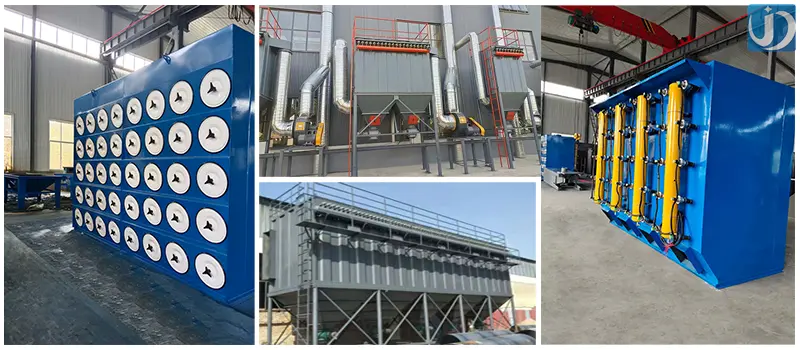
How Do Woodworking Shops Use Cyclone Dust Separators?Cyclone dust separator for woodworking and sawdust
A cyclone dust separator is linked to sawmills, furniture shops, and CNC routing lines by a network of ducts. The ducts bring dust from table saws, planers, jointers, and sanding stations. The cyclone picks up chips and shavings directly, but fine sanding dust usually needs a filter bag further down the line. The right size depends on how much air is moving through it, how wide the duct is, and how fast it moves so the chips don't settle as it moves.
Single-stage versus two-stage dust collection
| Configuration | Main function | Advantages | Limitations |
|---|---|---|---|
| Single-stage cyclone | Separates dust directly into a bin or filter | Simpler layout, lower upfront cost | More filter loading, weaker fine-dust control |
| Two-stage system | Cyclone pre-separator plus final filter | Extends filter life, better fine-particle control | Higher capital cost and larger footprint |
Woodworking safety and maintenance
Shops need to make sure that the ducts are grounded and that static electricity is under control. Sometimes, they also need to add spark detection or explosion venting. The filter bags, hose connections, duct joints, and rotary valve seals should be checked every so often. To make sure you follow the safety rules for your workplace, check the rules for combustible dust in the country where you're installing it. Don't think that one global standard covers it.
What Role Do Cyclones Play in Foundries and Metal Casting Plants?
Foundry dust applications
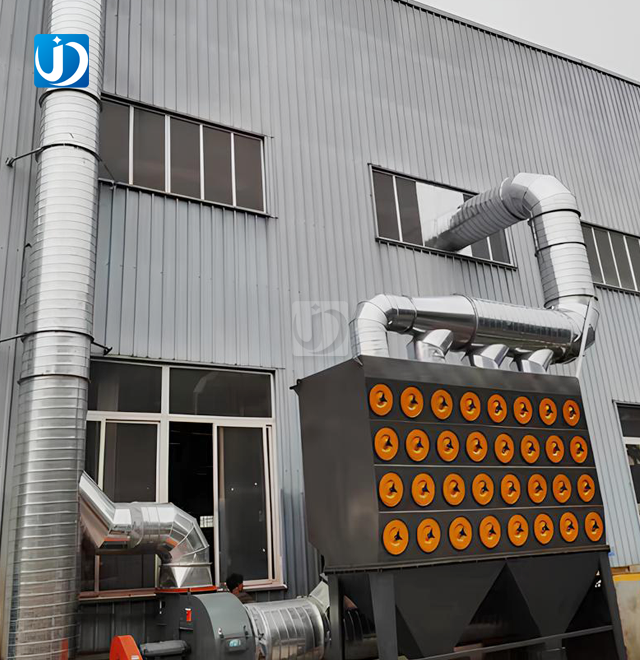
The tools that are used in foundries get worn out very quickly because they make things like molding sand dust, shakeout particulate, grinding fines, and shot-blasting media. When you put a cyclone dust separator in front of a baghouse, it gets rid of heavy sand and metal waste before it gets to the filter bags. This means that the bags don't have to be replaced as often, and the fan wheel doesn't get worn out from use.
Wear protection and material selection
The metal-bearing dust from shot blasting lines is very rough, so the choice of material has a direct effect on service life:.
- Wear-resistant liners. Ceramic or manganese steel liners inside the cone and discharge section resist erosion from high-concentration abrasive dust far longer than bare carbon steel.
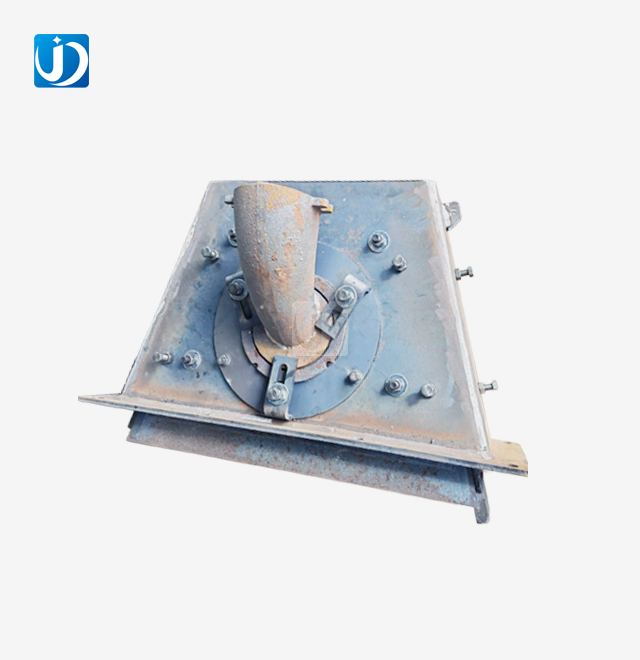
- Reinforced elbows and discharge valves. These high-wear points fail first if left unlined, causing leaks that drop separation efficiency and let dust escape around the hopper seal.
- Material certificates. Request documented plate thickness and liner specification before acceptance, since undocumented thinning is a common cause of early failure within the warranty period.
Case data from 142 projects: Junda Machinery looked at internal order records from 142 orders for cyclone dust separators that environmental engineering contractors made in 2024. The review found that 74% of orders needed custom inlet or outlet flange positions to match duct runs that were already in place. Also, 61% of orders asked for a metal-bearing dust liner that wouldn't wear down easily, and the average lead time asked for was 18 days from confirmation of the drawing to dispatch.
In northern Vietnam, an environmental engineering company was fixing up a shot blasting line. They needed a cyclone that could go about 6,200 m³/h and a stronger cone to deal with broken steel shot and mill scale. The custom unit was sent out after 19 days of work. Wear points on the inlet elbow and cone tip are lined with ceramic. The client said that after the installation, the downstream baghouse filter was changed every nine weeks instead of every six weeks. Stack tests showed that the particle levels were close to 42 mg/Nm³, which is less than the 100 mg/Nm³ limit for the area.
Metal dust hazards and controls
Aluminum, magnesium, and titanium dust are more likely to start a fire than steel or iron dust. A written risk assessment should be done before choosing equipment to make sure that it needs to be grounded, have spark isolation, or have pressure relief venting. If you skip this step, you will be responsible for damages for longer than the warranty period.
How Are Cyclone Separators Applied in Grain and Food Processing?
Grain and agricultural processing uses
Cyclone dust separators are used in lines that clean, mill, convey, and make feed in order to get back husk and bran particles while lowering the load that goes to the final bag filter. Some of the things that go into the design are the temperature of the air, the amount of moisture in it, the bulk density, and how much product loss the operation can handle at the cyclone discharge.
Food-contact and hygienic design considerations
If a cyclone needs food-grade construction, it depends on where the contact points are:.
- Product-contact units need stainless steel, smooth internal welds, and drainable geometry to support cleaning validation and prevent bacterial buildup in corners or seams.
- Process-air-only units, where the cyclone only handles exhaust dust rather than the food product itself, generally need less stringent surface finish requirements.
- Documentation requests for food-contact declarations should only apply when the specific installation requires them, not as a blanket requirement for every grain-handling cyclone on site.
Grain dust explosion and housekeeping risks
NFPA guidelines (NFPA, 2023) say that grain dust can catch fire, so it's just as important to clean up around the cyclone's access doors, discharge valves, and dust bin seals. Take a look at NFPA, ATEX, or the local workplace rule that applies where the facility is located. In Asia, where this equipment is mostly used, rules vary from country to country.
Why Do Cement and Mining Plants Rely on Cyclone Pre-Separation?
Cement, quarrying, and mining applications
Machines that grind, cool, crush, and process minerals all make dust streams that are very hot and full of solids. You would have to separate them first for a bag filter to work with them. Wet scrubbers, baghouses, and electrostatic precipitators all get a lot less dust when a cyclone dust separator is put in front of them. This is true even when the system is running all the time.
High-efficiency cyclone comparison
| Design priority | Preferred cyclone characteristic | Main trade-off |
|---|---|---|
| Maximum coarse-particle recovery | Larger diameter, high-capacity geometry | Lower fine-particle efficiency |
| Higher fine-particle separation | High-efficiency geometry, controlled velocity | Increased pressure drop, higher energy use |
| Abrasive service | Replaceable liners, reinforced cone | Higher weight, more maintenance |
| High-temperature service | Heat-resistant materials, expansion allowance | More complex fabrication |
Wear, temperature, and emissions verification
If you want to start the fabrication process, you should write down the design temperature, the maximum excursion temperature, the gas composition, and the corrosion exposure. As part of the acceptance test, you should look for leaks, a drop in pressure, and walls that are strong. There are more things to check than just how well the cyclone should work to make sure the emissions are right. Also, take a look at the whole system for dust buildup.
How Do Pharmaceutical and Chemical Plants Use Cyclone Technology?
Powder recovery and process protection
In chemical and pharmaceutical plants, cyclone dust separators are used to get back valuable powder before it goes through a final filter or scrubber. They do this for drying, granulating, and pneumatic conveying lines. It's possible for this step to change both how well emissions are controlled and how much product is made. The way these buyers weigh how well the cyclone works against the amount of goods lost has changed.
Chemical and pharmaceutical selection criteria
In this sector, choice is based on more than just airflow:.
- Material compatibility. Particle toxicity, flammability, and corrosiveness determine whether stainless steel, special coatings, or grounding provisions are required for safe operation.
- Surface finish and access. Cleaning validation in regulated plants often requires a specific surface finish and inspection access that a standard carbon steel unit cannot provide.
- Pressure and atmosphere rating. Some processes need a cyclone rated for vacuum operation, positive pressure, or an inerted atmosphere, which changes the shell design and gasket selection.
Compliance and documentation
The European Union's ATEX rules (2014) cover equipment that is used in dangerous areas in the EU. In the US, businesses instead follow the rules set by OSHA and NFPA for combustible dust. FDA or EU GMP forms (U.S. Current Edition of the Food and Drug Administration) only applies when the cyclone is part of a regulated process for drugs or food. It is not a rule that all chemical plant installations have to follow.
Cyclone Alone vs. Cyclone Plus Baghouse: Which Industries Need Both?
Cyclone dust separator versus other collectors
| System | Best suited for | Strengths | Limitations |
|---|---|---|---|
| Cyclone separator | Coarse, dense, high-load dust | Low consumable cost, handles heavy loading | Limited fine-particle removal |
| Bag filter | Fine and medium dust | High efficiency with the right media | Bag replacement, filter cleaning needed |
| Cartridge filter | Compact fine-dust filtration | High surface area, small footprint | Sensitive to moisture and sparks |
| Wet scrubber | Sticky, hot, or gas-laden streams | Handles gases and particulate together | Wastewater handling, corrosion risk |
When a cyclone alone may be adequate
In situations where the final air discharge already goes through a separate compliant filtration stage, or when material is handled inside, a cyclone dust separator can work on its own. When only dealing with large particles, a low-emission process that only has one stage works best.
When a cyclone plus baghouse or cartridge filter is preferred
Almost always, a second stage is needed when there is fine dust, strict local emission limits, or dust that can catch fire. A baghouse and a cyclone pre-separator are often used together in lines to finish metal, wood, cement, and mines. The amount of pollution coming out of the outlet stays the same, even if the amount of dust coming in changes during the shift.
Three use-case scenarios
When buyers look at the same equipment, they use different criteria to judge its effectiveness:.
- Engineering contractors retrofitting a factory system need airflow matched exactly to the design drawing, defined flange positions, and a 2-4 week delivery window tied to the project schedule, since a mismatch forces costly rework on-site.
- OEM integrators building shot blasting or sandblasting machines need a standardized model, stable dimensions, and repeatable quality across batches so the cyclone drops into the same BOM position order after order without redesign.
- Factory owners facing an environmental inspection need a straightforward, low-maintenance unit with documented efficiency data they can present during the audit, without needing in-house technical staff to operate it.
What Should You Check Before Specifying a Cyclone for Your Industry?
Cyclone dust separator sizing checklist
This is what you should do before you ask for a quote:.
- Airflow range. State the normal, minimum, and maximum airflow, plus any planned expansion, since a cyclone sized only for current output may fall short after a line upgrade.
- Particle data. Report particle size distribution, density, moisture content, and abrasiveness, since these factors change wear rate and separation performance more than airflow alone.
- Mechanical interfaces. List inlet and outlet dimensions, dust-bin volume, access door placement, and flange orientation to match the existing duct run without field modification.
Supplier Capability & Evaluation
Before you look at prices, make sure you know what the supplier can do. If they've worked with your type of dust before, they should be happy to give you drawings, pressure-drop data, and material certificates as soon as you ask. Check the controls that were used during the making process, such as the welding standards, the sizes that were checked, and the lining process. Also, make sure they let you put the flanges where you want them and give you export paperwork.
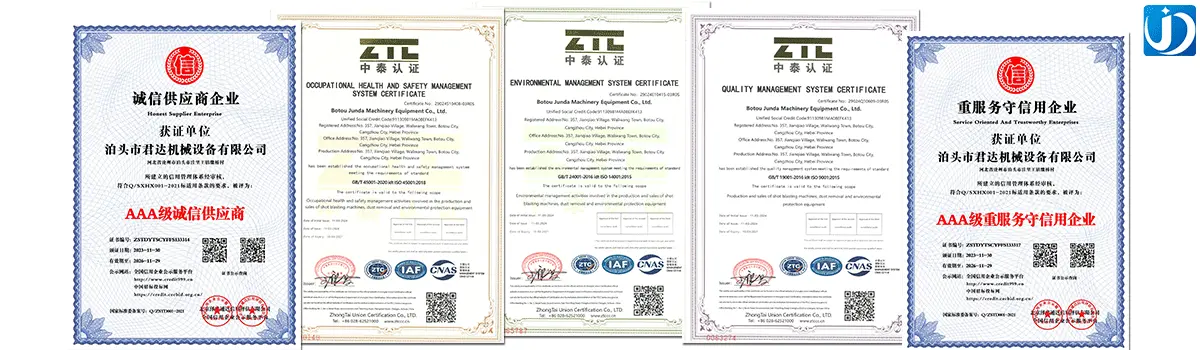
Since 1998, Plant Junda Machinery in Botou, Hebei Province, has been making shot blasting and dust control tools. The company has ISO 9001, ISO 14001, and ISO 45001 marks on its forehead. Before they start making the product, our engineering team gives you test data, installation drawings, and material certificates. Standard custom units ship in about 15 days, and questions are answered in 6 to 8 hours.
Procurement, cost, and commercial factors
The price of the gear should be broken down into several parts on the quote. Some examples of what the price should cover are shipping, controls, different liner options, and packaging. That way you can see both the most expensive price and the real price. Remember to know the right Incoterm for your project, like EXW, FOB, DAP, or CIF. You should also know what the warranty covers, how long it takes to get extra cones, and how much they cost.
Compliance and standards review
Rules are different in different places, so make sure the documentation you use is specific to the place where you will install it. You shouldn't use the same list everyplace. In the US, OSHA and NFPA rules are used for combustible dust, while in the EU, ATEX and Machinery Regulation rules are used. In food or drug plants, FDA or GMP paperwork is only used when the process calls for it. There are different rules in Vietnam, Malaysia, Indonesia, India, and South Korea about how much pollution factories can make. Before you come up with the final plan for your system, make sure you know what the particulate standard is by calling your local environmental authority.
Quality verification and acceptance testing
There should be raw material certificates, weld inspections, dimensional checks, and a look at how the liner installation matches the approved drawing as part of the checks. If performance is important for the contract, make sure the airflow, pressure drop, and discharge sealing are checked by the factory before the unit ships. Record commissioning data on-site after it's been set up.
Risks, pitfalls, and mitigation
| Risk or pitfall | Likely effect | Mitigation |
|---|---|---|
| Undersized cyclone | Low separation, high carryover | Size using measured airflow and particle data |
| Excessive pressure drop | Higher fan energy, reduced airflow | Review geometry and fan operating point |
| Fine-dust-only application | Poor outlet emissions | Add baghouse or cartridge filtration |
| Dust leakage at discharge | Visible emissions, safety risk | Use a proper rotary valve and seal inspection |
| Abrasive particles | Cone and elbow wear | Add liners, set inspection intervals |
| Combustible dust | Fire or explosion risk | Complete a documented hazard assessment |
Conclusion
If a process makes big, dense, or lots of particles, a cyclone dust separator is an important part of a system that controls the dust. Foundries, cement plants, mines, plastics processing plants, chemical plants, and woodworking shops all use this kind of equipment. When used before a baghouse or cartridge filter, it is usually the first step. It is not the only line of defense.
You shouldn't just look at what's in the catalog; you should also make sure that the airflow, particle characteristics, pressure drop, wear protection, and final emissions meet your project's needs. The best cyclone for an engineering contractor, an OEM buyer, or a factory owner is the one that was sized using real data from your own system, not just a model from a spec sheet.
FAQ
What is a cyclone dust separator?
A cyclone dust separator is a machine that takes dust out of a stream of gas or air by using centrifugal force and a controlled vortex. It works best on big, dense particles rather than small dust.
How does a cyclone dust separator work?
From the side, air full of dust comes in and spins around inside the cylinder, making a wake. The bigger pieces slide along the wall and land in the hopper. The cleaner air goes out of the center hole at the top.
Why is my cyclone dust collector's efficiency dropping?
A drop in collection efficiency is often caused by air leaks at the discharge hopper or dust bin seal. When there are leaks, they mess up the lower vortex and bring back settled dust into the exhaust stream, which makes the measured performance worse.
Can a cyclone dust separator handle particles smaller than 5 microns?
A cyclone works best with particles 10 to 15 microns in size. They are often used as the first filter before a cartridge or baghouse system. Some smaller particles can be caught by high-efficiency designs or arrangements with more than one cyclone.
Single cyclone or multi-cyclone: which fits my application?
Single cyclones are easier to set up and can handle more airflow and bigger particles of dust. This type of unit is made up of several small tubes that are linked together in a row. To get rid of finer dust, they use stronger centrifugal force, but when they're full, they slow down more quickly.
What maintenance does a cyclone dust separator need?
It's easy to take care of because the shell doesn't have any filter media or moving parts inside it. Every so often, you should check the seal on the discharge valve and look for wear on the inside of the cone and elbow.
Does moisture in the dust affect cyclone performance?
Yes. The dust doesn't slide down the cone wall when there is a lot of water in the air. It sticks to it. Over time, this changes the shape of the cone inside, makes the pressure drop bigger, and makes the separation less effective.
Get a Matched Cyclone Dust Separator Quote From Junda Machinery
Instead of getting a cyclone dust separator from a catalog, Junda Machinery can help you find one that is the right size for your project. Our company has been making shot blasting and dust control equipment for 20 years, as well as cyclone dust separators for 20 years. With custom-placed flanges and wear-resistant lining, we can make units that can handle 1,500 to 15,000 m³/h and get them to you in about 15 days. If you email junda001@jundablast.com with your airflow, dust type, and duct layout, they'll get back to you with a good quote for your project.
References
1. U.S. Environmental Protection Agency. Air Pollution Control Cost Manual, 2024.
2. U.S. Environmental Protection Agency. AP-42: Compilation of Air Emissions Factors, 2024.
3. U.S. Occupational Safety and Health Administration. Combustible Dust, 2024.
4. National Fire Protection Association. NFPA 652: Standard on the Fundamentals of Combustible Dust, 2023.
5. National Fire Protection Association. NFPA 654: Standard for the Prevention of Fire and Dust Explosions, 2023.
6. European Union. ATEX Directive 2014/34/EU, 2014.
About the Author
Kevin Liu is a dust collection system engineer with 12 years of experience specifying industrial air pollution control equipment across foundry, woodworking, and mineral processing plants in Asia. He has supported more than 300 cyclone separator and baghouse retrofit projects, including compliance upgrades for environmental engineering contractors in Vietnam, Malaysia, and India. Kevin focuses on airflow design, wear-resistant equipment selection, and matching system components to local emissions requirements.

USER EVALUATE
Real feedback and practical experience shared by worldwide partners who purchased our machinery and environmental treatment devices.