
What Should You Consider When Using a Tumble Belt Shot Blasting Machine?
By Michael Zhang, Surface Treatment Equipment Engineer, Botou Junda Machinery Equipment Co., Ltd. Michael Zhang is a surface treatment equipment engineer at Botou Junda Machinery Equipment Co., Ltd. in Botou, Hebei. He supports fastener plants, die casting shops, and hardware workshops on blast wheel layout, media sizing, and dust collector matching.
A tumble belt shot blasting machine cleans small parts in batches. A rubber belt turns the load inside a sealed cabinet while blast wheels throw steel shot at it. Every face meets the abrasive stream, so rust, scale, and burrs come off evenly. Six choices decide your result: belt load, part shape, media size, cycle time, running cost, and wear parts. One machine replaces a bench of hand grinders.This guide answers the questions buyers ask us most: machine design, parts you should never tumble, batch costs, and savings.
What Is a Tumble Belt Shot Blasting MachineHow Does the Belt Design Affect Tumble Blasting?
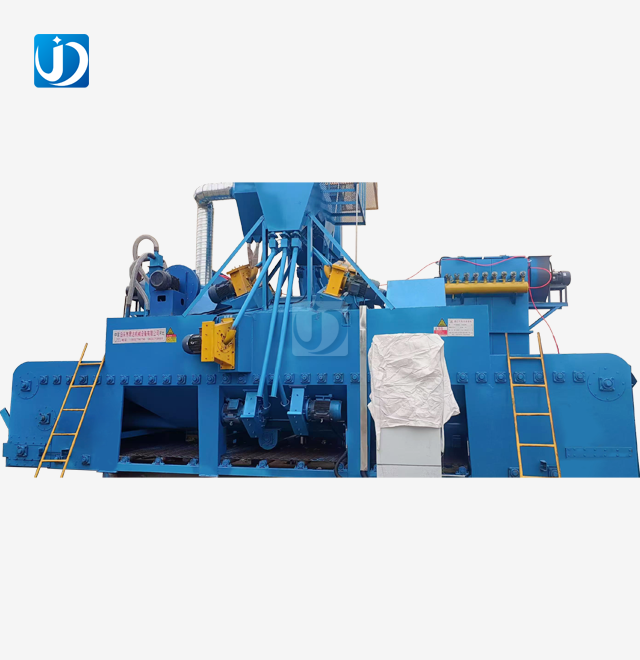
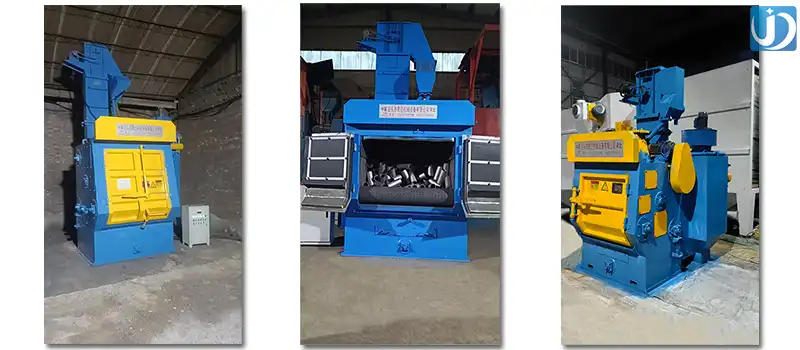
A tumble belt shot blasting machine is a batch cleaning unit built around a rubber belt loop inside a sealed blast chamber. Parts sit on the belt, and the belt turns them over while blast wheels fire steel shot at the load. That motion exposes every face to the stream. A separator screens out dust and broken shot, then returns good media to the wheels.
Rubber belt models suit parts up to about 50 kg each. Die castings, fasteners, springs, and bearings are the classic fit. A Q3210 class unit holds a rated 1000 kg in a 0.7 cubic meter drum. Steel slat belts take over for heavier parts.
The Parts That Decide Your Cleaning Result
Five components set the outcome. Belt design, wheel count, wheel position, separator quality, and door sealing. Check each against your part mix.
Component | Job it does | Check on a quote |
Rubber belt | Tumbles the load, cushions parts | Hole pattern vs smallest part |
Blast wheels | Throw media at the load | Two wheels, 11 to 15 kW each |
Separator | Screens dust and broken shot | Air wash, reclaim above 99 percent |
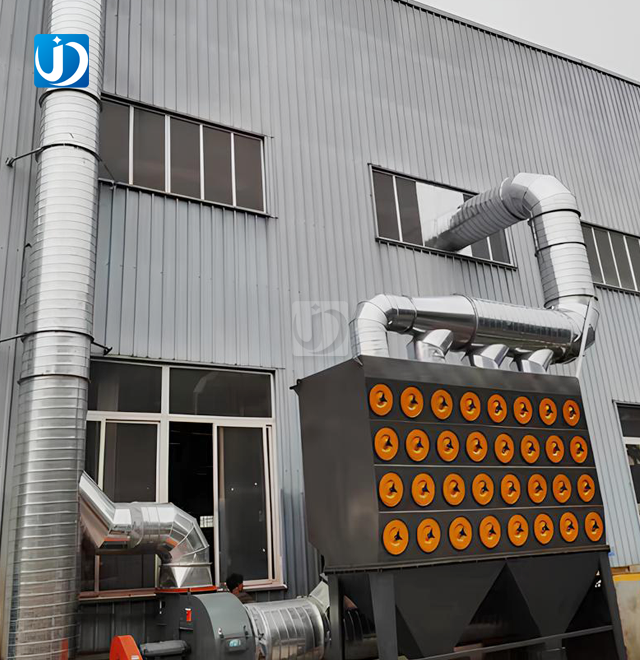
Dust collector | Holds airflow at the door | Air volume vs chamber size (OSHA, 2026) |
Discharge gate | Drops the cleaned batch | Interlock stops wheels when opened |

How Does a Tumble Belt Shot Blasting Machine Work
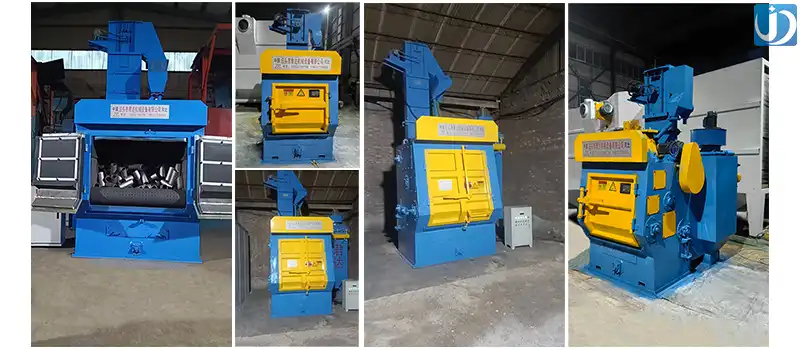
One cycle runs in four steps on any tumble belt shot blasting machine. Load, blast, separate, unload. The controller locks the order.
1. Load and seal the batch. Drop parts onto the belt by hand or skip loader. Keep the belt covered by parts, because bare rubber under the blast stream wears fast. Put the heaviest pieces in the middle so the belt turns them early. The PLC will not start the wheels until the door interlocks.
2. Blast and tumble. Two or more wheels throw steel shot while the belt turns the load. Rotation is the point of a tumble belt shot blasting machine, because a static pile would shadow itself. Soft parts need a gentler belt speed, and hard castings take a faster tumble inside the drum.
3. Separate and recycle. Shot and dust fall through the belt onto a screw conveyor, which feeds a bucket elevator. Air then strips fines and broken particles, and good shot drops into the wheel hopper. That closed loop keeps a tumble belt shot blasting machine cheap to run over its whole service life.
4. Unload and inspect. The belt reverses and drops the batch onto a screen or a bin. Look at the leading parts before you start the next load. Uneven results usually mean an overloaded belt or a worn wheel blade. A timer change will not fix a mechanical fault. Fix the cause before the next cycle.
What the PLC Controls During a Cycle
The controller holds blast time, belt direction, and door interlock state. Most units log cycle count and running hours as well. Those numbers let you plan belt replacement ahead of a breakdown on a tumble belt shot blasting machine.
Belt Load Limits: How Much Can You Load at Once
Rated load and working load differ. A Q3210 class tumble belt shot blasting machine is rated at 1000 kg, but that assumes small parts packed into 0.7 cubic meters. Heavy castings need a lighter load so the belt can still turn the pile.
How Do You Determine the Right Batch Load?
Two limits set the real batch size. Belt drive torque decides how much mass the belt turns and holds. Drum volume decides how much space the load occupies before parts slide instead of tumble. Once sliding starts, hidden faces take no blast.
What Overloading Does to Cycle Time and Belt Wear
An overloaded belt turns slower, so dwell time per face drops. Cleaning then looks patchy, and the operator extends the timer to compensate. That extra blast time hits the belt directly through exposed rubber. Media drains through the holes more slowly too, so the cabinet floor fills. A correct load holds a cycle between 5 and 15 minutes.
Under standard duty a jointed rubber belt lasts about 2,000 hours. A seamless vulcanised belt reaches roughly 5,000 hours at the same settings (CMBlaster, 2025). A change takes about a day on a small machine and three days on a large one.
Which Workpieces Are Unsuitable for Tumble Belt Blasting
Tumbling is a mechanical action, and some parts cannot survive it. Thin sheet deforms when a heavier neighbour lands on it. Slender shafts bend. Thin wall aluminium castings dent at the corners. Long parts bridge across the belt and stop turning. For those parts a tumble belt shot blasting machine is the wrong machine.
Geometry matters as much as strength. Deep blind cavities trap shot and stay unblasted through the whole cycle. Parts that nest inside each other form a locked bundle that rotates as one block. Fine pitch threads can bruise at the crest and then fail a gauge check.
Part type | Fits a tumble belt? | Better choice |
Fasteners, nuts, bolts | Yes | Standard batch, fill by volume |
Small die castings | Yes | Rubber belt protects the finish |
Thin sheet, under 3 mm | No | Mesh belt, flat conveying |
Slender shafts, thin walls | No | Hook type machine, no contact |
Long parts over 600 mm | No | Mesh belt or hook type |
How to Check Fit Before You Order
Run a drop test before you spend money. Put a sample batch in a plastic drum and roll it by hand for five minutes. Check the parts for dents, bent edges, and thread damage. If the batch survives, tumbling will not hurt it. If not, you need a hook or mesh belt design instead.
Tumble Belt vs Hook Type vs Mesh Belt: Full Comparison
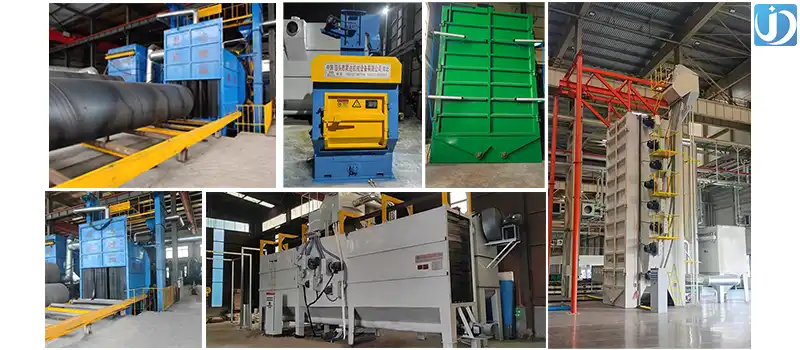
Three machine families cover most batch cleaning work, and each moves parts differently. A tumble belt shot blasting machine flips the load. A hook type machine rotates suspended parts. A mesh belt machine carries parts flat on a stainless screen.
Throughput favours the tumbler for loose small parts, because the drum holds a full batch at once. Finish quality favours the hook type machine when surface marks matter. Thin parts favour the mesh belt.
Machine type | How parts move | Best fit |
Tumble belt | Rubber belt flips the batch | Loose small parts, 5 to 50 kg |
Hook type | Hook rotates one part | Heavy or delicate workpieces |
Mesh belt | Flat belt carries parts through | Thin plates, 300 mm height limit |
Choosing the Right Shot Blasting Media Size and Shape
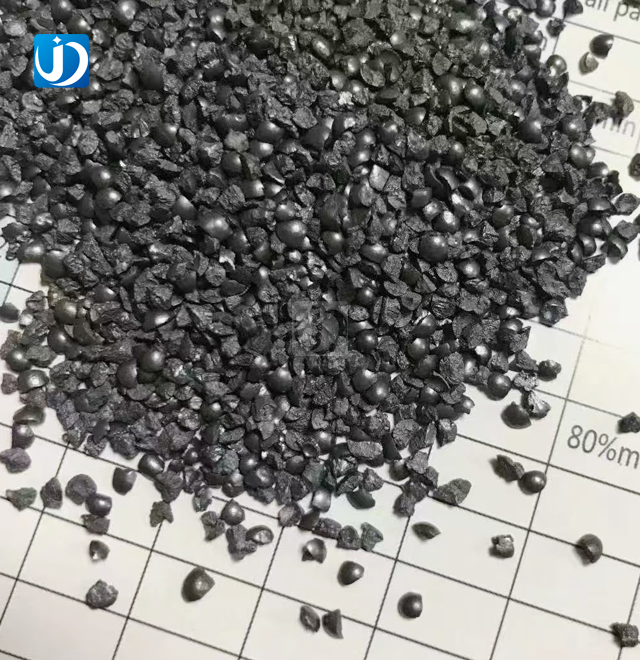
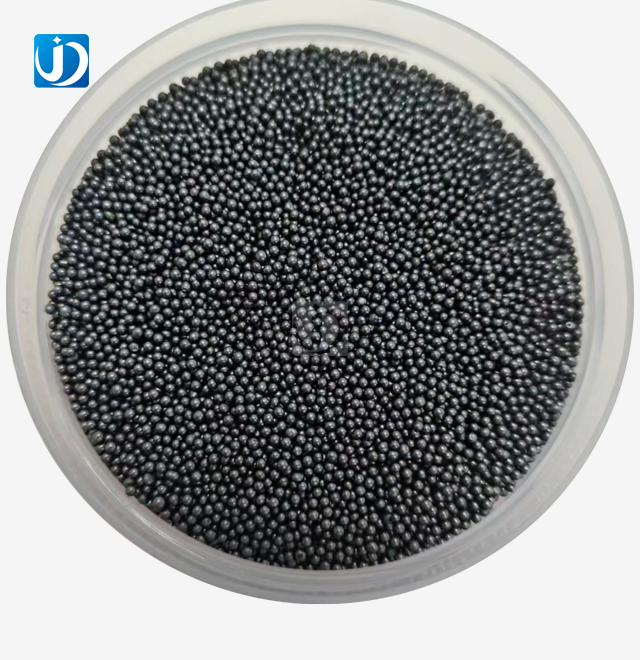
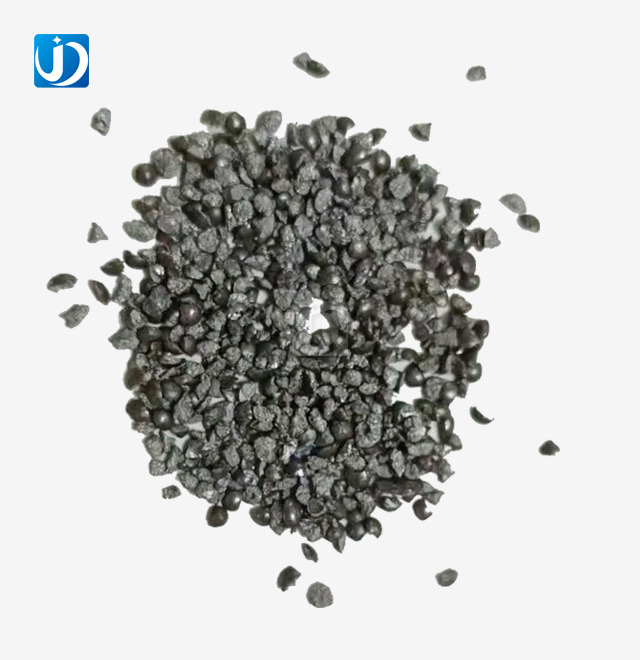
Media choice sets both cleaning speed and final surface. Cast steel shot is round and works by impact. Steel grit is angular and works by cutting. Round shot leaves a peened, matte finish on a tumble belt shot blasting machine. Grit leaves an anchor profile, which coatings need (Steel Construction Institute, 2026).
Sizing follows a simple rule. Heavy scale needs larger particles with more mass. Fine deburring needs smaller particles that reach into tight corners. Media that is too coarse erodes thin sections and drives up wheel wear.
Job | Starting media | Reason |
Fasteners, light rust | S230 steel shot | Balances speed against wheel wear |
Die castings, flash and burrs | S280 shot, low wheel speed | Round shot peens instead of cutting |
Heavy scale on forgings | S330 to S390 shot | Heavier particle, harder hit |
Pre-paint, coating spec | 70/30 shot and grit | Angular profile lifts adhesion |
Cycle Time and Output Data for Common Workpieces
Cycle time splits into blast time and handling. Blast time runs 5 to 15 minutes depending on contamination. Handling adds 2 to 4 minutes with a skip loader. At a 10 minute combined cycle, a tumble belt shot blasting machine delivers about 6 batches per hour.
Convert batches into kilograms and the numbers get useful. A 400 kg batch at six cycles per hour gives 2.4 tonnes per hour. Light parts on a short cycle push that toward 4 tonnes per hour. That is where a tumble belt shot blasting machine beats hand grinding on cost per tonne.
Global demand supports that volume. The shot blasting machine market reached USD 1.39 billion in 2026, with Asia-Pacific the largest region. Growth runs at 5.2 percent a year toward USD 1.7 billion by 2030 (The Business Research Company, 2026).
Three Workshop Cases from 2026
Fastener plant, India. A bolt maker ran a 300 kg batch of M8 to M12 fasteners for 8 minutes to strip heat treatment scale. Output reached about 2 tonnes per hour. The same batch took two operators most of a shift on pedestal grinders.
Die caster, Vietnam. A zinc die casting shop cleaned 250 kg batches of small housings in 6 minutes. Low wheel speed and S280 round shot removed flash without cutting the cast surface. Surface marking rejects fell after the belt replaced a steel slat unit.
Hardware workshop, Indonesia. A finisher ran mixed pressings at a 200 kg batch size. Shot and grit at 70 to 30 removed rust and left an anchor profile for powder coating. Cycle time settled at 7 minutes after separator airflow was reset.
Tumble Belt Machine Price and Running Cost Breakdown
What Determines Tumble Belt Shot Blasting Machine Cost?
Machine price scales with drum size, wheel power, and dust collector size. A small Q326 class unit with a 200 kg load sits at the low end. A Q3210 class tumble belt shot blasting machine with a 1000 kg load costs several times more. Freight and installation add a visible slice.
Running cost breaks into four lines. Electrical power, abrasive consumption, wear parts, and maintenance labor. Power follows wheel motor size and blast time. Abrasive loss follows separator efficiency and door sealing on a tumble belt shot blasting machine.
Where Safety, Dust Control, and Wear Checks Add Cost
Dust control is not optional, and it is not cheap. OSHA sets the respirable crystalline silica limit at 50 micrograms per cubic meter. The action level is 25 micrograms as an 8 hour average (OSHA, 2026). Exhaust ventilation on a tumble belt shot blasting machine must hold continuous inward airflow at every opening of the enclosure (OSHA, 2026).
Wear checks protect the largest cost line. Inspect the belt weekly for cuts, cleat wear, and fabric damage. Replace blades once thickness falls about 20 percent, because a worn blade widens the pattern and drops impact speed.
How to Optimize Your Tumble Belt Blasting Process
Optimization starts with a written recipe per part family. Record media size, batch weight, belt speed, blast time, and target finish. Change one variable at a time and measure. Match the batch to the wheel pattern, and track cost per tonne instead of cost per batch.
Conclusion
A tumble belt shot blasting machine earns its place when you run loose small parts in volume and surface marks cost money. Check belt load limits before anything else. Run a drop test on your hardest part family. Pick media by the finish you must deliver, and plan belt replacement from day one.
FAQWhat is a tumble belt shot blasting machine used for?
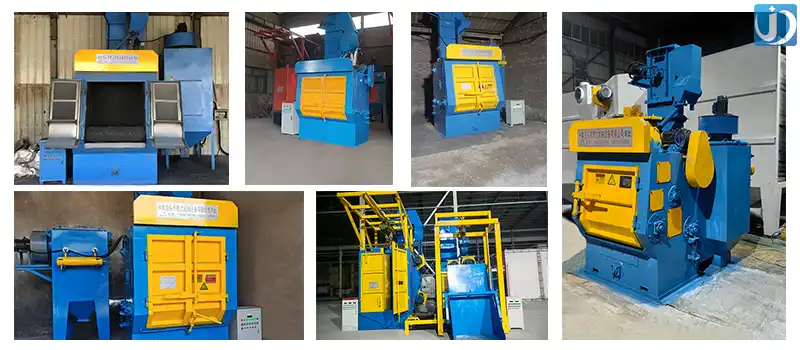
A tumble belt shot blasting machine removes rust, heat treatment scale, flash, and burrs from loose small parts in batches. Typical work includes fasteners, hardware, springs, bearings, die castings, and small forgings. It suits shops cleaning hundreds of kilograms per shift.
How much can you load into a tumble belt machine at once?
A Q3210 class tumble belt shot blasting machine carries a rated 1000 kg in a 0.7 cubic meter drum. Heavy castings should run lighter so the belt keeps turning the pile. Fill by volume for small parts and by weight for dense parts.
Which parts should never go into a tumble belt machine?
Thin sheet under about 3 mm deforms, slender shafts bend, and thin wall aluminium castings dent. Long parts bridge across the belt and stop tumbling. Deep blind cavities trap shot and stay unblasted. A tumble belt shot blasting machine cannot process those parts without damage, so choose a hook type or mesh belt model.
How long does the rubber belt last?
Under standard duty a jointed rubber belt lasts roughly 2,000 hours. A seamless vulcanised belt reaches about 5,000 hours at the same settings (CMBlaster, 2025). Keeping parts covering the belt through the cycle keeps direct blast wear off the rubber.
Does a tumble belt machine need a foundation pit?
No. An integrated frame design sits on a level concrete floor and needs no pit. That keeps installation simple in an existing workshop and stops water collecting under the machine. A tumble belt shot blasting machine built this way can also be moved if your layout changes.
What Your Parts List Tells Us About the Right Belt Machine
Picking a tumble belt shot blasting machine comes down to two questions. What is your heaviest part, and what is your smallest? Send Junda Machinery your part list with weights and a target finish grade. As a tumble belt shot blasting machine manufacturer, we return a drum size, media recommendation, and cycle estimate. Email junda001@jundablast.com or visit jundablast.com.
References
1. OSHA (accessed 2026). FactSheet 3682 — Control Silica Dust.
2. OSHA (accessed 2026). 1910.94 — Ventilation: Abrasive blasting.
3. The Business Research Company (September 2026). Shot Blasting Machine Global Market Report 2026.
4. Steel Construction Institute (2026). Surface preparation.
5. CMBlaster (2025). TMB: Tumblast Machine — Rubber Belt.
6. MarketsandMarkets (2025). India Industrial Fasteners Market 2025-2030.

USER EVALUATE
Real feedback and practical experience shared by worldwide partners who purchased our machinery and environmental treatment devices.