
Steel Grit for Surface Preparation Before Industrial Coating
Below are some charts with various grit sizes, how clean Sa 2.5 is, how much garnet and aluminium oxide cost and a supplier checklist generated from genuine queries asked by distributors in Vietnam, Indonesia and India about purchasing stuff. Steel grit gives the rough surface coatings require to bond to.
Why Is Steel Grit Used for Surface Preparation Before Coating?
Steel grit cleans the surface and produces a pattern on it, allowing paint to attach to it. This is why professional painters and blasting teams use steel grit. Sand and soft rocks may polish a surface but they erode fast, leaving a rougher, more rounded surface.
What Is Steel Grit and What Is It Not?
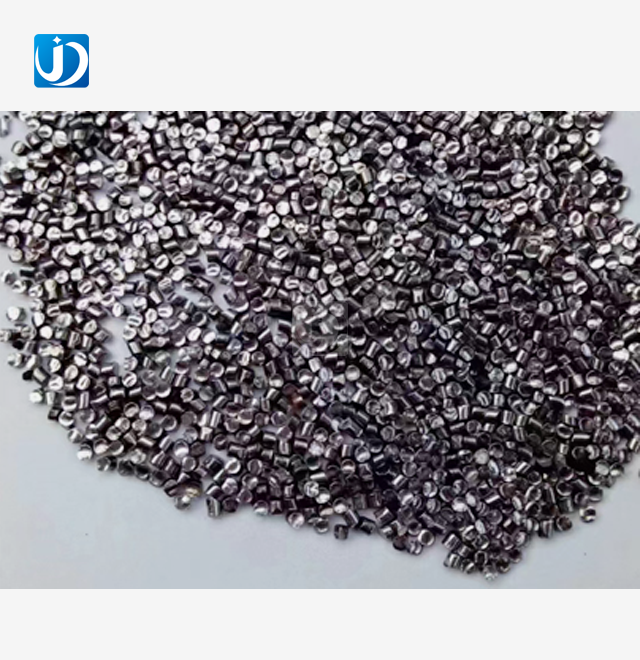
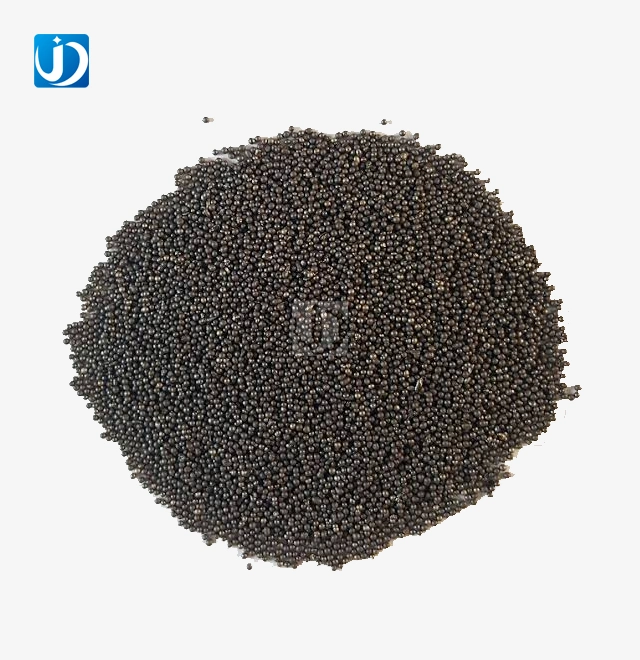
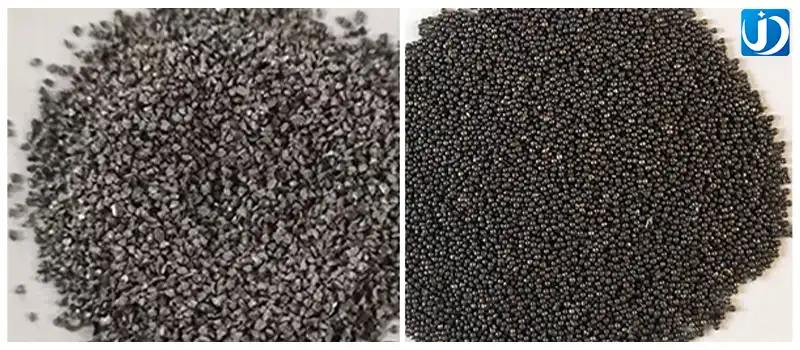
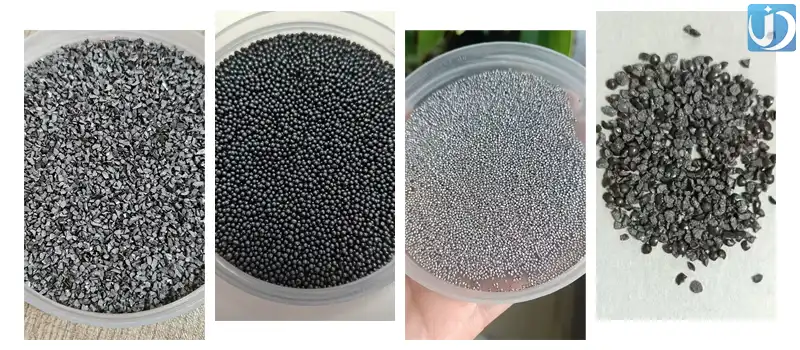
It is not like sand, garnet, glass beads or aluminium oxide which are abrasives manufactured from minerals or ceramics. Steel grit is manufactured from carbon steel shot that is heat treated and shattered into angular, sharp edged bits.
Steel Grit Abrasive Properties
There are several qualities of the steel grit that may tell you if it will or will not function on the blast line. Its carbon concentration is generally between 0.85-1.20% which gives it a tempered martensitic microstructure robust enough to absorb a number of strikes before it fractures. It has a density of at least 7.4 g/cm³, therefore each particle is hefty enough to impart substantial kinetic energy to the steel surface on impact.”
- Angular form and cutting action: sharp edges cut into rust and mill scale, not slide over it, reducing cycle time on badly corroded parts.
- Hardness grade and fracture resistance: GP grade (about 40-50 HRC) rolls off gradually, GL grade (54-61 HRC) loses its sharp points but remains semi-angular and GH grade (over 64 HRC) retains its edge for much of its working life.
- Particle size distribution: A narrow, reproducible spread between batches prevents the anchor profile from drifting over a protracted project.
- Recyclability and dust output: a well constructed grit will create less fine dust every cycle, keeping the separator functioning effectively and reducing the number of respirator filter replacements.
These attributes go hand in hand. Even if a batch has the correct hardness it will still have profile concerns on site, but terrible sieve consistency. That's why both numbers are significant, not just one.
How Is Steel Grit Made?
Molten steel is treated with a regulated quantity of carbon, manganese, sulphur and phosphorus to produce steel grit. It is then broken up into little, rough bits. Then the particles are heated to make them tough so they don’t break when they are struck again and again. Then it is broken up and screened to separate into SAE J444 size grades. Then it is separated using magnets and then brushed off and packaged. Quality-conscious manufacturers test each batch by Rockwell C hardness and by sieve analysis. A metallurgical microscope is also used to view the microstructure to detect whether there are any fractures or too much retained austenite. Both of these may reduce the life of the metal if not kept under check.

How Does Grit Blasting Create the Ideal Anchor Pattern for Coatings?
Most of the time, it's not the paint that fails on steel. It's sometimes about what the surface was like before the paint was put on.
What Is an Anchor Profile?
This pattern of highs and lows in the surface that is left behind by a steel grit blast is called an anchor profile. You might not be able to use a surface that looks clean if the profile isn't the right depth or width for the coating system. The cleanup and profile tests must both be passed by the coating crew before they can move on.
Why Angular Steel Grit Improves Adhesion
Particles with angles don't just bounce off of rust, scale, and old coatings; they cut right through them. By cutting this way, small valleys are made in the surface. This means there is more surface area that can be mechanically bonded. When used in a controlled wheel blast machine, steel grit makes a profile that is more consistent from panel to panel than abrasives that are round. When inspectors check a lot of test points during a long building project, this is important.
Matching Profile to Coating Thickness
The range of the goal profile should stay in the same as what the coating maker writes on the product data sheet. To check this, crews often use an ISO 8503 comparator, replica tape, or a digital profile gage. They then compare it to ASTM D4417 (ASTM International) field measurement procedures. And if the profile is too deep, the coating peaks might be able to rust for a long time. The cost of the paint per square meter can go up because more paint has to be pushed into the valleys.
What Grit Size Produces the Right Profile for Different Coating Systems?
What grit size should be used is the first thing a project engineer or distributor will ask. This is because the grit size shapes both how quickly the machine cleans and how deep the profile is when it's done.
Steel Grit Particle Size Chart
Millimeter sizes are a bit different from one company to the next, but the SAE J444 grade system, which has 16 standard grades ranging from 0.1 mm to 2.5 mm, is a good place to start.
| Grit range | Typical application | Expected profile tendency | Selection note |
|---|---|---|---|
| Fine grit (G80–G120) | Light rust, thin coatings, finishing work | Fine and shallow | Fits coating systems with limited dry-film thickness |
| Medium grit (G40–G50) | General structural steel, machinery | Moderate profile | Common starting point for industrial coating prep |
| Coarse grit (G25–G30) | Heavy rust, mill scale, thick coatings | Deeper, more aggressive | Needs profile verification before coating |
| Very coarse grit (G10–G16) | Severe corrosion, stubborn coating removal | Deep, aggressive | Use only when the coating system allows it |
How Grit Size Affects Cleaning and Coating Performance
Coarse steel grit removes rust and mill scale from heavily corroded steel more quickly because larger particles carry more mass and deliver greater impact energy. When particles are smaller, they cover more surface area per kilogram. This can make it less likely that a thinner coating system will have a pattern that is too deep. There is a balance between impact energy and coverage in a mixed work mix, like the kind used in wheel blast systems. This gives operators both speed and a consistent surface. When there is too much fine dust in the mix, work slows down and more respiratory protection needs to be worn on the job.
Grit Size Selection Checklist
Think about the useful things that will help you pick the right grade before you place your order.
- Existing coating thickness and type, since a thick epoxy layer needs more aggressive cutting than a thin shop primer.
- Rust and mill-scale severity, rated informally against ISO 8501-1 rust grades A through D.
- Target cleanliness grade (Sa 2, Sa 2.5, or Sa 3) specified in the project documents.
- Required surface profile range listed on the coating manufacturer's data sheet.
- Blast equipment type, since air blast cabinets and wheel blast machines handle grit sizes differently.
- Recycling and separator capability, which limits how fine a mix the recovery system can keep clean.
Before you order a test batch, read this list. It will save you weeks of back and forth once the container is on the water.
How Does Grit Blasting Achieve Sa 2.5 Surface Cleanliness Standards?
It's important to know what Sa 2.5 means because it's used in a lot of coating standards for bridges, tanks, and ships at sea.
What Does Sa 2.5 Mean?
ISO 8501-1 says that Sa 2.5 means "very thorough blast-cleaning." There shouldn't be any oil, grease, rust, mill scale, or old paint on the surface. There shouldn't be many stains or marks. If you only look at how it looks, this grade doesn't take into account the profile depth, dust level, or salt contamination.
Sa 2.5 Inspection and Documentation
Both the person who applies the coating and the person who owns it can't have problems with the quality of the surface afterward because of a full inspection process.
- Pre-clean oil, grease, and loose debris before blasting begins.
- Blast using the approved steel grit grade at the pressure and nozzle distance specified in the method statement.
- Compare the finished surface against ISO 8501-1 reference photographs.
- Measure profile depth using ISO 8503 comparators or ASTM D4417 gauges.
- Check for dust residue following ISO 8502-3.
- Check soluble salt levels under ISO 8502-6 or ISO 8502-9.
- Record ambient conditions, inspection results, and any rework performed.
Related Standards for Surface Preparation
When it comes to coating, owner specifications and manufacturer data sheets are still more important than general advice. Some standards that keep coming up in coating contracts are ISO 8501-1 for visual cleanliness, the ISO 8502 series for testing for contamination, ISO 8503 for roughness characteristics, ASTM D4417 for measuring field profiles, and ISO 12944 for designing systems that protect against corrosion.
Steel Grit vs. Garnet and Other Expendable Abrasives: Cost Comparison
People who sell and work on construction sites often want to know if a cheaper abrasive that can only be used once is really cheaper than steel grit. The honest answer depends on whether the system can get the media back and use it again.
Abrasive Comparison Table
| Abrasive | Particle shape | Recyclability | Typical strengths | Main limitations |
|---|---|---|---|---|
| Steel grit | Angular | High in closed-loop systems | Fast cutting, deep profile, long reuse life | Needs recovery equipment and corrosion control |
| Steel shot | Spherical | High | Peening, light cleaning | Weaker profile creation |
| Garnet | Angular | Limited to moderate | Low silica, portable use | Higher media use than reusable steel |
| Aluminum oxide | Angular | Limited to moderate | Aggressive on hard surfaces | Higher running cost, more dust |
| Glass bead | Spherical | Limited | Light cleaning, finishing | Weak on heavy rust |
| Sand | Variable | Low | Low starting price | Silica exposure risk, restricted in many regions |
Steel Grit vs. Steel Shot
Steel shot smooths and peens, whereas steel grit shapes and cuts. A lot of wheel blast lines use both together to clean the surface and lightly pack it down. But the type of coating should tell you how much to mix, not how easy it is to use.
Total Abrasive Cost, Not Just Price per Ton
You should compare the costs of the abrasive, the tools, the workers' productivity, and how much it costs to get rid of the used media. You should also look at how much is used per square meter and how many times it can be recycled. Steel grit can be recycled 200 to 300 times if you keep your closed-loop system in good shape. Each pass uses about 0.15 to 0.4 kg per square meter. When people buy it, they often get more for their money because it costs more per ton than garnet or sand. Because you waste more when you use abrasives that need to be changed more often, you will pay more.
Which Industries Require Grit-Blasted Surfaces Before Coating?
When heavy steel needs a coating base that is consistent and repeatable, steel grit is used. Not just in shipyards, but also in a lot of other fields with different pressure points.
Shipyards and Offshore Structures
Paints like epoxy or coal tar can't be put on the inside of tanks, offshore platform legs, hull plating, or deck structures until they have an SA 2.5 or SA 3 finish. In this case, controlling soluble salt is more important than on steel used on land, because chlorides left behind under a coating make blistering happen faster in just a few months.
Foundries, Heavy Equipment, and Pipeline Coating
To remove scale from hot castings and forgings, foundries use steel grit. The sharp particles get into corners that softer abrasives can't get to and clean them. Pipe coating lines use centrifugal wheel blast machines with a tightly packed grit mix to make an anchor profile that is sharp and even before they put on Fusion Bonded Epoxy. This is important because a profile that isn't level makes the coating fail and corrosion in the pipeline begin early.
A Field Case: Steel Grit Blend Trial in Vietnam
This happened in 2024 at a ship repair yard near Haiphong. They got two types of abrasives from a regional distributor and put them up against each other. Before working on the hull section again, the yard only used one G40 grade. Now they use a mix of G25 and G40. As a comparison, the blend cut the use of abrasives by 18% over six weeks, which saved about 140 tons of work. The crew that did the recoat also said that profile rejections saved them 2.3 hours of work per hull section. That's because the distributor's technical sales team said the sieves were more consistent from batch to batch. The profile stayed in the Rz 40–80 μm range, which was what the coating contractor needed. They didn't have to re-blast it several times.
This is why repeat buyers care more about consistency from batch to batch than a slightly lower unit price on a single order.
How Does Recycled Steel Grit Affect Coating Adhesion Quality?
Steel grit can be recycled to save money on many projects. The mix can slowly start to lose quality, though, if no one checks it.
Benefits of Steel Grit Recycling
More steel grit can be used because of a closed-loop system that sorts, cleans, and reuses it after each pass. This cuts down on the need to buy more abrasive, throw away more trash, and keep blasting going for long projects. The price of abrasive per square meter falls well below the price of a single-use abrasive after the system has been used more than a few hundred times. This is because operators pay close attention to it.
How Recycling Can Lower Quality
There are some risks that come with reusing. When things break down too far, they make fine dust. The working mix gets messed up by this dust, and the profile that the operator thought was set changes. Paint chips, oil residue, and loose rust can get into the abrasive stream if the separator isn't tuned correctly. The next part that needs to be blasted gets this residue right on top of it.
- Broken-down particles becoming too fine: this shifts the average grit size downward and shallows the profile without anyone changing the grade on purpose.
- Mixed particle sizes from uneven screening: this produces inconsistent roughness across one panel, which inspectors catch during profile spot checks.
- Oil, grease, or soluble salts entering the stream: this risk rises in humid coastal yards and can cause early coating blistering if undetected.
Recycling Control Plan
People who work on the line check the separator settings, dust collector performance, and sieve results once a week to find these problems before they get to the coating line. If you write down the machine ID, the batch of abrasives, the rate of replenishment, and the profile reading in a simple log, you can do the same thing over and over again.
What Blasting Parameters Control Profile Depth and Cleanliness?
What the grit grade does to the possible profile range is set by the blasting setup, but what it does to the steel is what it does.
Core Blasting Parameters
How the abrasive flows, how far away the nozzle is, how steep the nozzle is, and how fast the traverse is going all affect the final profile and cleanliness grade. Too close of a grip on the nozzle speeds up the cutting process. Too far of a grip lowers the impact energy and slows down the cleaning process.
Parameter-to-Result Matrix
| Parameter change | Likely result | Potential risk |
|---|---|---|
| Increase grit size | Deeper profile, faster cutting | Coating consumption rises |
| Increase air pressure | Faster cleaning | Dust and substrate stress rise |
| Slow nozzle movement | Deeper cleaning | Uneven profile, over-blasting |
| Use worn grit | Lower cutting efficiency | Longer cycle time |
| Use contaminated grit | Surface staining | Coating adhesion failure |
How to Avoid Over-Blasting and Surface Contamination Before Coating?
Surface prep mistakes almost never show up on the first day. They show up when a coating starts to blister or peel after months.
Common Surface Preparation Failures
Water that sits on a surface that was just blasted before the coating is put on can cause flash rust. Port towns in Southeast Asia that are humid and have small weather windows have this happen a lot. Remaining dust, soluble salts, and compressor oil traces are also repeat offenders. An anchor profile that was cut too deeply for the coating thickness that was asked for is another one.
Risks and Mitigation Table
| Risk | Likely cause | Mitigation |
|---|---|---|
| Poor adhesion | Dust, salts, or oil residue | Test and clean before coating |
| High coating cost | Profile too deep | Select a finer grade or lower blast intensity |
| Flash rust | Humidity or coating delay | Track dew point, shorten exposure time |
| Uneven finish | Worn or mixed grit | Screen and replenish media regularly |
Steel Grit Blasting Safety
You won't breathe in the crystalline silica that comes from many sand products if you blast with steel grit instead of sand. You will still have to deal with noise, dust, and the chance of rebound, though. As long as the blast rooms are closed off, the right eye and respiratory protection is worn, the quality of the compressed air is checked regularly, and the Safety Data Sheet for the product is read. In addition to the site-specific risk assessment that is required by law, this is also done.
How to Choose a Grit Supplier for Consistent Coating-Ready Surfaces?
One of the best ways to compare suppliers is by price per ton, but this number isn't always useful when different sieve results come in with a shipment.
Supplier Evaluation Checklist
A short list of questions gets rid of suppliers who can't handle a lot of repeat orders. You should ask the factory how they keep track of the different sizes from batch to batch, what grades of hardness are available, and what the limits are for chemical composition. For sea freight, check to see if the packaging is still good. Abrasive that wasn't properly bagged has been ruined more than once by water getting in during a 25–40 day trip through humid ports.
Quality Verification and Required Documents
It is important to ask for a product data sheet, a safety data sheet, and an analysis certificate that shows the hardness, chemical make-up, and particle size distribution for the shipped batch. That way, you can keep track of the samples. Also, make sure that the batch meets the size and durability standards set by SAE J444, SAE J1998, and ISO 11124-3. Most of the time, consumer marks like CE, RoHS, or FDA don't cover steel abrasive media that are used by themselves. There are some things you should do if a supplier says their grit has these marks.
Working With Junda Machinery
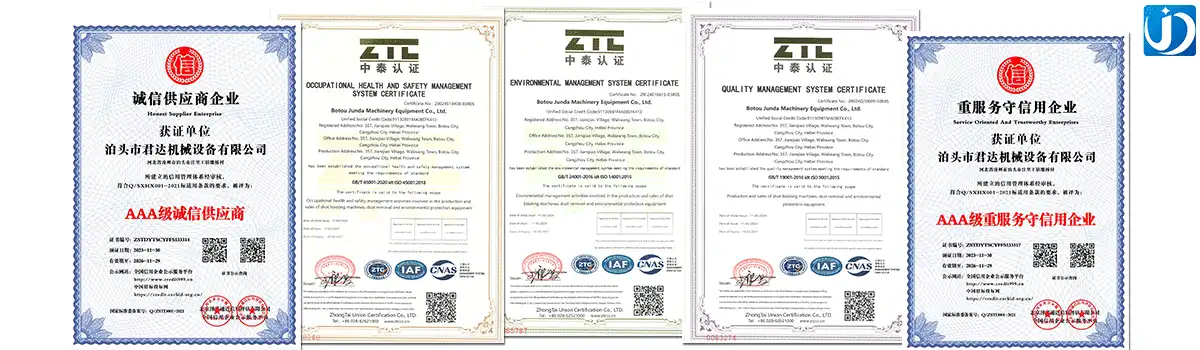
Botou, which is in Hebei Province and is a center for making foundry and surface treatment equipment in China, is home to Botou Junda Machinery Equipment Co., Ltd. Even though they make shot blasting machines, the business does other things too. They also sell steel grit that is made and checked for quality according to ISO 9001. Each batch is sieved and tested for hardness before it is packed. People who sell abrasives under their own brand names can ask for custom 25 kg woven bags, printed jumbo bags that are 1000 x 1000 x 1200 mm, and mixed grit ratios that are packed into one container. The company gives CIF quotes so customers can see how much freight will cost before they place their first order. They answer standard questions in 6 to 8 hours.
International Logistics and Commercial Terms
Steel grit is a dense cargo, and freight can account for 15% to 30% of the total landed cost. Make sure you are familiar with the Incoterms.
Steel Grit Selection Comes Down to Profile, Consistency, and Supply Reliability
When picking the right grade of steel grit, you need to make sure that the coating, the tools you have, and the recycling system you can use all work with the hardness and particle size. For projects that need a clean Sa 2.5 profile and a clear Rz profile, they need grit that is the same from batch to batch and comes with real test results, not just a cheap price per ton. A different kind of question needs to be asked by distributors who want to start their own private-label abrasive business: can a supplier give them the same consistency every time in the amounts and packages that their market needs?
FAQ
What is steel grit used for?
Tiny bits of steel grit can get rid of rust, mill scale, old paint, and other dirt on the surface. Before painting, lining, or thermal spray coating can begin, it also cuts an angle-shaped anchor profile into the surface.
What is the difference between steel grit and steel shot?
A deeper profile is created by angular steel grit particles cutting through the surface. Since steel shot stays round, it's better to use it for peening and light surface cleaning than for making rough profiles.
How do I choose between softer and harder steel grit grades?
Stronger grades (GH, above 64 HRC) keep their sharp edge longer and work well with air blast systems that need to quickly and deeply etch. GL grades (54–61 HRC) are softer and clean faster. They also wear down wheel blast machine parts less.
Why does steel grit break down faster than expected?
If something breaks down quickly, it's likely because the heat treatment wasn't done right or the microstructure isn't level. Ask the supplier for a certificate that shows a tempered martensite structure instead of one with grain patterns that are brittle or not tempered.
Can steel grit be recycled, and how many times?
Yes. If you take good care of a closed-loop system, good quality steel grit can usually be recycled 200 to 300 times before it stops working as well as it should. However, this depends on the grade and the conditions of use.
What does Sa 2.5 mean in abrasive blasting?
With a grade of 2.5, ISO 8501-1 (2007) says the surface looks clean, meaning it has been blast-cleaned very well and there are only light stains left. It does not tell you anything about how deep the profile is or how much salt is in it.
Can steel grit be used on stainless steel surfaces?
It is true that carbon steel grit does leave ferrous residue on stainless steel, which can lead to galvanic corrosion in the future. For that base, it is better to use aluminum oxide or stainless steel grit, which are both abrasives that aren't made of iron.
Request a Steel Grit Sample and Batch Test Report From Junda Machinery
If someone is looking for a new steel grit supplier for their first container order, they can get a free 25 kg sample with a sieve analysis and hardness certificate from that supplier. Junda Machinery helps buyers in South Korea, Vietnam, Indonesia, and Malaysia get CIF quotes, print their own labels on bags, and mix different grades in the same container. A similar quote will be sent to you within one business day if you email junda001@jundablast.com with your target grade, annual tonnage, and port of destination.
References
International Organization for Standardization, ISO 8501-1:2007 — Preparation of steel substrates before application of paints and related products, cited in the Sa 2.5 cleanliness section.
International Organization for Standardization, ISO 8503-1:2012 — Surface roughness characteristics of blast-cleaned steel substrates, cited in the anchor profile and grit size sections.
SAE International, SAE J444 — Cast Shot and Grit Size Specifications for Peening and Cleaning, cited throughout the grit size and manufacturing sections.
ASTM International, ASTM D4417-14 — Standard Test Methods for Field Measurement of Surface Profile of Blast Cleaned Steel, cited in the Sa 2.5 and parameter sections.
U.S. Occupational Safety and Health Administration, Abrasive Blasting, cited in the safety section.
International Organization for Standardization, ISO 12944 — Corrosion protection of steel structures by protective paint systems, cited in the related standards section.
About the Author
Shot blasting media are nothing new to Michael Wang. He has worked on projects all over Southeast Asia and South Asia in shipyards, foundries, and on coatings for structural steel. On active job sites, it's his job to pick the right abrasive grade, check the quality of each batch, and make sure that the profile of the finished surface meets the needs of the coating. He writes about surface preparation standards and how well abrasives work for teams that buy things from businesses.

USER EVALUATE
Real feedback and practical experience shared by worldwide partners who purchased our machinery and environmental treatment devices.
YOU MAY LIKE